
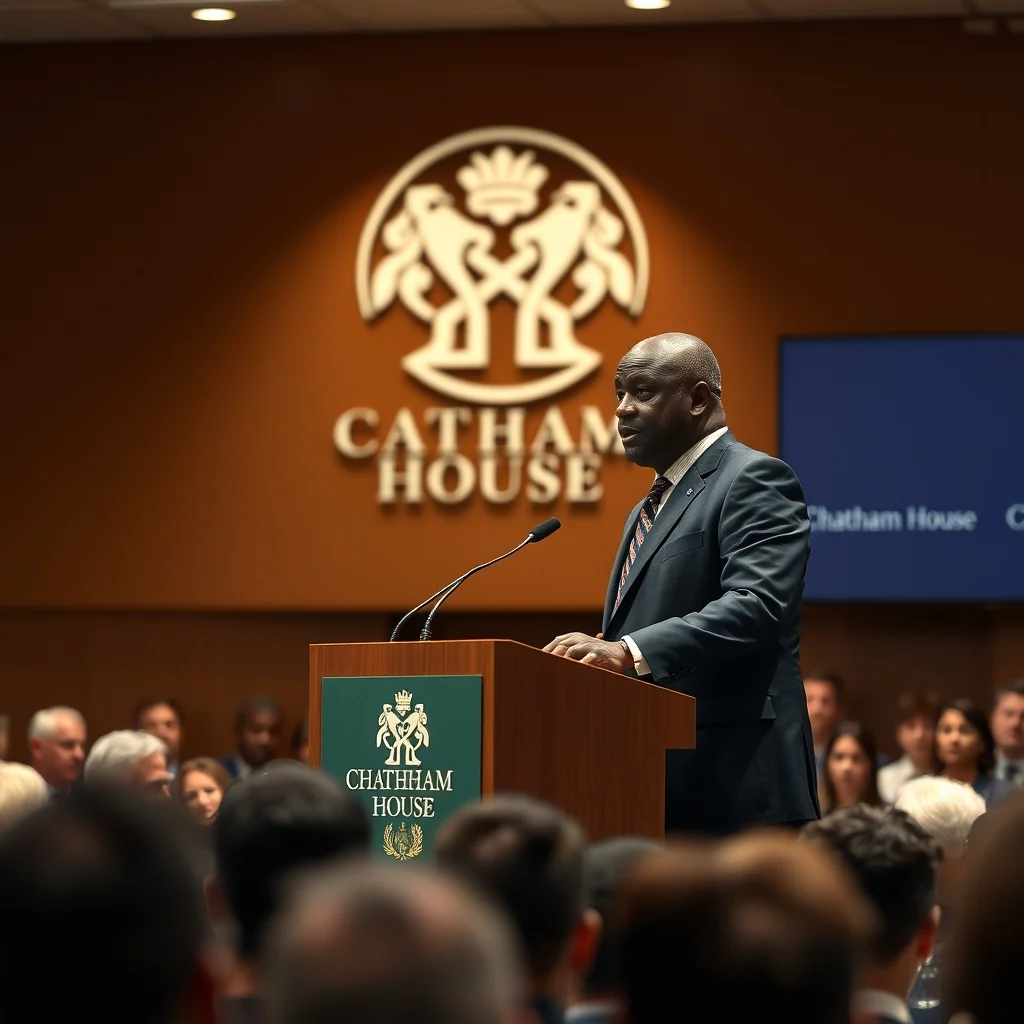
President John Mahama, during his official visit to the United Kingdom, addressed Chatham House in London on “Navigating a Changing Global Order: Ghana’s Strategic Priorities.” The engagement, occurring on the third day of his five-day UK trip, focused on Ghana’s vision for a more equitable international system.
Context of Global Transition
Chatham House, a prominent policy institute, hosts discussions on critical geopolitical and international challenges. President Mahama highlighted the institution’s role in shaping conversations on diplomacy and governance, especially during periods of significant global transition. He emphasized the need for such platforms to not only interpret change but also to analyze its consequences and influence its trajectory.
Reforming Global Governance
A key focus of President Mahama’s address was Ghana’s strong support for comprehensive reform of the United Nations system. He specifically reiterated the call for equitable representation for Africa on the UN Security Council. The President described the Continent’s current exclusion from permanent membership as a historical injustice and a structural imbalance that compromises the credibility of the multilateral system.
Lessons from the Pandemic
The COVID-19 pandemic, Mahama noted, starkly revealed profound inequalities within the global system. Access to vital medical resources like vaccines and therapeutics in many African nations was determined by global supply hierarchies rather than the urgency of need. This experience underscored the national security vulnerability arising from overreliance on external systems in critical sectors.
The Accra Reset Initiative
In response to these vulnerabilities, Ghana launched the Accra Reset Initiative. This initiative reflects a broader philosophy of climate-strategic repositioning and aims to bolster sovereign capacity. Key areas targeted include public health systems, pharmaceutical manufacturing, vaccine production, digital infrastructure, food security, industrialization, and strategic financing.
President Mahama clarified that the Accra Reset is not a rejection of international cooperation but a proposal for a new partnership architecture. This new model should be founded on mutual respect, co-creation, equity, and shared responsibility, moving away from dependency towards dignity in international relations.
African Integration as a Necessity
Ghana views African integration as an economic and geopolitical imperative, not merely an aspiration. In a world grappling with fragmented supply chains, shifting trade blocs, and rising economic nationalism, strengthening internal economic resilience within Africa is crucial.
The African Continental Free Trade Area (AfCFTA)
The President lauded the African Continental Free Trade Area, headquartered in Accra, as a transformative project of the current generation. He stated that successful implementation of AfCFTA holds the potential to significantly boost intra-Africa trade, expand industrial production, strengthen regional value chains, and reduce the Continent’s susceptibility to external shocks.
Mahama pointed out the long-standing issue of African economies relying on the export of raw commodities while importing higher-value finished products. He argued that this model is unsustainable and strategically unviable. Consequently, Ghana remains committed to industrial transformation, adding value to its exports, diversifying export bases, and deepening regional economic integration.
Future Outlook
The discussions at Chatham House signal Ghana’s proactive stance in shaping its future amidst evolving global dynamics. The emphasis on strengthening sovereign capacity, reforming multilateral institutions, and advancing African integration through initiatives like AfCFTA points towards a strategic shift. Readers and industry stakeholders should watch how these priorities translate into concrete policy actions and international engagements, particularly concerning Africa’s role in the global economic and political order.










Leave a Reply