
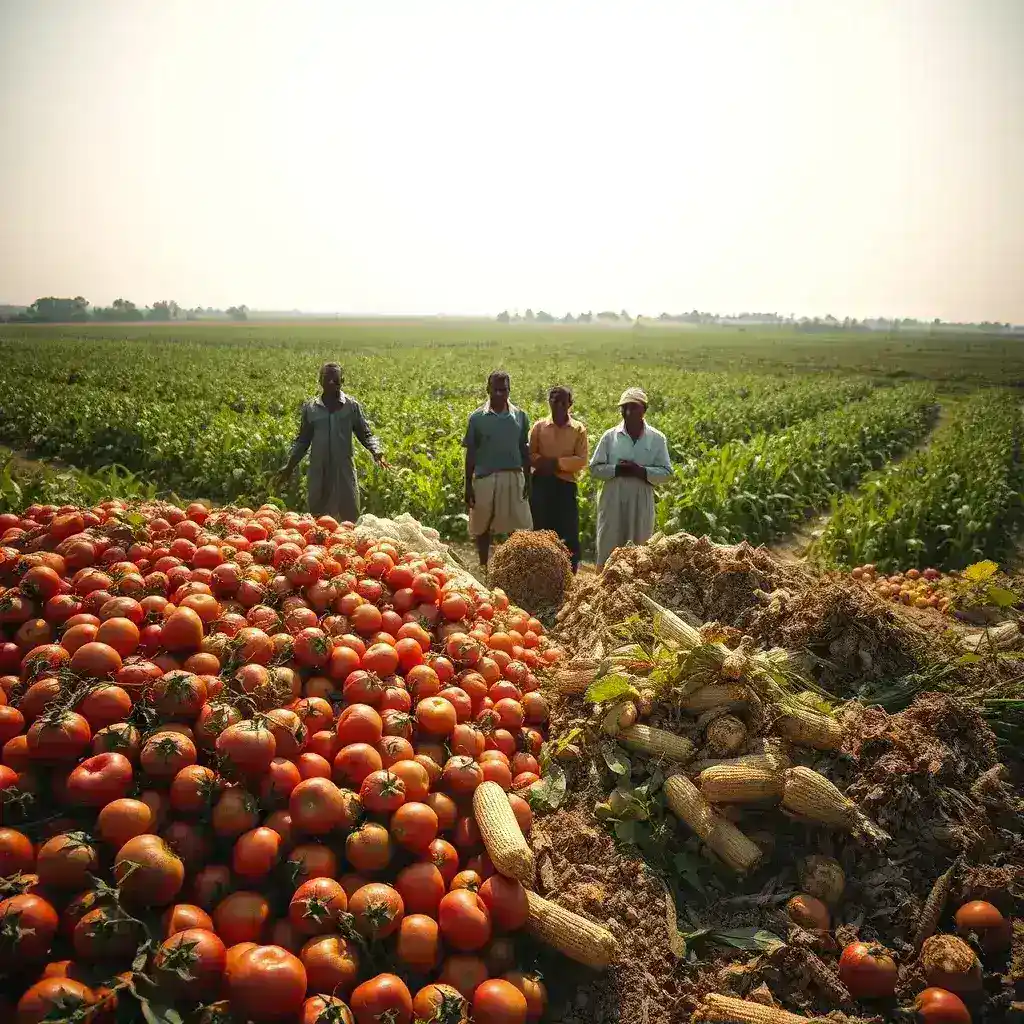
The Centre for Democratic Movement (CDM) has sounded the alarm over a worsening food glut crisis in Ghana, revealing that farmers are incurring substantial losses even as they achieve bumper harvests. This situation, highlighted in Accra on Monday, points to critical failures in the nation’s food distribution system, characterized by weak coordination, inadequate storage, and ineffective government intervention.
Collapsing Distribution System
Samuel Doku, Convenor of the CDM, stated at a press conference that large quantities of essential produce, including tomatoes, maize, rice, beans, and yams, are perishing in farming communities. The primary reason cited is the inability of farmers to access reliable markets to sell their surplus crops.
“Many farmers across Ghana cannot sell their produce despite having bumper crops, while educational institutions and vulnerable communities continue to experience shortages and supply disruptions,” Doku explained. He characterized the paradox of wasted food alongside persistent shortages and high consumer prices as a significant structural flaw within Ghana’s food system.
Structural Weaknesses Exposed
The crisis underscores deep-seated issues in agricultural market coordination and nationwide food distribution. Farmers are reportedly left watching staple foods rot at farm gates due to a lack of guaranteed markets, insufficient storage facilities, absence of guaranteed pricing mechanisms, and inefficient state intervention.
This disconnect is particularly stark as consumers in urban centers continue to grapple with elevated food prices, while schools and other institutions report ongoing supply challenges. “Consumers continue to pay high food prices while schools continue to report shortages,” Doku emphasized, labeling the situation a “governance failure” rather than solely an agricultural one.
Discouraging Farmers, Threatening Food Security
The persistent financial losses are having a direct and detrimental impact on the farming community. The CDM expressed grave concern that many farmers are abandoning cultivation altogether due to sustained losses and the pervasive uncertainty surrounding their livelihoods.
“We are particularly concerned that many farmers are now abandoning cultivation due to sustained losses and uncertainty,” Doku stated. Reports indicate some farmers are even selling their farmlands, deeming agriculture economically unsustainable. This growing frustration among the agricultural backbone of the nation poses serious long-term risks to food security and national stability if not addressed urgently.
“No nation secures its future by destroying the economic dignity of its farmers,” he asserted, highlighting the critical role of farmers in national well-being.
Calls for Urgent Intervention
The CDM also pointed to other contributing factors exacerbating the crisis. These include weak buffer stock management, underdeveloped agro-processing capacity, and inadequate feeder road networks, all of which collectively worsen the challenges faced by farming communities across Ghana.
In response, the group is urging immediate and decisive government intervention. The proposed measures include significant improvements to storage infrastructure, strengthening of food distribution systems, expansion of agro-processing capabilities, and enhanced market access initiatives for farmers nationwide.
Looking Ahead
The situation demands a comprehensive review of Ghana’s agricultural and food distribution policies. Future attention will likely focus on the government’s response to the CDM’s demands, the implementation of new strategies to bridge the gap between farm-gate supply and market demand, and the development of robust systems to prevent such food wastage while ensuring affordable access for consumers. The sustainability of Ghana’s agricultural sector and its contribution to national food security hinge on effectively tackling these systemic issues.










Leave a Reply