
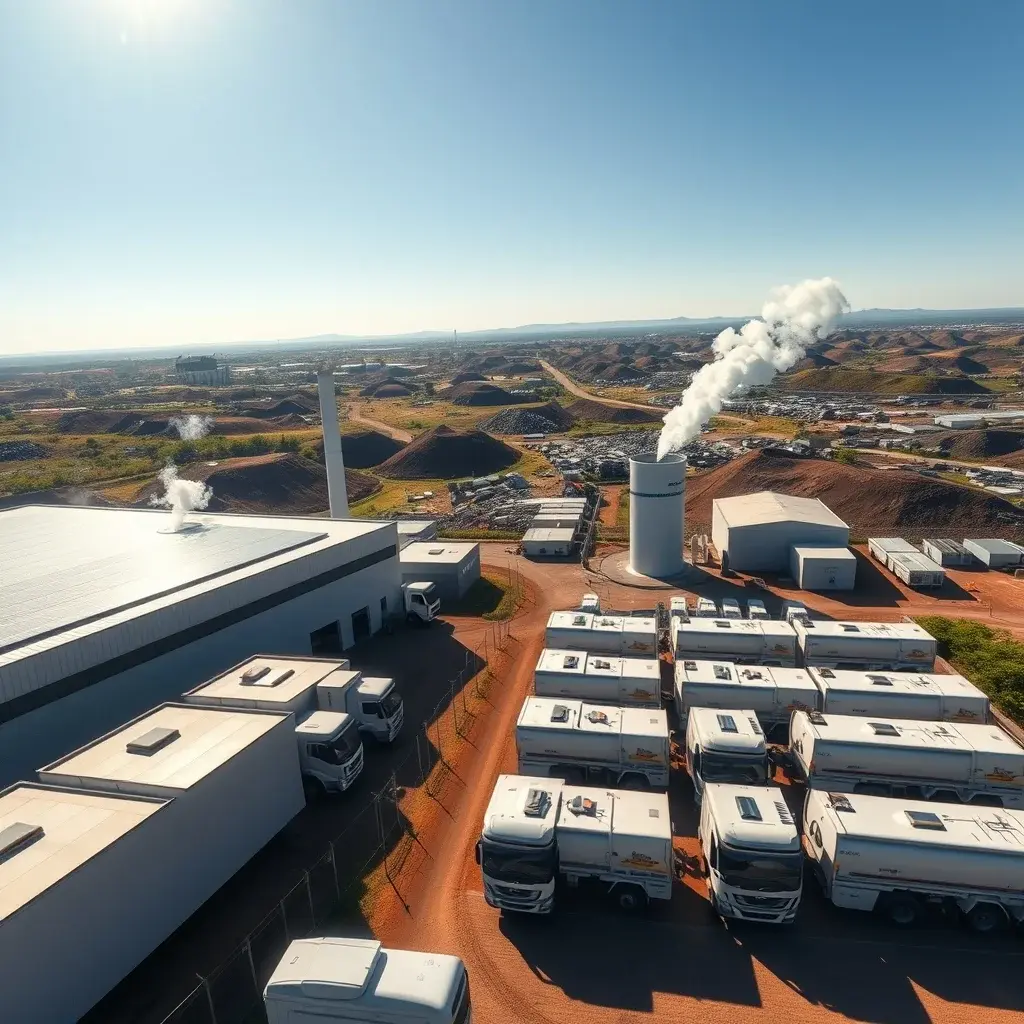
Accra, Ghana – May 19, 2026 – Ghana’s government has inked a significant Memorandum of Understanding (MoU) with Canadian clean energy company Portage Energy Group Inc. to develop a pioneering project that will convert municipal solid waste into clean electricity and sustainable aviation fuel (SAF). This strategic partnership aims to bolster Ghana’s climate resilience and circular economy objectives while creating new economic opportunities.
Context: Addressing Waste and Energy Demands
Ghana, like many developing nations, faces escalating challenges with waste management, particularly in urban centers. Landfills are reaching capacity, posing environmental risks such as methane gas emissions, a potent greenhouse gas. Simultaneously, the nation is striving to increase its energy security and transition towards cleaner energy sources to meet growing demand and climate commitments.
This initiative comes at a time when global efforts to decarbonize the aviation sector are gaining momentum. Sustainable Aviation Fuel (SAF) is considered a key pathway to reducing the carbon footprint of air travel, but its production is currently nascent and expensive.
Project Details and Scope
The agreement designates Portage Energy as the preferred development partner for this ambitious waste-to-value project. The initial phase will involve comprehensive technical and environmental engineering studies, focusing on the Kpone landfill site within the Tema Metropolitan Area. This site is a critical hub for the region’s waste disposal.
The project envisions integrated facilities designed to process municipal solid waste. These facilities will transform waste into bio-organic pellets, which can be used for energy generation or other industrial applications. Crucially, they will also produce clean electricity for the national grid.
Each planned facility is projected to generate approximately 25 megawatts (MW) of electricity. A portion of this power, around 5 MW, will be utilized to run the facility’s operations, ensuring self-sufficiency. The remaining 20 MW will be fed into Ghana’s national electricity grid, contributing to the country’s energy supply.
Private Sector-Led Financing
A key aspect of this agreement is its financing model. The government has emphasized that the entire project will be privately funded by Portage Energy Group Inc. This structure ensures that there will be no direct financial burden on the Ghanaian state, making it an attractive proposition for public-private partnerships.
Portage Energy will be responsible for all capital investments required for the development and construction of the integrated facilities. This private sector commitment allows Ghana to pursue critical infrastructure development without straining its national budget.
Environmental and Economic Benefits
The project is poised to deliver substantial environmental benefits. By diverting waste from landfills, it will significantly reduce the volume of solid waste, mitigating associated environmental hazards. The conversion of waste into energy also directly addresses methane emissions from decomposing organic matter, contributing to Ghana’s climate resilience agenda.
Economically, the initiative is expected to stimulate job creation throughout the project lifecycle, from construction to operation. Improved waste management infrastructure will enhance public health and sanitation standards in the Tema area and beyond.
Furthermore, the project aims to strengthen Ghana’s renewable energy portfolio by adding a consistent source of clean power. It also positions Ghana as a potential future hub for Sustainable Aviation Fuel (SAF) production in Africa, a sector with significant growth potential.
Official Statements and Support
Minister for Energy and Green Transition, John Abdulai Jinapor, hailed the MoU as a pivotal moment for Ghana’s green transition. “This partnership aligns seamlessly with Ghana’s strategic commitment to sustainable waste management and our green transition,” he stated. “By turning municipal solid waste into reliable, clean electricity, we are not only addressing sanitation challenges but also strengthening our national energy security and driving local economic growth without drawing on public funds.”
Craig Latimer, Chief Executive Officer of Portage Energy Group Inc., expressed his company’s enthusiasm. “Portage Energy is honoured to be designated as a Preferred Development Partner for this transformative project,” Latimer said. “Our proven waste-to-value solutions will reduce landfill dependence, generate up to 25 megawatts of clean power, and lay the essential groundwork for future Sustainable Aviation Fuel production in West Africa.”
The Canadian High Commissioner to Ghana, Myriam Montrat, underscored the bilateral significance of the agreement. “The signing of this Memorandum of Understanding marks another proud milestone in the strong bilateral relationship between Canada and Ghana,” she commented. “We are thrilled to see Canadian innovation and expertise supporting Ghana’s ambitious climate resilience and circular economy goals.”
Next Steps
Following the signing of the MoU, Portage Energy is set to commence immediate technical assessments and engage with relevant stakeholders. These preliminary steps will pave the way for detailed negotiations on operational frameworks and power purchase agreements, bringing the project closer to implementation.










Leave a Reply