
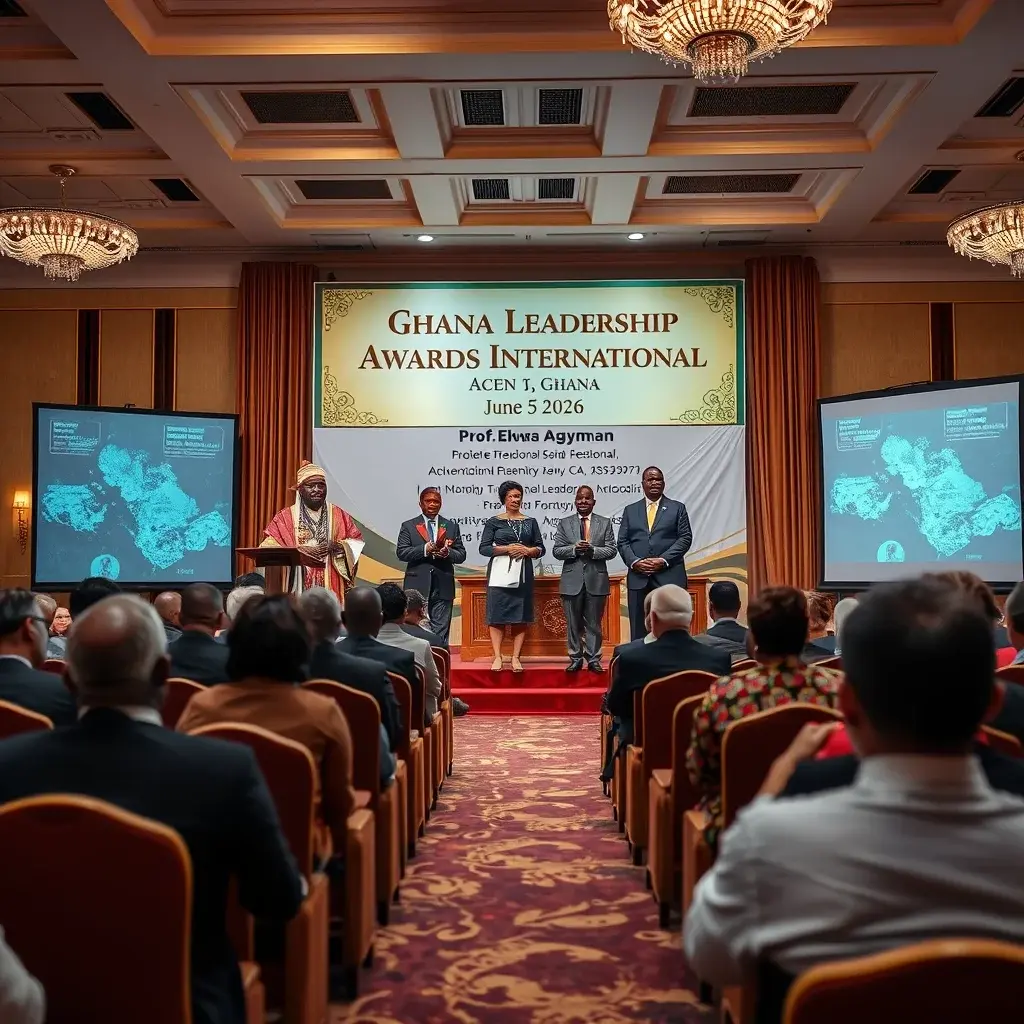
Accra, Ghana – June 5, 2026 – The Ghana Leadership Awards International (GLAI) convened its 18th annual ceremony in Accra on Friday, honouring prominent Ghanaians, including the Ga Mantse, Nii Tackie Teiko Tsuru II, and Professor Elsie Effah Kaufmann, for their significant contributions to national and global development. The event also underscored the critical role of the media in addressing the escalating climate crisis.
Context of the Awards
The Ghana Leadership Awards International, now in its 18th year, serves as a platform to recognize individuals who demonstrate exceptional leadership and make impactful contributions to society. The organization aims to inspire future generations and foster national and international progress through these accolades.
Rev. Prof. Emmanuel Yao Nash, Founder and CEO of GLAI, expressed pride in celebrating leaders whose work shapes society. He highlighted the organization’s commitment to recognizing inspirational figures and noted GLAI’s substantial international reach, estimated at over 286 million people, through its various platforms.
Distinguished Honorees
Among the distinguished individuals recognized were His Royal Majesty Nii Tackie Teiko Tsuru II, the Ga Mantse; Professor Elsie Effah Kaufmann, known for her role as moderator of the National Science and Maths Quiz; Dr. Akwasi Agyeman, Editor of Adom Brands at Multimedia Group Limited; Okronkronyi Nyame Somafo Yawoh, leader of the Asomdwee Ntonton Som; and the accomplished musician, entrepreneur, and philanthropist Akosua Agyapong.
These honorees represent diverse fields, from traditional leadership and education to media and the arts, all acknowledged for their impactful influence.
Dr. Akwasi Agyeman’s Journalism and Academic Excellence
Dr. Akwasi Agyeman was specifically lauded for his over two decades of distinguished journalism and his recent PhD in African Studies (History and Politics) from the University of Ghana. His academic achievement is seen as an inspiration for other journalists to pursue higher education, thereby elevating professional standards in the media industry.
Media’s Crucial Role in Climate Change Discourse
A significant focus of the event was Dr. Agyeman’s presentation on “The Role of the Media in Climate Change: The Ghanaian Media Experience.” He emphasized that climate change is an immediate reality impacting livelihoods and economies globally, with Ghana experiencing effects like floods, droughts, and coastal erosion.
Dr. Agyeman articulated that the media is strategically positioned to bridge the gap between scientific understanding and public awareness. Journalists translate complex climate science into accessible content through various media formats, including news reports, documentaries, and digital platforms.
He cited public awareness creation as a primary media contribution, noting that many Ghanaians first learn about climate change through radio, television, newspapers, and online sources. Media coverage of issues like flooding in Accra, drought in northern Ghana, illegal mining, and deforestation has brought these environmental concerns to national attention.
Educational and Watchdog Functions of the Media
The media’s educational role, through expert interviews and dedicated programs, helps citizens understand climate change causes and consequences, promoting environmentally responsible behavior. Furthermore, investigative journalism serves a crucial watchdog function, exposing environmental degradation and promoting accountability.
Opportunities and Challenges in Climate Reporting
Dr. Agyeman highlighted radio’s continued effectiveness in climate communication due to its wide reach, especially in rural areas, with community radio stations playing a vital role in local languages. Digital and social media platforms are also expanding opportunities for climate advocacy and youth engagement.
However, challenges persist. The technical nature of climate science makes accurate reporting difficult for many journalists. Limited funding, insufficient training, and competition from other news genres often sideline climate stories.
To overcome these hurdles, Dr. Agyeman called for enhanced journalist training, stronger collaboration between media and scientists, and increased investment in environmental journalism. He urged media organizations to prioritize climate-related issues, recognizing their link to national development.
Implications for National Development and Future Outlook
Drawing on Development Media Theory, Dr. Agyeman stressed the media’s responsibility in developing nations to support progress through education and social transformation. He asserted that the media must lead the conversation on climate change, influencing policy and inspiring action.
The call for collective responsibility among journalists, policymakers, communicators, and citizens underscores the need for widespread climate information dissemination. The ongoing efforts by GLAI and the insights shared by honorees like Dr. Agyeman point towards a growing recognition of leadership’s multifaceted impact and the media’s indispensable role in shaping a sustainable future for Ghana and beyond.










Leave a Reply