
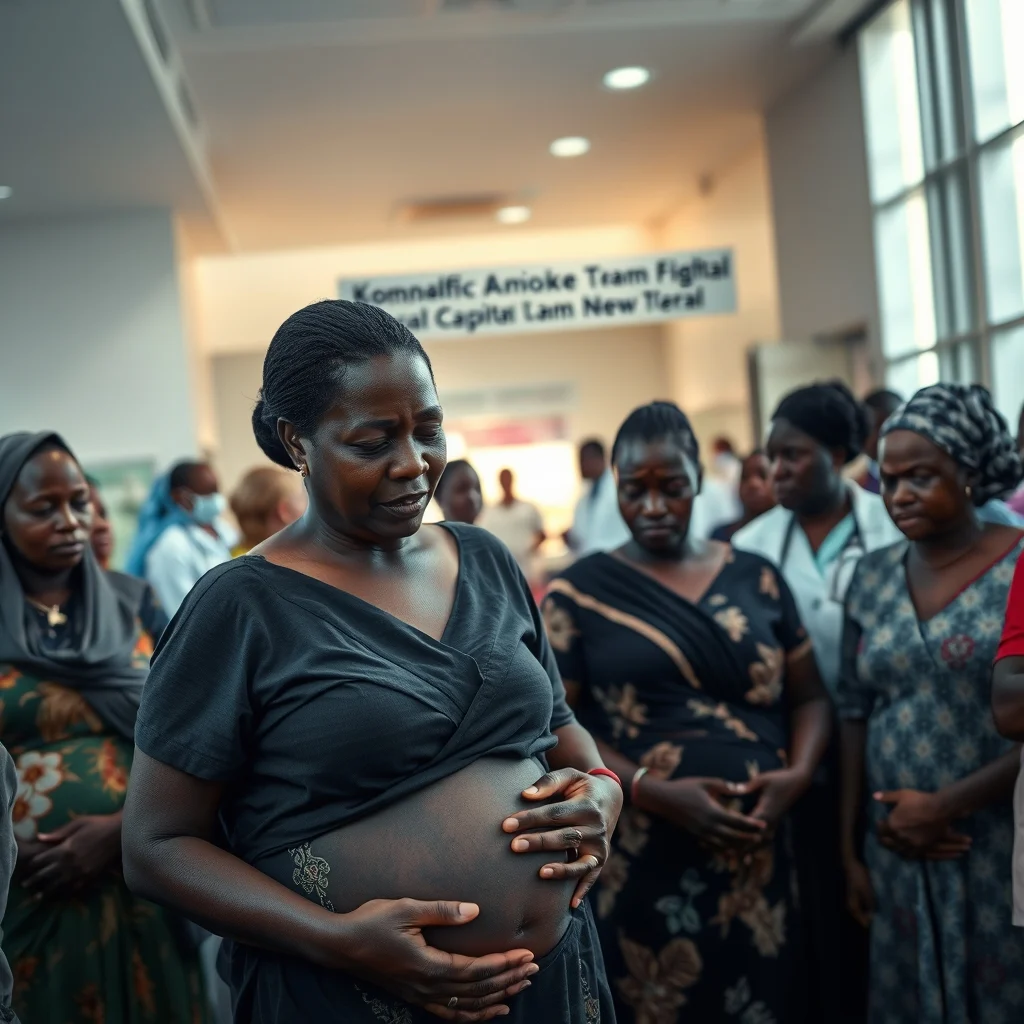
Ghana’s Ministry of Health, Parliament, and the United Nations Population Fund (UNFPA) are escalating efforts to eradicate obstetric fistula, a severe childbirth injury, following revelations that fewer than one-third of affected women received treatment over the past decade. New data indicates a significant gap between the 3,688 recorded cases between 2016 and 2025 and the 1,096 women who underwent reparative surgery during the same period.
A Growing Crisis Demands Urgent Attention
Obstetric fistula, characterized by the continuous leakage of urine or faeces, subjects women to profound social isolation, stigma, and lasting health complications. These stark figures emerged during a high-level delegation visit to Komfo Anokye Teaching Hospital (KATH) in Kumasi, coinciding with the International Day to End Obstetric Fistula. The visit aimed to evaluate current treatment, gather insights from survivors and healthcare professionals, and identify sustainable strategies to combat this escalating health challenge.
Wilfred Ochan, UNFPA Country Representative for Ghana, highlighted the persistent challenge, stating that approximately 845 new fistula cases emerge annually, while treatment capacity remains critically low. “All these shows that there’s still work for us to do to move women into care,” he remarked.
Ochan further elaborated on the scale of the problem, noting, “On average 845 women get fistula every year. If we look at 10 years back, there is a backlog because we are repairing only about 200 cases a year. There is an estimated backlog between 10,000 and 12,000.”
Root Causes and Emerging Concerns
Health authorities identify prolonged and obstructed labour, coupled with a lack of timely access to emergency obstetric care, as the primary drivers of obstetric fistula. An estimated 3,000 cases of such prolonged obstructed labour occur annually across Ghanaian communities.
Adding to the complexity, medical experts are observing an increasing number of fistula cases stemming from surgical complications. Officials report that up to 22 percent of cases currently managed at repair centres are linked to obstetric and gynaecological procedures. This trend underscores the critical need for enhanced surgical training and stringent quality assurance measures within the healthcare system.
A Multi-Sectoral Commitment to Solutions
In response to the crisis, the Ministry of Health is planning to establish dedicated obstetric fistula treatment centres nationwide. Deputy Minister for Health, Grace Ayensu-Danquah, announced plans to develop a specialized facility at KATH, envisioned as a hub for treatment, training, and research.
“As one of the things I have discussed with UNFPA is to acquire a standalone facility for fistula treatment,” Ayensu-Danquah stated. “The one at Yendi is showing progress. We would like something similar for Komfo Anokye so we can train, provide equipment and add more specialists.” A dedicated centre of excellence is expected to boost cure rates, minimize recurrences, and bolster specialist capacity across the country.
Parliamentary bodies have also pledged their commitment. Patricia Appiagyei, Chairperson of the Parliamentary Caucus on Population and Development, advocated for accelerated policy interventions and expanded specialist training, recommending a separate unit dedicated to fistula issues, including a training centre to increase the number of qualified surgeons.
Mark Kurt Nawaane, Chairman of the Health Committee, assured that Parliament would actively campaign for increased government support. “We have understood the situation. The Health Select Committee is going to champion this cause and press on the Executive to take this issue very seriously,” he vowed.
Immediate Interventions and Future Targets
As an immediate measure, UNFPA has committed funding to cover free surgical repair procedures for 200 women this year. However, experts estimate that Ghana must perform approximately 2,249 fistula repairs annually until 2030 to clear the existing backlog and achieve elimination targets.
Key recommendations for tackling the crisis include establishing a national fistula registry, expanding year-round surgical services, and improving access to treatment in underserved regions. Strengthening funding mechanisms and enhancing community-based case detection through the Community-based Health Planning and Services (CHPS) programme are also vital components.
Without immediate and sustained action, the number of women living with untreated obstetric fistula is projected to rise, underscoring the critical need for comprehensive and collaborative interventions.










Leave a Reply