
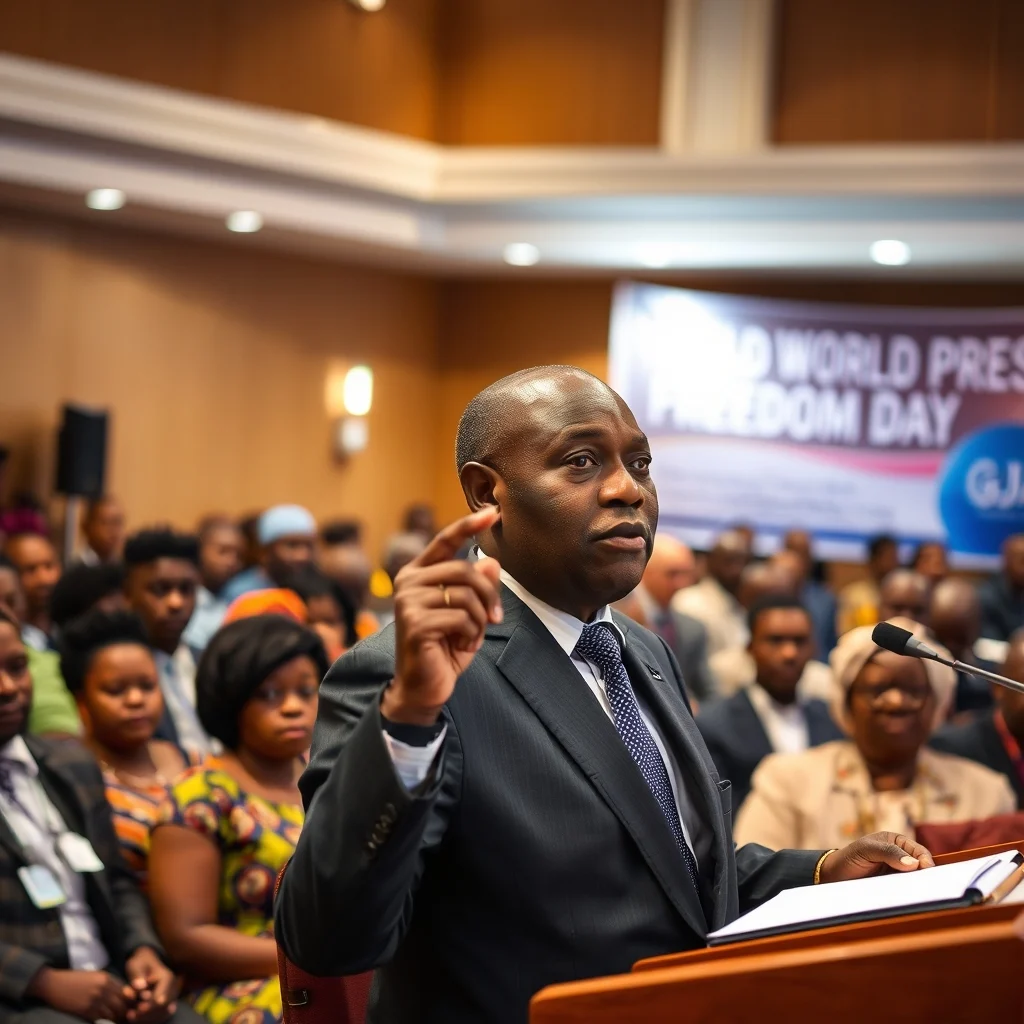
The Ghana Journalists Association (GJA) has raised serious concerns regarding the application of “false news” provisions within the Electronic Communications Act against journalists, warning that such actions threaten press freedom and constitutional rights. GJA President Albert Kwabena Dwumfour highlighted this trend at the Second World Press Freedom Day (WPFD) Honours Night in Accra on Saturday, an event attended by media professionals, policymakers, and civil society representatives.
Context of Legal Challenges
The GJA’s statement comes amid increasing instances where journalists have reportedly been questioned or charged by police under the Electronic Communications Act for alleged false publications. This practice, according to the GJA, fosters an environment of fear and encourages self-censorship among media practitioners, potentially stifling investigative reporting and public discourse.
Mr. Dwumfour emphasized that a thriving democracy requires journalists to operate without fear of intimidation or arbitrary arrest. He pointed out that specific sections of the Electronic Communications Act, 2008, and the Criminal Offences Act present significant hurdles to media freedom and warrant a review to align them with democratic principles.
Undermining Investigative Journalism
Beyond the direct application of “false news” laws, the GJA President also underscored the critical importance of protecting confidential sources. He warned that any erosion of this protection could severely cripple investigative journalism, a vital component of holding power accountable and informing the public.
“Once journalists lose the ability to protect their sources, investigative journalism itself becomes endangered,” Mr. Dwumfour stated. The GJA advocates for legal reforms that safeguard journalistic independence and ensure that laws are not weaponized to silence or harass reporters.
Call for Restraint and Reform
While acknowledging the state’s legitimate interest in investigating matters of public concern, the GJA stressed that such investigations must not infringe upon journalistic independence or the public’s fundamental right to access information. Mr. Dwumfour urged law enforcement agencies to exercise discretion and respect the rights of journalists as they carry out their duties.
The WPFD Honours Night also served as a platform to recognize institutions and individuals for their contributions to press freedom and national development. The Ghana News Agency, among others, received accolades, highlighting its long-standing commitment to disseminating credible news and supporting democratic governance through reliable information.
Implications and Future Outlook
The GJA’s strong stance signals a growing unease within Ghana’s media landscape about the potential for legal frameworks to be used as tools to suppress reporting. The association’s call for legal reform and restraint from law enforcement suggests a push towards greater clarity and protection for journalists.
Moving forward, it will be crucial to observe how legislative bodies and judicial systems respond to these concerns. The effectiveness of reforms aimed at balancing public interest with press freedom, and the adherence of law enforcement to calls for restraint, will significantly shape the future of journalism in Ghana and its role in the nation’s democratic journey. The international focus on World Press Freedom Day further amplifies the importance of these discussions for the global community.










Leave a Reply