
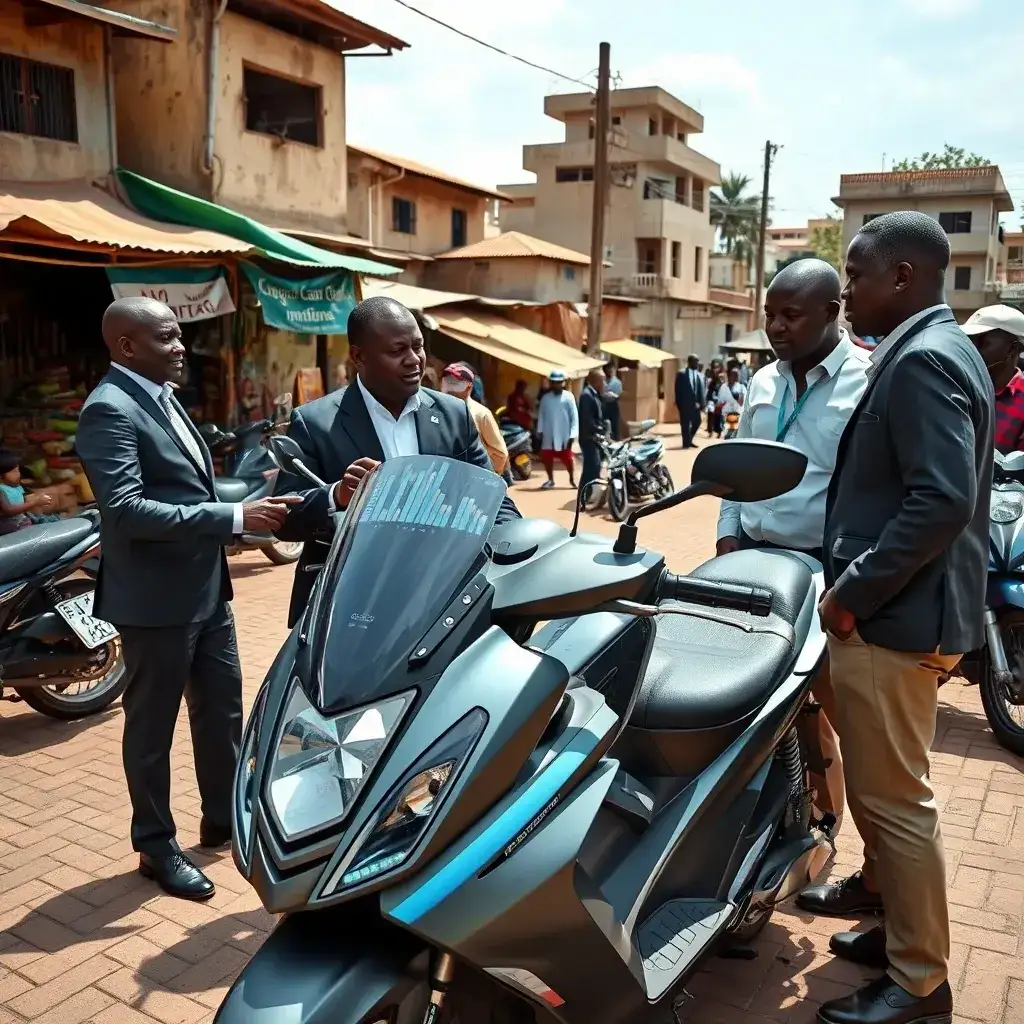
The District Assemblies Common Fund (DACF) and Wahu Mobility have launched a significant national electric mobility program, aiming to deploy 5,000 smart electric motorcycles across Ghana. The initiative, which began with a pilot phase distributing 280 eMotos nationwide, was announced at the Ghana-UK Investment Summit 2026 in London. This program seeks to enhance the operational efficiency and revenue collection capabilities of local government bodies.
Context: Addressing Mobility Challenges in Local Governance
Local government authorities in Ghana have long faced challenges with mobility, hindering their ability to conduct essential tasks like revenue collection and service delivery effectively. The current reliance on aging, fuel-powered motorcycles contributes to high maintenance costs and operational inefficiencies. This new program directly addresses these issues by introducing a sustainable and technologically advanced alternative.
The initiative operationalizes a Memorandum of Understanding between the Government of Ghana and Wahu Mobility, a Ghanaian manufacturer specializing in smart electric two-wheelers. Funding for the initial phase comes from the DACF Grant Mobilisation Programme. This phase will ensure that each of Ghana’s 261 Metropolitan, Municipal and District Assemblies (MMDAs), along with the 16 Regional Coordinating Councils, receives at least one electric motorcycle.
Main Body: Enhancing Service Delivery and Revenue Collection
The electric motorcycles will be instrumental in enabling district officers to perform a range of crucial duties. These include conducting property rate and business permit assessments, collecting market tolls, supervising sanitation activities, and carrying out environmental health inspections. Furthermore, the eMotos will support agricultural extension services, facilitate social welfare visits, and improve response times to emergencies.
By integrating telematics technology, these smart electric motorcycles will transmit real-time data, including GPS location, distance traveled, energy consumption, and vehicle uptime. This data will be accessible through a central dashboard, providing district leaders with direct insights into field activities and their impact on revenue mobilization and service delivery performance.
Potential Cost Savings and Environmental Benefits
Projected figures indicate substantial annual savings for each district. It is estimated that each electric motorcycle could save between GHS 9,000 and GHS 12,000 in fuel and maintenance costs compared to traditional petrol-powered models. This financial benefit is expected to significantly boost internally generated funds (IGF).
Beyond economic advantages, the program is poised to contribute to Ghana’s environmental sustainability goals. Replacing a single petrol-powered motorcycle with an electric one is projected to prevent approximately 1.8 tonnes of carbon dioxide emissions annually. The monitoring systems are designed to align with Article 6.2 of the Paris Agreement, potentially allowing Ghana to generate revenue from verified carbon emission reductions.
Expert Perspectives and Data Points
Harry Yamson, Administrator of the District Assemblies Common Fund, highlighted the program’s broader significance. He described it as more than just a vehicle deployment initiative, emphasizing its role as critical infrastructure for local government operations. “This project supports Ghana’s transition towards cleaner energy and domestic industrial development,” Yamson stated.
Wahu Mobility’s involvement underscores a commitment to local manufacturing. The company operates Ghana’s first completely knocked down assembly plant for electric two-wheelers, fostering job creation and skills development within the country. This local capacity is seen as crucial for the program’s long-term success and scalability.
Implications: Paving the Way for a Greener Future
The success of this pilot program could position Ghana as a leader in Africa for leveraging district-level fleet electrification within a compliance carbon market framework. Potential revenues from carbon credits could further benefit participating districts, creating a sustainable funding loop.
Wahu Mobility envisions this pilot as the first step in a comprehensive strategy to decarbonize local government operations nationwide. Future phases are planned to include the development of charging infrastructure and the introduction of financial instruments to attract private investment for expanding electric vehicle operations.
The data generated from the pilot is expected to be crucial for securing carbon credit opportunities and establishing long-term revenue streams. By providing direct experience with the technology to every district, stakeholders anticipate generating the necessary evidence and support for a nationwide rollout. If the pilot proves successful in delivering its projected operational and financial benefits, it could trigger a transformative shift in local government mobility and service delivery across Ghana.










Leave a Reply