
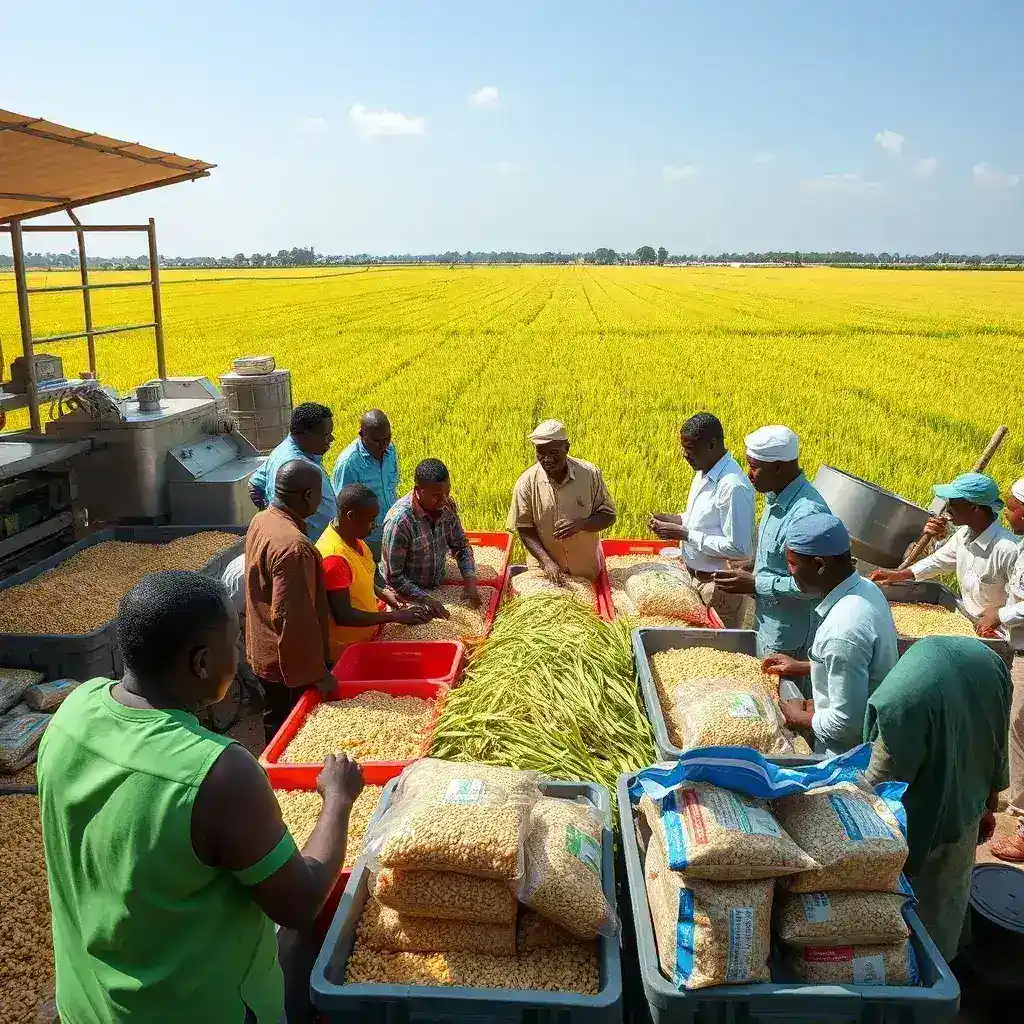
The Government of Ghana is implementing a significant policy shift, directly tying rice import permits to investments in domestic rice farming and milling operations. This move, announced by the Minister of Agriculture, Eric Opoku, aims to accelerate the nation’s progress toward rice self-sufficiency and reduce its substantial import bill, a strategy met with strong approval at the West Africa Rice Investment Roundtable in Accra.
Context: Ghana’s Rice Deficit
Ghana has long grappled with a significant gap between its rice consumption and domestic production. Last year, the nation consumed approximately 1.71 million tonnes of rice, while local production only reached about 960,000 tonnes. This deficit of nearly 751,000 tonnes necessitated imports costing around $320 million, placing a considerable strain on the country’s foreign exchange reserves.
While domestic output has seen an increase, rising from about 45 percent self-sufficiency at the start of the decade to the current 56 percent, the pace of growth is deemed insufficient by the government to achieve full self-reliance. This new policy is designed to invigorate local production and bridge the remaining gap.
New Import Regime Explained
Under the forthcoming import quota policy, rice importers will be required to demonstrate verifiable partnerships with Ghanaian rice producers before they can secure permits to import rice. This means new import applications must include evidence of procurement deals or investment arrangements with local farmers and millers.
Minister Opoku emphasized that the policy is not intended to penalize consumers or create shortages. “We are not raising tariffs that punish consumers. We are not imposing bans that create shortages,” he stated at the roundtable event, which was co-organized with the World Bank, ECOWAS Commission, and the African Development Bank. Instead, the objective is to redirect the economic value generated by rice imports towards building Ghana’s domestic productive capacity.
Economic and Social Benefits Projected
Government modelling indicates substantial economic advantages from achieving 100 percent rice self-sufficiency within the next decade. Projections suggest potential savings of roughly $2.1 billion in cumulative foreign exchange and the attraction of over $400 million in private-sector investment.
Furthermore, the policy is expected to generate more than 200,000 jobs across various sectors, including farming, processing, logistics, and related services. Minister Opoku highlighted the rice sector as the country’s “single largest untapped agribusiness opportunity.”
Leveraging Technology for Growth
Complementing the import reforms, the Ghanaian government is employing advanced satellite-based geospatial mapping technology. Developed with support from the World Bank and NASA Harvest programme experts, this technology will identify and classify land suitable for rice cultivation nationwide.
This data-driven approach aims to provide investors with precise, location-specific information on production opportunities and irrigation potential. By combining this intelligence with the guaranteed market access provided by the quota regime, the government seeks to reduce investment risks and unlock capital for large-scale expansion in the rice sector.
Broader Agricultural Strategy
The new import policy is an integral part of the broader Feed Ghana Programme. This comprehensive initiative includes targeted investments in crucial areas such as irrigation systems, agricultural mechanization, improved seed varieties, and post-harvest infrastructure to enhance value addition.
The program also intensifies efforts to combat rice smuggling and promotes locally produced rice through campaigns like the “Buy Ghana First” initiative. The government plans a progressive reduction in the share of imports over the next decade, with each decrease directly linked to verified increases in local production, ensuring a stable supply chain.
Looking Ahead
The success of this policy hinges on effective implementation and sustained investment in domestic production capacity. Stakeholders will be watching closely to see how quickly and effectively importers can forge partnerships and how successfully the government can monitor and verify increases in local output. The integration of geospatial data with market access guarantees is a novel approach that could set a precedent for other agricultural sectors in Ghana and across West Africa. The coming years will reveal whether this ambitious plan can truly transform Ghana’s rice economy and achieve its self-sufficiency goals.










Leave a Reply