
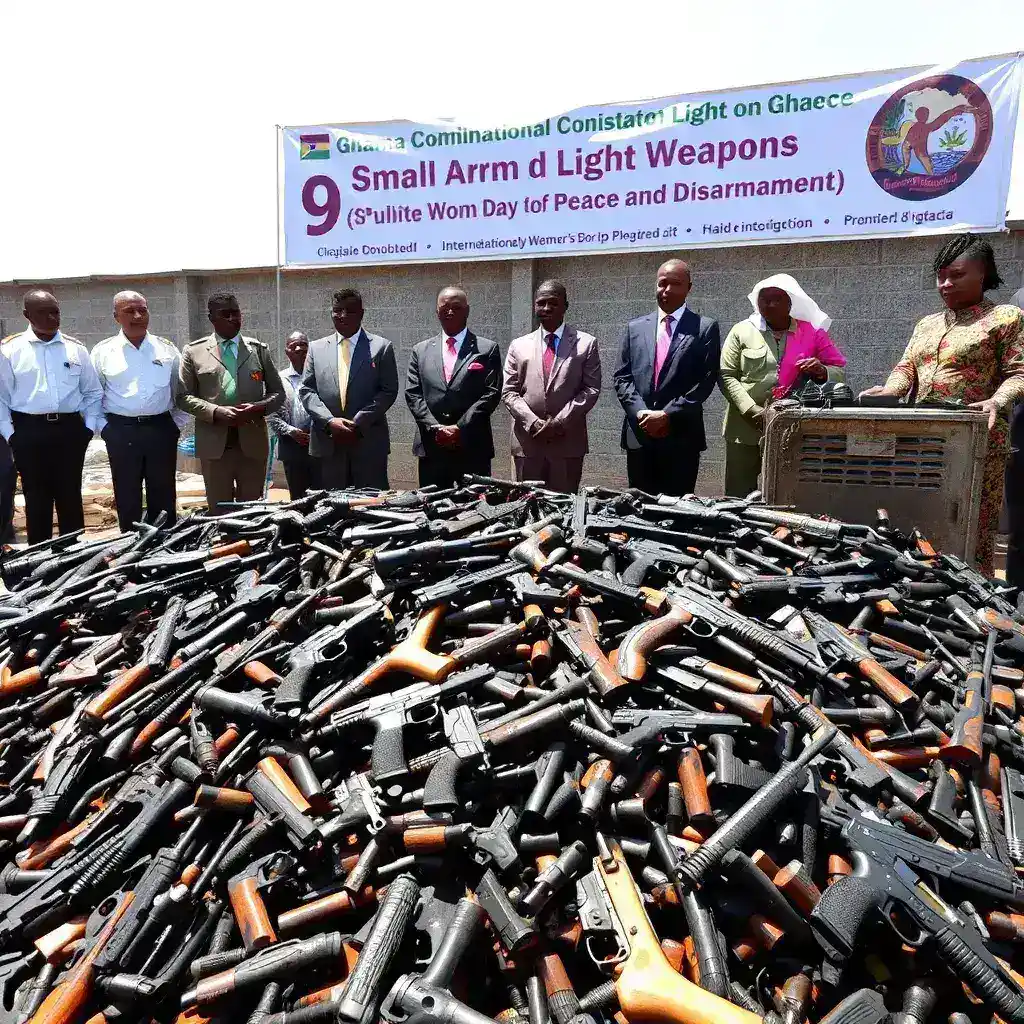
Ghana is set to publicly destroy more than 4,000 illegal weapons collected during a recent nationwide arms amnesty exercise. The significant haul of firearms, scheduled for destruction on July 25 and July 29, underscores the nation’s commitment to enhancing security and promoting transparency in arms control, while also drawing attention to the crucial role of women in peacebuilding.
Context: Curbing Illicit Arms Circulation
The destruction of these weapons is part of a broader, ongoing effort by Ghana to reduce the circulation of illicit small arms and light weapons. Such weapons are often linked to criminal activities, political instability, and the escalation of conflicts. The National Commission on Small Arms and Light Weapons has been instrumental in coordinating the amnesty program and securing the collected firearms.
An arms amnesty allows individuals in possession of illegal weapons to surrender them to authorities without facing prosecution. These exercises are crucial for removing dangerous items from circulation and are often accompanied by public awareness campaigns to encourage participation. The success of such programs is often measured by the quantity and type of weapons surrendered.
Nationwide Amnesty Yields Significant Haul
The nationwide arms amnesty exercise successfully gathered over 4,000 illegal weapons, demonstrating a growing level of public trust and cooperation with national security initiatives. The National Commission on Small Arms and Light Weapons is meticulously documenting and securing each item before its final disposal.
Adam Bona, Executive Director of the Commission, stated that the agency is working closely with security services to ensure the process adheres to international standards for weapon disposal. “The scale of surrendered arms reflects growing public cooperation with efforts to curb the spread of illegal weapons in the country,” Bona remarked.
Public Destruction and Accountability
The public destruction exercise aims to bolster accountability and public confidence in the government’s arms control measures. The presence of high-profile officials, including an invitation to the Presidency, signifies the importance the government places on this initiative.
The planned destruction dates are July 25 and July 29. The open nature of the event is intended to assure citizens that the recovered weapons are being verifiably destroyed, thereby reinforcing national security and demonstrating a commitment to a safer society.
Integrating Peacebuilding and Women’s Empowerment
Beyond the physical destruction of weapons, the event also serves as a platform to highlight the critical role of women in peacebuilding and conflict prevention. The Minister for Gender, Children and Social Protection, Naa Momo Lartey, emphasized the need for greater inclusion of women in decision-making processes concerning peace and security.
Minister Lartey referenced United Nations Security Council Resolution 1325, which advocates for the increased participation of women in peace and security frameworks. She underscored that sustainable peace is unattainable without their active involvement and highlighted the invaluable contributions women make at the community level in de-escalating tensions and restoring trust.
The Minister called for enhanced collaboration between government institutions and development partners to expand public education on peacebuilding, particularly in grassroots communities. She urged women and girls to actively promote peace within their communities, asserting that their inclusive participation is vital for maintaining national stability.
Implications and Future Outlook
The successful collection and impending destruction of over 4,000 illegal weapons represent a significant step forward for Ghana’s national security strategy. It signals a positive trend in public engagement with disarmament efforts and contributes to a safer environment by removing instruments of violence.
The concurrent focus on women’s roles in peacebuilding aligns with global efforts to achieve more inclusive and sustainable peace. This integrated approach suggests a more holistic strategy to national security, recognizing that societal stability is built not only through disarmament but also through the empowerment and inclusion of all citizens, especially women, in peace processes.
Moving forward, the success of this amnesty and destruction exercise will likely encourage similar initiatives. Observers will watch to see if the momentum gained translates into sustained public cooperation and increased integration of women into formal peace and security dialogues at all levels of governance.










Leave a Reply