
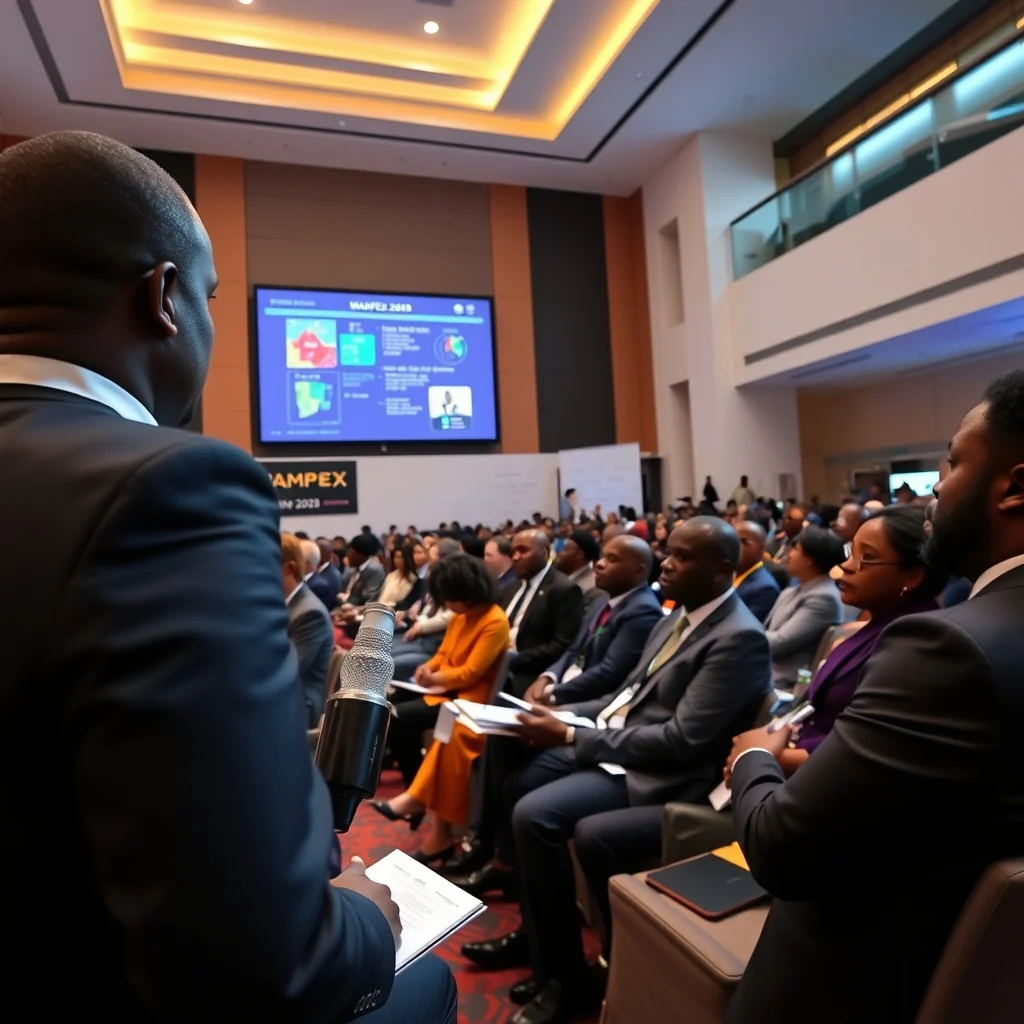
Accra, Ghana – Minister for Lands and Natural Resources, Emmanuel Armah Kofi Buah, has moved to quell investor anxieties regarding the nation’s mining sector, assuring stakeholders of Ghana’s steadfast commitment to a stable, transparent, and legally certain investment climate. Speaking at the West African Mining and Power Exhibition (WAMPEX) 2026 in Accra, Buah directly addressed concerns about nationalization and lease renewal debates, emphasizing the government’s focus on responsible investment and collaborative development.
Context of Investor Confidence
Ghana’s mining sector, a significant contributor to its economy, is currently navigating a period of heightened scrutiny. Discussions surrounding the renewal of existing mining leases and evolving global expectations for environmental, social, and governance (ESG) standards have created a degree of uncertainty for both current and prospective investors.
The Minister acknowledged that the landscape is shifting, with communities demanding greater accountability and shared benefits, while investors increasingly favor jurisdictions that demonstrate stability and responsible governance. He framed adherence to ESG principles not as a burden, but as a competitive advantage for partners and the nation.
Government’s Stance on Stability and Transparency
In his address, Minister Buah explicitly stated, “Ghana remains committed to providing a stable, predictable fiscal and legal certainty and transparent environment for investment.” He sought to dispel rumors and speculation, urging industry players to disregard what he termed “noise,” and reinforcing that his statements represent official government policy.
Crucially, the Minister categorically rejected any notion of a nationalization agenda. Instead, he advocated for a partnership model where investors achieve good returns while simultaneously contributing to local empowerment, value addition, and skill development. “It cannot be nationalism of minds to investment,” Buah declared, instead calling for collaboration in building value-added industries.
Regional Perspectives on Value Addition
Echoing Ghana’s sentiments, Nigeria’s Minister of Solid Minerals Development, who delivered the keynote address, highlighted the untapped potential within West Africa’s rich mineral endowment. He pointed out that despite possessing valuable resources like gold, lithium, and rare earth elements, the region has historically exported raw materials, with value addition occurring elsewhere.
The Nigerian Minister emphasized that the global transition to clean energy presents a unique opportunity for West African nations to integrate into global value chains. This can be achieved through responsible mining practices, local beneficiation, and strategic energy development, shifting the region’s role from mere supplier to active participant.
Investor Expectations and Enabling Environments
Both ministers underscored the importance of creating enabling environments to attract long-term investment. Investors are actively seeking jurisdictions that offer stability, predictability, transparency, and institutional credibility. This requires governments to strengthen regulatory frameworks, promote responsible mining, and invest in reliable infrastructure, particularly power.
The WAMPEX 2026 conference itself, themed “How can responsible mining and power accelerate West Africa’s sustainable development?”, reflects these critical discussions. Sessions are designed to tackle key issues including fiscal regimes, critical mineral strategies, mine-to-market traceability, community development, and financing within the mining and energy sectors.
Implications and Future Outlook
Minister Buah’s clear articulation of government policy aims to provide the necessary assurance for continued investment in Ghana’s mining sector. The emphasis on partnership and value addition suggests a strategic move towards industrialization, leveraging mineral wealth for broader economic transformation.
Moving forward, the focus will be on the practical implementation of these principles. Investors and industry stakeholders will be closely watching how Ghana and other West African nations translate these commitments into concrete policies and actions that foster responsible mining, enhance local beneficiation, and ensure that mineral resources contribute meaningfully to sustainable development and economic diversification. The success of these efforts will be key to unlocking the region’s full potential in the global energy transition and beyond.










Leave a Reply