
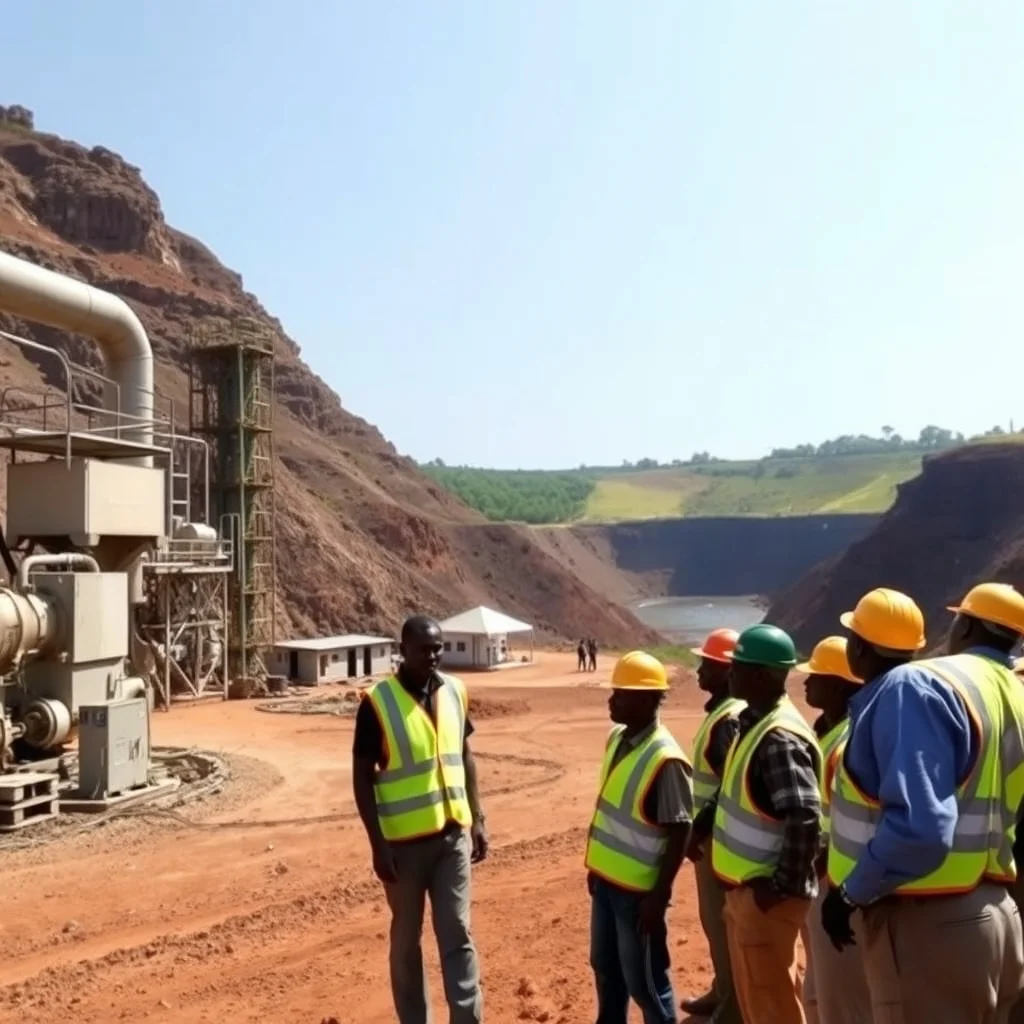
The Ministry of Lands and Natural Resources is actively transitioning illegal mining operations in Ghana’s Ellembelle District of the Western Region to a structured Responsible Cooperative Mining and Skills Development Programme. This initiative, launched recently, aims to curb the destructive environmental and social impacts of illicit mining by offering a regulated alternative for local youth and communities.
Context of Illegal Mining in Ellembelle
The Western Region is a significant hub for gold deposits in Ghana, attracting both licensed mining companies and a pervasive network of illegal miners. Historically, these illicit activities have led to widespread land degradation and pollution of vital water bodies. In areas like Nkroful, Anwia, and Bokazo alone, approximately 800 acres of land have been severely damaged due to unregulated mining practices.
Illegal mining, often referred to as ‘galamsey,’ has been a persistent challenge for the Ghanaian government, prompting various interventions over the years. The environmental toll includes deforestation, soil erosion, and the contamination of rivers with mercury and cyanide, affecting both ecosystems and human health.
The Cooperative Mining Initiative Takes Shape
The government’s new strategy involves not only reclaiming illegally mined land but also providing sustainable livelihood options for those involved in the sector. The Responsible Cooperative Mining and Skills Development Programme (RCOMSDEP) is central to this effort, aiming to professionalize small-scale mining and ensure adherence to safety and environmental standards.
A key site for this transition is an abandoned pit belonging to Adamus Mining in Anwiah. This pit, which had accumulated significant volumes of water since its closure, is now being dewatered with the support of the Ministry and community efforts. Machinery has been deployed to expedite this crucial dewatering process.
Francis Awuah, the Assembly Member for the Anwian Electoral Area, confirmed that sponsors and stakeholders are actively involved, pushing for the swift completion of the dewatering. “Machines deployed to dewater the mine pit are still at work and we will complete the dewatering very soon,” he stated.
Developing Infrastructure and Skills
Following the dewatering phase, the site is slated for the installation of essential facilities. These include a clinic to serve the health needs of the miners and the surrounding community, administrative offices, and changing rooms to improve working conditions.
Crucially, the miners who are expected to operate at the Anwiah Teleko Bokazo Responsible Cooperative Mining site have already undergone training. The University of Mines and Technology in Tarkwa provided the necessary skills development, ensuring that participants are equipped for responsible mining practices.
Ensuring Safety and Sustainability
The Public Relations Officer for RCOMSDEP, Johnson Afful, emphasized the stringent safety protocols that will be enforced before operations commence. “Since we ensure all safety measures are deployed in the mine, we will check if all things are standard before operations,” Afful explained, highlighting a commitment to preventing future accidents and environmental harm.
The local community has reportedly embraced the standards set by RCOMSDEP, demonstrating a willingness to collaborate and meet the requirements for a sustainable mining operation. This community buy-in is seen as vital for the long-term success of the cooperative model.
Government Support and Future Outlook
Minister for Lands and Natural Resources, Emmanuel Armah-Kofi Buah, reaffirmed the government’s dedication to making the cooperative site fully functional. He announced plans to accelerate the dewatering process and provide crucial gold processing equipment to support the cooperative.
“We know that you are close to finishing the pumping, we are going to fast track it. The good news is that we are bringing the first set of processing machines to Ellembelle to support the cooperative mining program,” the Minister stated. This commitment signifies a direct investment in the cooperative’s operational capacity and economic viability.
Implications for the Region and Beyond
This shift from unregulated to regulated mining in Ellembelle has significant implications. It offers a potential pathway to reduce environmental degradation, protect water resources, and decrease the social conflicts often associated with illegal mining. For the youth in the district, it presents an opportunity for formal employment and skills enhancement in a sector that has traditionally been informal and hazardous.
The success of the Anwiah Teleko Bokazo cooperative could serve as a model for other mining communities in Ghana facing similar challenges. The government’s commitment to providing processing equipment suggests a focus on adding value locally and improving the economic returns for the miners. Observers will be watching closely to see if this cooperative model can effectively balance resource extraction with environmental stewardship and community well-being.










Leave a Reply