
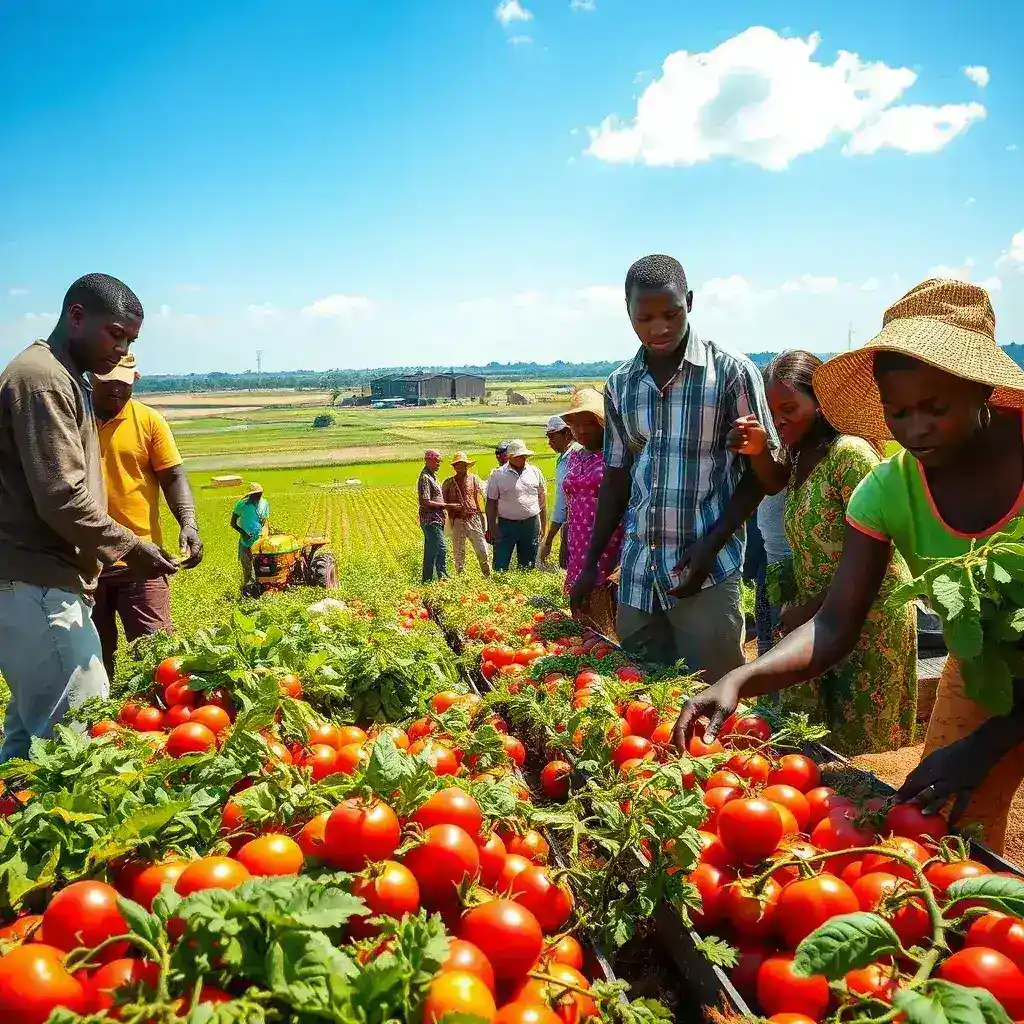
Ghana’s Ministry of Food and Agriculture has finalized a significant $1.5 billion Ghana AgriConnect Compact with a consortium of development partners including the World Bank, the International Fund for Agricultural Development (IFAD), and the International Finance Corporation (IFC). Signed recently, this landmark agreement aims to revolutionize the nation’s agricultural sector by creating over 2.6 million jobs within the next five years, enhancing food security, and bolstering the agribusiness industry.
Transforming Ghana’s Agricultural Landscape
The Ghana AgriConnect Compact marks a pivotal moment in the government’s strategy to modernize agriculture and establish it as a primary engine for economic expansion. Minister for Food and Agriculture, Eric Opoku, hailed the compact as a crucial step towards achieving these ambitious goals.
This initiative is designed to unlock substantial opportunities for farmers, agribusinesses, and particularly the youth. It directly addresses Ghana’s ongoing efforts to reduce its reliance on imported food products.
“This compact represents a new chapter for Ghana’s agriculture sector. It brings together strategic partners and resources needed to transform agriculture into a major source of jobs, income, and economic growth,” stated Minister Opoku. He emphasized that the program aligns with the government’s overarching vision of cultivating a resilient and competitive agricultural sector capable of meeting domestic food demands and expanding export markets.
Private Sector and Smallholder Farmer Focus
The success of the AgriConnect Compact hinges significantly on the active participation of the private sector, according to Nathalie Kouassi Akon, Division Director for West Africa at the International Finance Corporation. Akon highlighted that attracting private investment is fundamental to generating sustainable employment and building robust agricultural value chains across the nation.
“Agriculture presents enormous opportunities for investment and job creation. Through this partnership, we aim to help attract the capital and expertise needed to unlock the sector’s full potential,” she remarked.
Complementing this, Lakshmi Moola, IFAD Country Director for Ghana, underscored the imperative of keeping smallholder farmers at the heart of this transformation. Moola noted that the compact provides a vital avenue to improve livelihoods, strengthen rural economies, and enhance resilience against climate-related challenges.
“We are committed to supporting inclusive agricultural development that empowers farmers, improves incomes, and creates opportunities for rural communities,” Moola affirmed.
Key Investment Areas and Expected Outcomes
The $1.5 billion compact is earmarked for strategic investments spanning critical areas of the agricultural value chain. These include enhancing agricultural production, improving processing and storage facilities, optimizing logistics, and expanding market access for agricultural produce.
A significant component of the initiative involves promoting and integrating climate-smart farming practices. This focus is crucial for building a sustainable and resilient agricultural system capable of withstanding environmental pressures.
Officials anticipate that the Ghana AgriConnect Compact will serve as a powerful catalyst for broad-based economic growth. The expectation is that agriculture will transition into a leading sector for employment and prosperity over the next five years.
Looking Ahead
The successful implementation of the Ghana AgriConnect Compact will be closely watched, particularly its impact on job creation, food security, and the overall economic diversification of the nation. Key indicators to monitor will include the volume of private sector investment mobilized, the adoption rate of climate-smart agricultural practices, and the tangible improvements in the livelihoods of smallholder farmers. The coming years will reveal whether this substantial investment can truly transform Ghana’s agricultural potential into sustained economic development and widespread prosperity.










Leave a Reply