
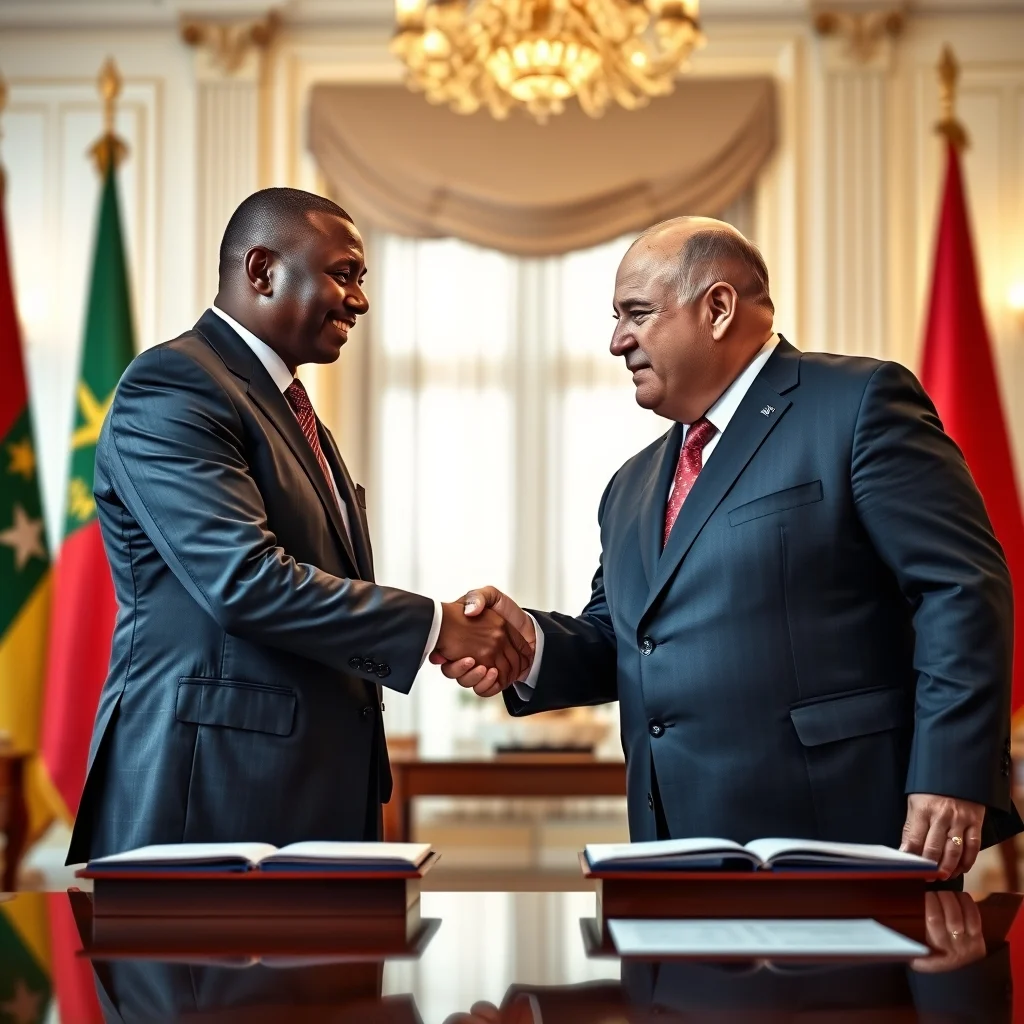
President John Dramani Mahama is in Minsk, Belarus, for high-level bilateral talks with Belarusian President Aleksandr Grigorievich Lukashenko aimed at strengthening economic, agricultural, and technical cooperation between the two nations. The meeting, held at the Presidential Palace on Monday, June 8, is a key component of Mahama’s five-day official visit and is expected to culminate in the signing of four Memoranda of Understanding (MoUs).
Context of the Visit
President Mahama’s visit to Belarus comes at the invitation of President Lukashenko. It signifies Ghana’s strategic effort to forge new international partnerships and attract investment to drive its economic transformation and enhance food security. The engagement underscores a broader Ghanaian policy of diversifying international economic relationships to support national development goals.
Expanding Cooperation in Key Sectors
The core of the discussions between the two presidents and their delegations focuses on expanding collaboration in critical sectors. These include agriculture, where Ghana seeks to modernize its practices and improve productivity. Trade and investment are also high on the agenda, alongside technology transfer and industrial development, areas where Belarus has demonstrated significant expertise.
Following the presidential talks, a Ghana-Belarus Business Forum is scheduled to take place at the Presidential Hotel. This forum will bring together government officials and private sector representatives from both countries. The objective is to identify concrete opportunities for commercial partnerships and explore avenues for mutual investment.
Ghanaian Delegation and Objectives
The Ghanaian delegation accompanying President Mahama is comprised of key figures from relevant government agencies and the private sector. This includes representatives from the Ghana Export Promotion Authority (GEPA), the Ministry of Food and Agriculture, and the Ghana Investment Promotion Centre (GIPC). Their presence highlights the practical, results-oriented nature of the visit.
Officials stated that the visit is designed to pinpoint specific areas where collaboration can directly support Ghana’s agricultural modernization agenda and its broader industrial growth strategy. This focus on practical application aims to ensure tangible benefits from the diplomatic engagement.
Pre-Visit Engagements and Observations
Prior to the official talks, President Mahama engaged in site visits to observe Belarusian advancements firsthand. He toured Savushkin Product, a major agro-processing company, to examine its modern food production and processing systems. Additionally, he visited the Belagro Agricultural Exhibition, gaining exposure to a wide array of agricultural machinery, mechanization equipment, and food processing technologies.
These observations are intended to inform the discussions and identify best practices that can be adapted for Ghana’s agricultural sector. The emphasis on mechanization and advanced processing techniques aligns with Ghana’s goal of increasing efficiency and value addition in its agricultural value chain.
Significance of the MoUs
The anticipated signing of four MoUs is poised to mark a substantial advancement in the diplomatic and economic relationship between Ghana and Belarus. These agreements are expected to formalize cooperation frameworks and lay the groundwork for future joint ventures and exchanges. The MoUs will likely cover specific initiatives in the discussed sectors, translating the goodwill from the presidential meeting into actionable projects.
Implications and Future Outlook
This visit represents a significant step for Ghana in its pursuit of international partnerships for economic development. The focus on agriculture and industrialization signals a clear strategy to leverage external expertise and investment for domestic growth. For Belarusian businesses, it offers an entry point into the growing West African market. The success of these talks and the subsequent implementation of the MoUs will be crucial in determining the long-term impact on Ghana’s economy, particularly in boosting agricultural output and industrial capacity. Observers will be watching closely to see how these agreements translate into on-the-ground projects and economic benefits for Ghana.










Leave a Reply