
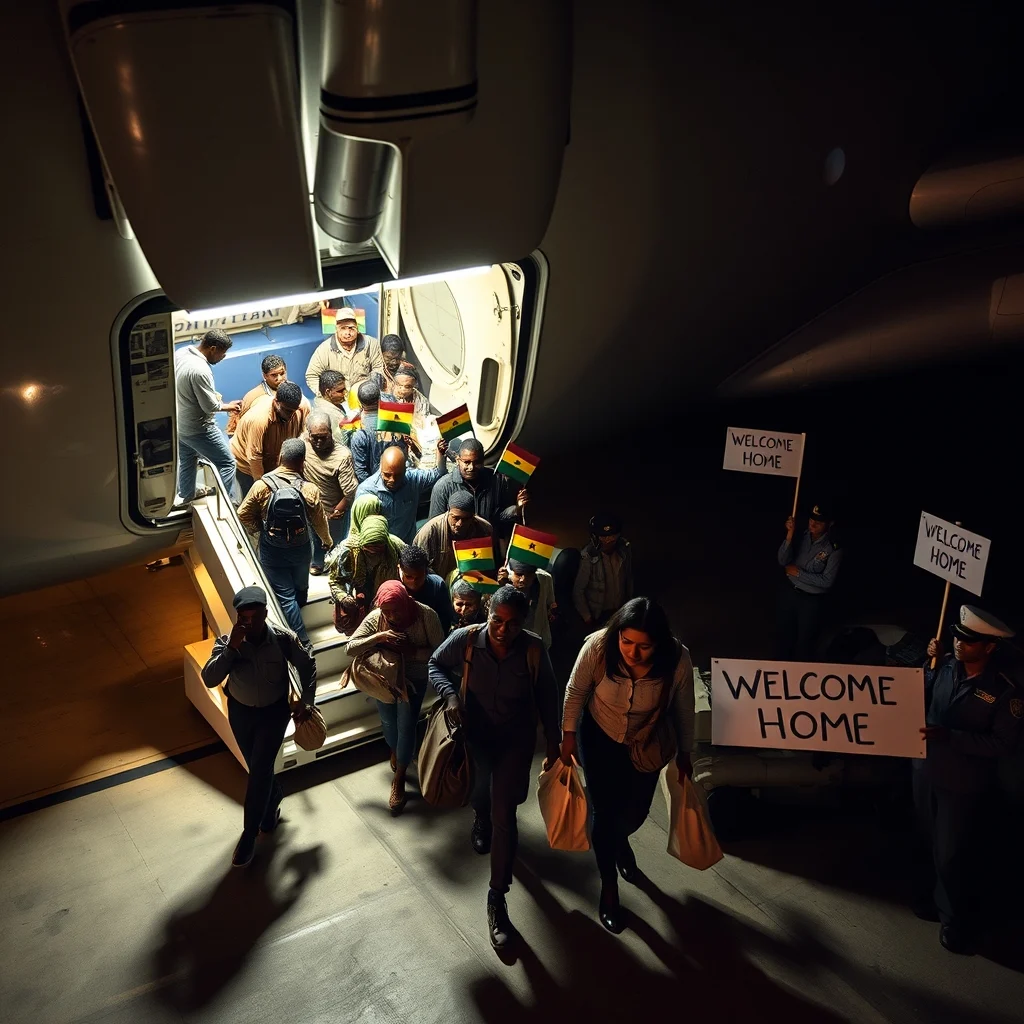
Ghana and South Africa are locked in an escalating diplomatic dispute over the repatriation of Ghanaian citizens amidst rising xenophobia in South Africa, revealing significant cracks in the ideal of Pan-African solidarity. The public exchange, which began on social media platform X, intensified after Ghana’s embassy shared video footage of evacuees. South African Foreign Minister Ronald Lamola criticized Ghana’s actions, citing “incomplete information and outright misinformation devoid of any diplomatic decorum,” while Ghana’s Foreign Minister Samuel Okudzeto Ablakwa announced legal action to recover assets for displaced citizens.
Context of Diplomatic Strain
The friction stems from ongoing anti-immigrant sentiment and protests in South Africa, fueled by a high unemployment rate exceeding 30 percent. Pretoria views Ghana’s public narrative management and transparency regarding the repatriations as an attempt to deflect from its own domestic security failures. South African officials argue that such high-profile repatriation campaigns oversimplify complex migration realities and can exacerbate local tensions.
Ghana’s Shift to Economic Accountability
Ghana’s strategy has evolved from immediate humanitarian relief to demanding economic accountability. Foreign Minister Ablakwa announced a state-led asset recovery campaign upon the arrival of 345 evacuees in Accra on June 6, 2026. He pledged to activate legal processes to ensure compensation for properties and life savings lost by Ghanaian traders who had invested for decades in South Africa.
The National Disaster Management Organisation (NADMO) and the Ghana Immigration Service (GIS) are compiling a detailed dossier of losses. This initiative aims to hold South Africa liable under international law for failing to protect foreign assets. Experts caution that securing financial reparations will be challenging due to legal hurdles like proving state negligence and navigating sovereign immunity doctrines.
Logistical Sovereignty and Regional Inaction
The emergency airlift highlights the severity of security issues in South African urban centers, prompting over 1,500 Ghanaians to register for repatriation. Following an initial flight on May 27, subsequent flights on June 6 and 7 brought the total number of evacuated citizens to approximately 1,000. Minister Ablakwa assured that “No Ghanaian has been abandoned in harm’s way,” emphasizing the administration’s commitment to defending citizens’ rights.
This swift action serves as an implicit critique of regional security mechanisms, which are often perceived as slow to respond during humanitarian crises. Ghana’s decisive intervention contrasts with the measured responses of other affected nations, such as Mozambique, Nigeria, and Malawi.
Operational Excellence and Asymmetrical Crisis Response
Ghana’s rapid repatriation strategy has set a new benchmark for crisis management across Africa. Accra has positioned its response as a demonstration of active sovereignty, contrasting with perceived administrative delays in other capitals. Minister Ablakwa noted that several foreign ministers have sought consultation on Ghana’s successful approach.
This operational capability, which bypasses typical logistical bottlenecks, has shifted diplomatic influence, positioning Ghana as a model for crisis response.
Corporate Mobilization and Mitigation of Remittance Shocks
To counter the economic impact of lost diaspora remittances, Ghana has established a public-private partnership for the reintegration of returnees. Major corporations are collaborating with the state to absorb returnees into the domestic job market.
Telecom companies Telecel and AirtelTigo provided essential services like SIM cards, transport stipends, and trauma counseling. Industrialist Ibrahim Mahama’s Engineers and Planners committed 100 jobs, with approximately 200 job openings secured through this corporate alignment. Minister Ablakwa highlighted the significant corporate support, stating that CEOs are stepping forward to help integrate those who lost businesses and assets.
Reframing the Migrant Narrative
Ghana’s government is actively working to reframe the socio-political identity of returnees, countering hostile narratives that label foreign workers as troublemakers or criminals. Minister Ablakwa reassured evacuees that they are considered “treasures” with valuable contributions to offer.
The government is leveraging immigration data to highlight domestic market opportunities, emphasizing that South African citizens themselves migrate to Ghana for business. Ablakwa pointed out that over 10,000 South Africans have visited Ghana, investing and establishing businesses, thereby challenging the perception of Ghana as a “second-rated country.” This ideological shift aims to transform an international migration crisis into domestic economic momentum.
Continental Fallout and the AfCFTA Agenda
This diplomatic rift directly impacts the African Continental Free Trade Area (AfCFTA) initiative. Analysts note that disputes between major economic powers over migration signal failures in implementing broader protocols for the free movement of people. The success of trade liberalization is seen as contingent on ensuring the safety of cross-border traders and their investments.
If regional leaders resort to diplomatic litigation over coordinated policy, the ambition of a unified African market risks stagnation due to recurring security breakdowns.
Towards Resolving the Continental Dilemma
The diplomatic standoff underscores systemic weaknesses in continental migration frameworks. Ghana’s focus on protecting citizens’ economic investments and South Africa’s management of internal economic anxieties highlight the complex challenges. Moving beyond this conflict will require structural compromises and addressing the root economic causes of xenophobia to prevent future regional crises.





Leave a Reply