
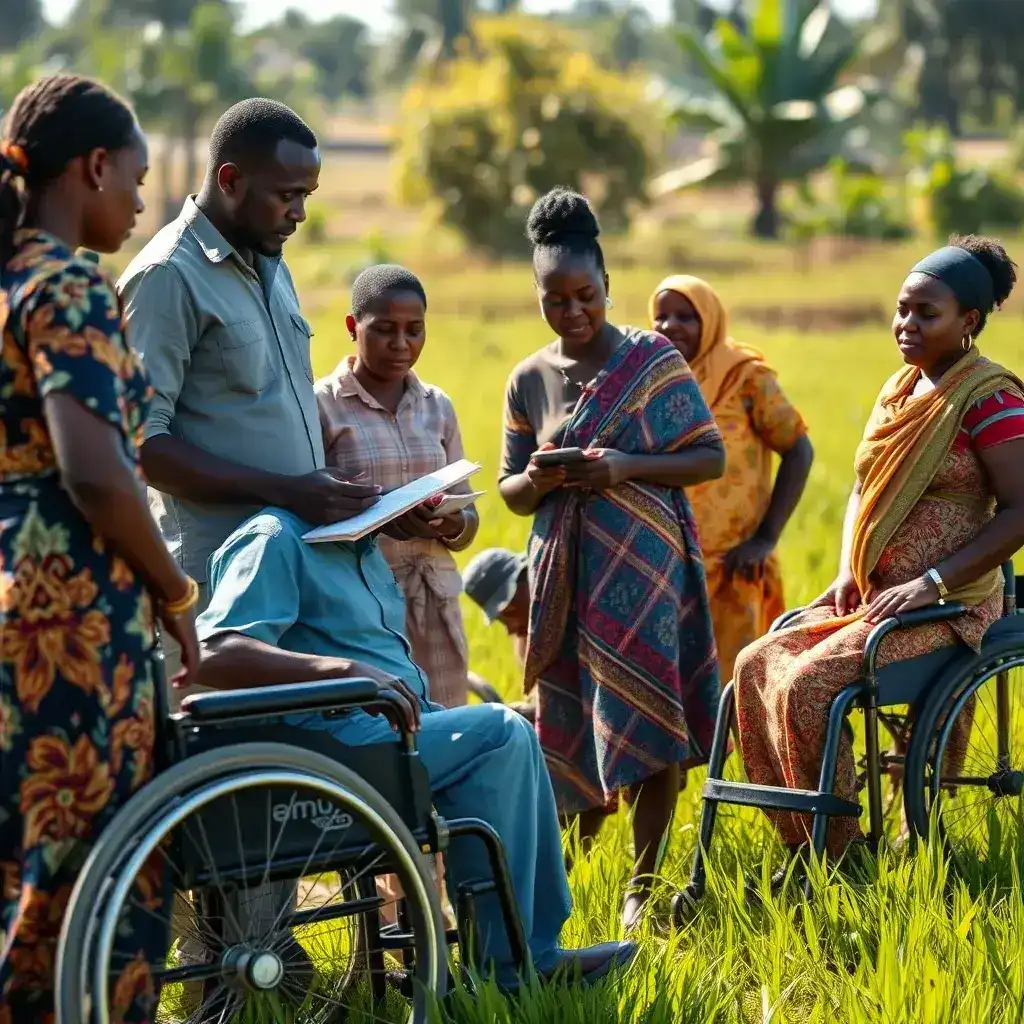
A new study published in the Journal of Agricultural Science reveals that agricultural extension agents (AEAs) in Ghana possess limited capacity to effectively serve farmers with disabilities, hindering their access to vital agricultural services and support. The research, which surveyed 528 frontline AEAs across Ghana’s 16 regions, identified significant gaps in knowledge, attitudes, and skills crucial for disability inclusion.
Context: Disability and Agriculture in Ghana
Approximately eight percent of Ghana’s population, totaling around 2.1 million people, live with some form of disability, according to the Ghana Statistical Service. This prevalence is notably higher in rural areas, where farming is the dominant livelihood, affecting 9.5% of residents compared to 6.5% in urban settings. Ghana’s Persons With Disability Act of 2006 mandates that public service providers implement accessible facilities, a legal framework that extends to agricultural extension services.
Farmers with disabilities, despite their potential for self-reliance and income generation, often face significant barriers to accessing the support needed to thrive. The agricultural extension system in Ghana, primarily managed by government employees under the Ministry of Food and Agriculture (MOFA), plays a critical role in disseminating technical advice and modern farming techniques. However, a shortage of staff equipped with disability-inclusive skills limits the reach and effectiveness of these services.
Key Findings: Competency Gaps Identified
The study, titled










Leave a Reply