
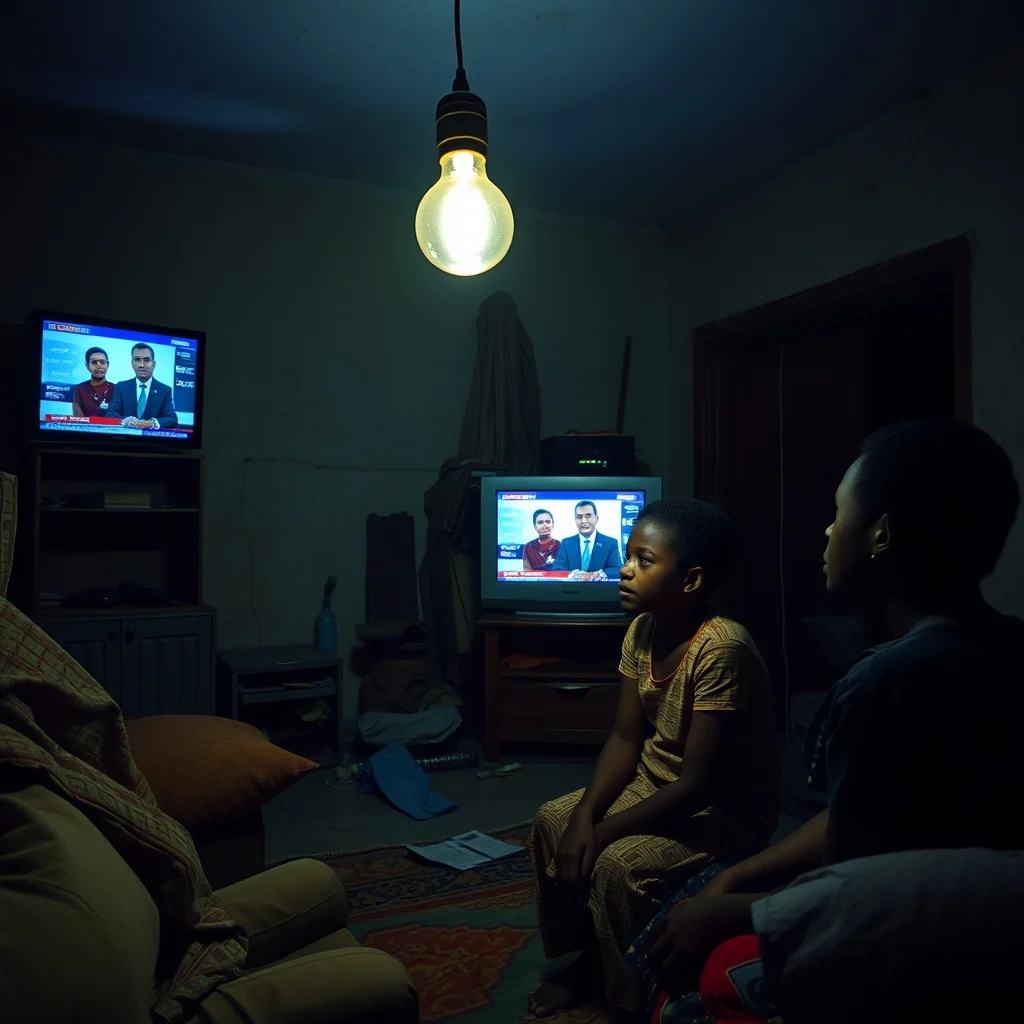
Professor Godfred A. Bokpin, a finance professor and economist at the University of Ghana, stated on Saturday, May 2nd, that ongoing inefficiencies within Ghana’s power sector are placing a significant financial burden on ordinary citizens. He attributed these persistent issues to a longstanding failure in leadership and planning, leading to reactive policymaking and escalating costs for the average Ghanaian.
Persistent Inefficiencies and Lack of Proactive Leadership
Professor Bokpin highlighted that consumers face continuous uncertainty due to a lack of robust long-term planning and effective leadership in addressing structural challenges within the energy sector. He described the national approach as reactive rather than proactive, emphasizing a critical “lack of leadership.” This sentiment was echoed during a discussion on the program ‘Newsfile’, where the professor elaborated on the systemic problems plaguing the nation’s utility services.
The economist pointed out that periods of crisis within the sector can unfortunately create opportunities for financial exploitation. “And when the crisis manifests like this, remember that in crisis moments, some politicians monetise and make money through procurement and all of that,” he stated. This raises serious questions about governance and accountability during times of national challenge.
Calls for Accountability and Lasting Solutions
Professor Bokpin urgently called for clarity and accountability from political leaders regarding the timeline for permanent solutions to Ghana’s energy challenges. He expressed his hope that the relevant minister would provide a clear exit strategy from the current predicament. “I’m hoping the minister will be quite clear on when we are exiting this completely… so that in the next three, four, five months on Newsfile, this shouldn’t be an agenda item,” he urged.
Furthermore, he stressed that failure to deliver sustained improvements should have consequences for those in leadership positions. “If it doesn’t happen, then the minister himself should resign. It’s not just VRA; the boss who should resign and all of that,” Bokpin asserted, advocating for a culture of responsibility.
Shifting Blame and the Burden on Citizens
The professor criticized a prevailing culture among political actors where responsibility is often avoided, and blame is frequently shifted for inherited problems. He questioned the narrative presented by the two major political parties that have governed Ghana over the past 33 years. “These two main political parties have had a chance to govern this country in the last 33 years. And each one of them will tell you they inherited a worse situation. They inherited a worse situation from whom?” he asked.
Professor Bokpin reiterated that ordinary citizens ultimately bear the financial brunt of these inefficiencies through utility tariffs regulated by the Public Utilities Regulatory Commission (PURC). “The average taxpayer and consumer are burdened through PURC tariffs. We keep paying for inefficiencies,” he explained. This places a constant strain on household budgets.
Broader Societal Pressures
The economic pressure on Ghanaian households extends beyond just electricity, encompassing challenges in multiple critical sectors. Professor Bokpin lamented that citizens experience constant stress due to issues with water supply, deteriorating road networks, deficiencies in education and healthcare systems, and environmental management problems. “The average Ghanaian has no breathing space. It’s either water that is not flowing, your road network is very bad, electricity is not working, the school system is very bad, or our environment is polluted,” he detailed.
Reflecting on national progress since independence, he questioned the tangible improvements achieved across these vital areas. “What are we looking up to? What is the leadership? What have we done? What legacy have we left for Ghana?” he posed. He argued for comprehensive reforms in education, health, the environment, and food systems to restore public confidence in national development.
A Call for Better Governance
Professor Bokpin concluded that both major political parties have failed to adequately serve Ghanaians. “The two main political parties have failed us. We should apologise to Ghanaians,” he stated. He described the nation’s situation, nearly seven decades after independence, as deeply troubling, citing poor infrastructure and declining standards in essential services.
He insisted that the average Ghanaian deserves a higher quality of life and better governance. “The average Ghanaian deserves more than this,” he emphasized, calling for a fundamental shift towards improved living standards and effective leadership.
Looking Ahead
The ongoing debate underscores the urgent need for a paradigm shift in Ghana’s governance, particularly concerning long-term strategic planning and accountability in the public sector. Ghanaians will be watching closely to see if political leadership can move beyond reactive measures and implement sustainable solutions that alleviate the financial pressures on citizens and foster genuine national development across all critical sectors. The performance of the energy sector and the transparency of regulatory bodies like the PURC will remain key indicators of progress, with potential repercussions for leadership if improvements are not realized.










Leave a Reply