
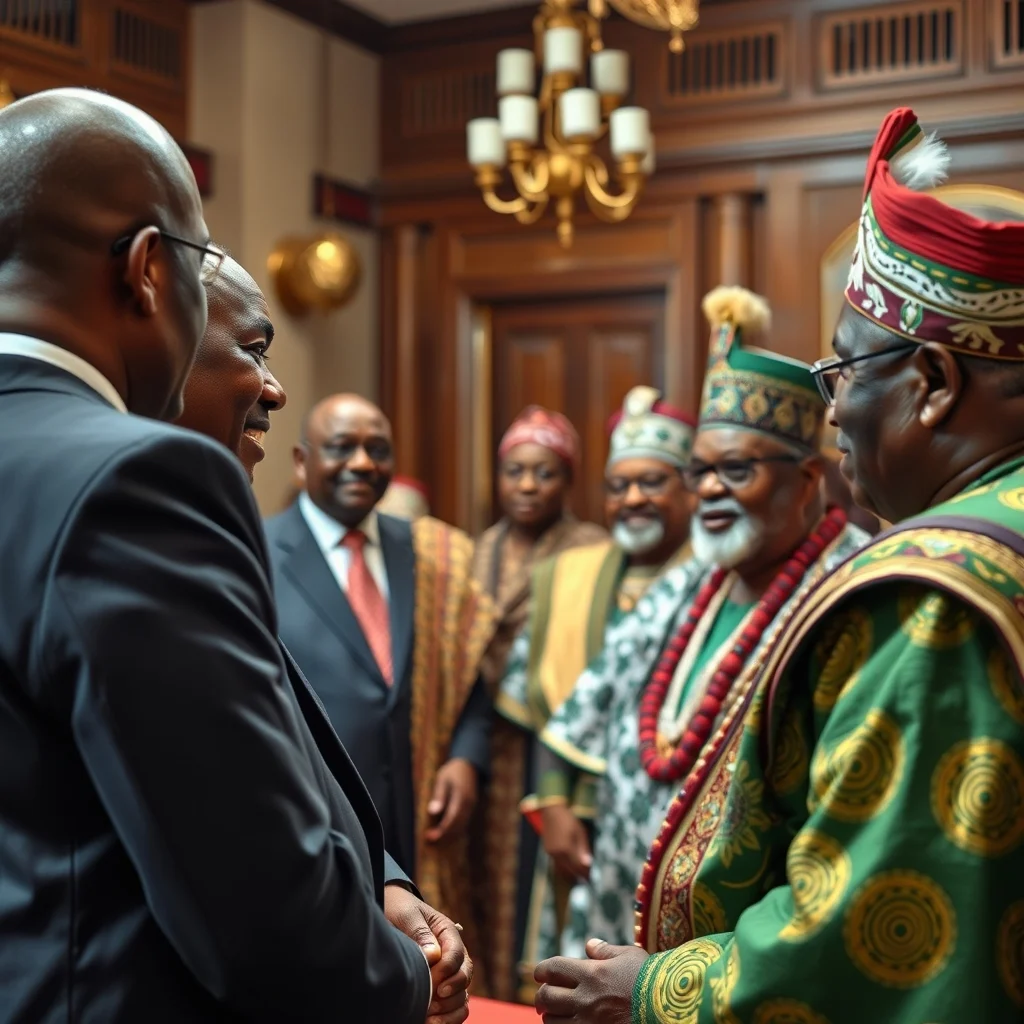
President John Mahama emphasized Ghana’s commitment to decentralization and citizen participation on Friday, May 15, during an engagement with the Northern Regional House of Chiefs. He articulated a vision where national transformation is deeply rooted in communities, involving stronger local engagement and a re-evaluated relationship between state institutions and traditional leaders, moving beyond ceremonial roles to strategic partnership.
Rethinking Traditional Authority’s Role
President Mahama’s administration is actively working to reshape how the state interacts with traditional leaders. This effort is part of a broader “reset agenda” aimed at fostering a more inclusive and effective governance structure.
The President stated that the government no longer views chiefs solely as ceremonial figures consulted on occasion. Instead, they are recognized as vital strategic partners in critical areas such as peacebuilding, social mobilization, and community development.
This redefined relationship seeks to leverage the deep-seated influence and local knowledge of traditional authorities for national progress. The government believes this collaboration is essential for achieving meaningful decentralization and ensuring citizen participation in governance.
Decentralization and Community Anchoring
A core tenet of the government’s development strategy is the principle that national transformation must be anchored in communities. This approach prioritizes local participation and strengthens the link between national policy and grassroots realities.
The engagement with the Northern Regional House of Chiefs saw the President welcome proposals for a new partnership model. He deemed this initiative both necessary and timely for advancing Ghana’s development agenda.
Key priorities for the administration include decentralization, accountability, and robust citizen engagement. The government sees the active involvement of traditional leaders as integral to achieving these goals.
Balanced National Development
President Mahama also reaffirmed his commitment to ensuring balanced national development. He stressed the importance of extending progress beyond urban centers to reach all regions, districts, and communities across the country.
This vision aims to create a more equitable Ghana where development benefits are widely shared. The call for unity between the government and traditional leadership underscores the belief that collective action is crucial for building a prosperous nation for future generations.
Future of Governance and Traditional Leadership
The government remains open to continuous dialogue with traditional authorities nationwide. This ongoing conversation is expected to refine the partnership model and ensure its effective implementation.
The strategic integration of chiefs into governance structures signifies a potential shift in how development is planned and executed in Ghana. It highlights a growing recognition of the unique position traditional leaders hold within their communities.
This evolving relationship could lead to more effective local governance, enhanced community development initiatives, and stronger mechanisms for peacebuilding. The focus on structured collaboration, rather than occasional consultation, suggests a move towards more integrated policy-making and implementation.










Leave a Reply