
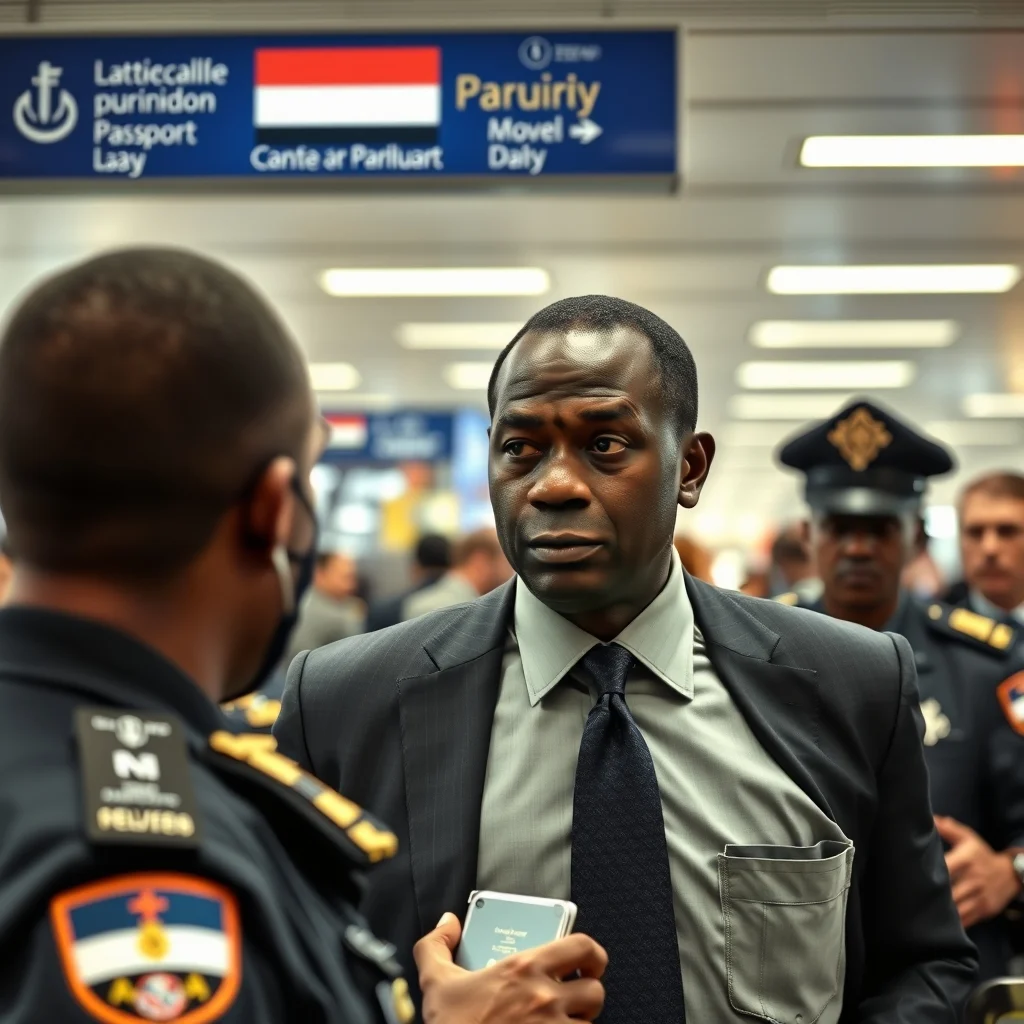
The Member of Parliament (MP) for Asante Akyem North, Kwame Ohene Frimpong, was reportedly detained at Amsterdam Airport Schiphol while in transit, an incident that international law experts suggest points to underlying legal charges likely stemming from an arrest warrant issued by U.S. authorities. The detention occurred recently, sparking discussions about international legal cooperation and the rights of citizens abroad.
Underlying Legal Basis for Detention
Professor of International Law at the University of Ghana, Kwadwo Appiagyei-Atua, explained that international arrests and extradition procedures are typically not initiated without a substantial legal foundation.
The professor stated that the act of detention by Netherlands security officers strongly implies the existence of prior charges or an ongoing judicial process in the requesting jurisdiction, likely the United States.
“There will certainly be some charges that have been preferred against him, but they may not be willing to expose them yet,” Professor Appiagyei-Atua commented, adding that “there should be a basis for his arrest; otherwise, the Netherlands government security officers may not have arrested him.”
Lack of Immediate Clarity on Charges
Despite the indication of underlying charges, initial reports suggested that Mr. Frimpong had not been officially informed of the specific accusations against him following his detention.
This lack of immediate disclosure prompted concerns, particularly following a claim by the Majority Chief Whip, Rockson Nelson Dafeamekpor, that the MP had contacted him after his arrest, reporting no official communication regarding charges.
Professor Appiagyei-Atua acknowledged that while full case details might not be public, the engagement of international cooperation mechanisms inherently suggests a pre-existing legal process.
Ghanaian Government’s Response and Rights
In response to the situation, legal representation has reportedly been arranged in The Hague to assist the detained MP.
Under the principles of consular relations, Ghanaian authorities are entitled to ensure that any citizen detained in a foreign country receives access to legal counsel and is afforded due process.
Ghanaian diplomatic missions are expected to work towards obtaining complete legal clarity on the matter. This includes facilitating access to a lawyer who can investigate the facts of the case and assess the justification for the detention.
Potential Diplomatic and Legal Avenues
Should the detention be found to lack proper justification, the expert noted that Ghana could pursue appropriate legal and diplomatic channels.
These actions could aim to secure the MP’s release or ensure that the matter is handled through a fair judicial process.
Looking Ahead: Transparency and Due Process
The incident highlights the complexities of international law enforcement and the importance of transparency in cross-border legal actions.
Moving forward, attention will likely focus on the specifics of the charges, the extradition process, and the steps taken by both the U.S. and Dutch authorities, as well as the Ghanaian government, to ensure due process is followed.










Leave a Reply