
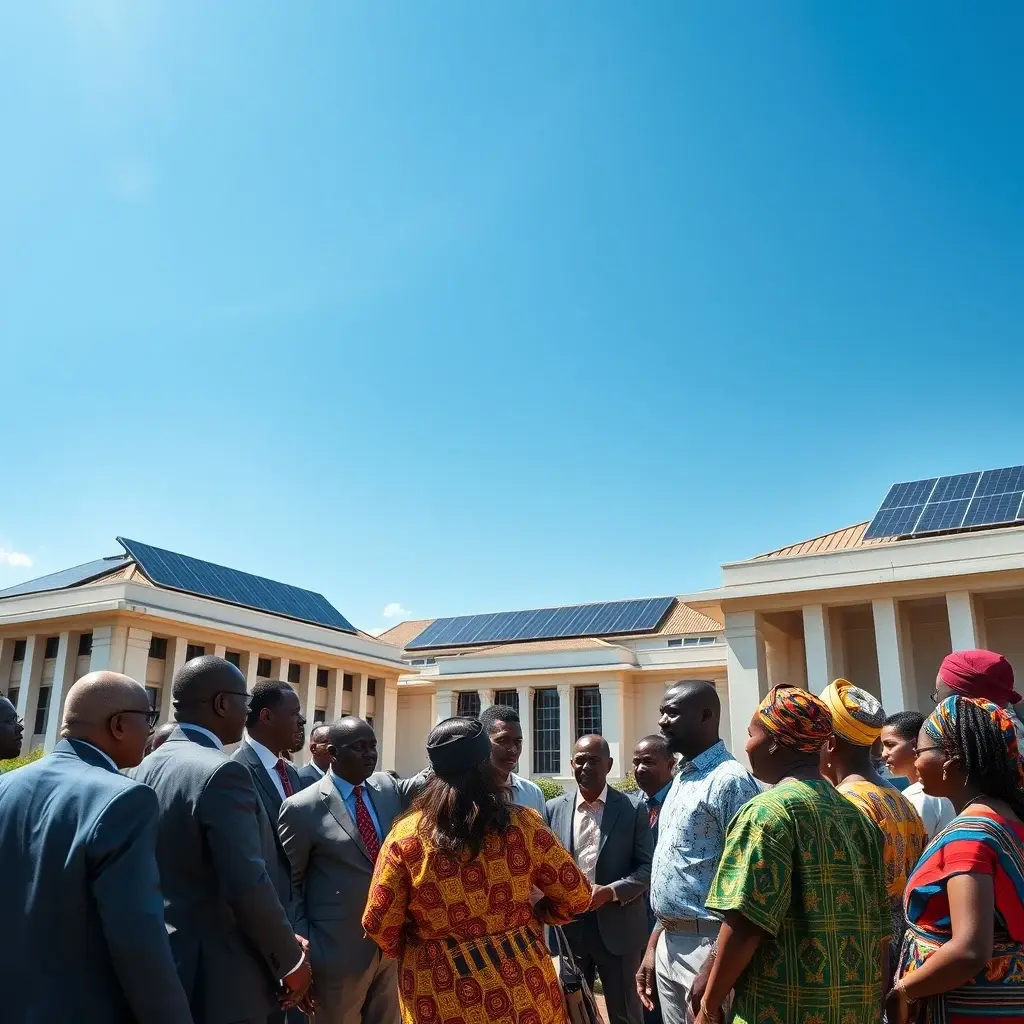
Ghana’s Parliament is set to spearhead the nation’s commitment to renewable energy by installing solar panels within the parliamentary enclave, aiming to catalyze wider adoption of clean energy solutions across the country. This initiative, announced at the Ghana Green Investment Dialogue in Accra, signifies Parliament’s dedication to sustainable energy practices and serves as a model for constituencies nationwide.
From Awareness to Action
Yaw Addo Frimpong, Chair of the Committee on Environment, Science, and Technology, emphasized the critical need to transition from mere awareness to tangible action in addressing Ghana’s energy challenges. Speaking at the dialogue, Frimpong stated, “There has been enough awareness creation about renewable energy and sustainability. The time has come for practical action.”
The Ghana Green Investment Dialogue, organized by the Climate Parliament in partnership with the United Nations Industrial Development Organisation (UNIDO) and the Parliament of Ghana, convened policymakers, legislators, investors, financial institutions, and development partners. The forum focused on devising strategies to mobilize green investment and climate finance effectively.
Legislative Support for Green Initiatives
Frimpong indicated Parliament’s readiness to enact laws and regulations that foster a supportive environment for renewable energy investments. He specifically highlighted the potential for constituency-based energy projects, drawing inspiration from Zambia’s successful model.
In Zambia, Members of Parliament were empowered to utilize constituency development funds for investments in alternative energy projects within their communities. Frimpong explained that these small-scale renewable energy initiatives helped alleviate pressure on the national electricity supply, suggesting that similar programs in Ghana could have mitigated the impact of past energy crises.
The call for constituency-level renewable energy projects in Ghana aims to bolster energy security, generate employment opportunities, and promote sustainable development across the nation.
Scaling Up Renewable Energy Implementation
Dr. Robert Sogbadji, Deputy Director for Renewable Energy and Green Transition at the Ministry of Energy and Green Transition, underscored that Ghana has reached a pivotal stage requiring a shift from pilot projects and policy frameworks to large-scale implementation and robust investment pipelines.
The government has already made strides through the Scaling-Up Renewable Energy Programme (SREP), which has facilitated the installation of solar mini-grids in island and lakeside communities. These systems are now providing clean and reliable electricity to thousands of residents in previously underserved areas.
These mini-grids are instrumental in powering homes, schools, and health centers, while also enabling productive economic activities such as agro-processing and supporting small businesses. Dr. Sogbadji highlighted these projects as evidence of the government’s commitment to inclusive energy access and climate-resilient development.
National Net-Metering Framework on the Horizon
Furthermore, the Ministry of Energy and Green Transition is preparing to launch a national net-metering framework. This policy will empower households and businesses equipped with rooftop solar systems to contribute surplus electricity back into the national grid, creating a more integrated and efficient energy system.
Future Outlook
The forthcoming installation of solar panels at Ghana’s Parliament marks a significant step in the nation’s renewable energy journey. Observers will be watching closely to see how this lead initiative inspires similar projects at the constituency level and how the proposed national net-metering framework will accelerate the integration of distributed renewable energy sources into Ghana’s national grid. The success of these measures could significantly enhance Ghana’s energy security and contribute to its broader climate change mitigation goals.










Leave a Reply