
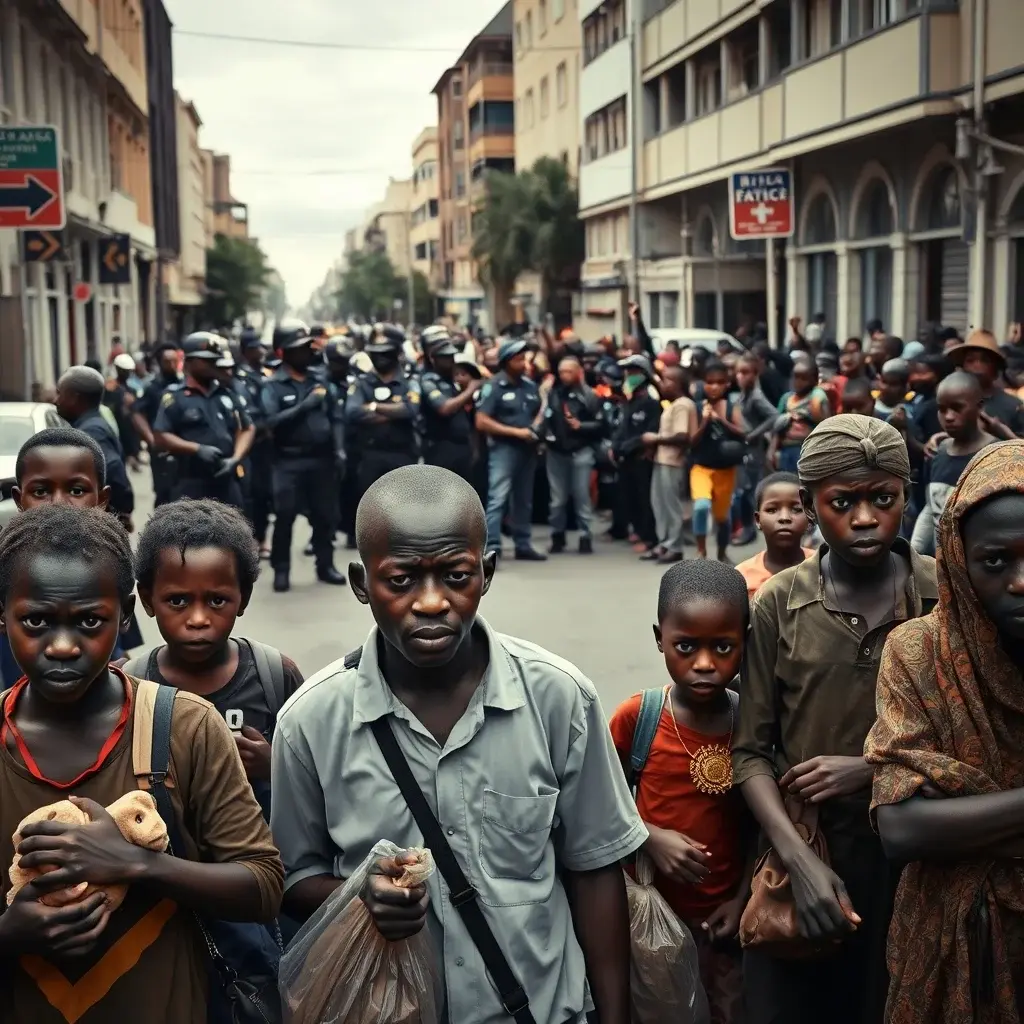
Accra, Ghana – Ghanaian President John Mahama has strongly criticized South African authorities, stating they did “little to quell” recent xenophobic violence and provided inadequate protection for displaced foreigners, including nearly 200 Ghanaians who sought refuge at Ghana’s embassy in South Africa. The comments were made on Monday during a speech at Chatham House in London.
Context of the Attacks
The violence, which primarily targeted foreign nationals, erupted in several South African cities, most notably Durban. This is not the first instance of such attacks in South Africa, which has a history of xenophobic unrest, often linked to economic frustrations and perceptions that foreign workers take jobs and strain social services.
These attacks create a climate of fear and insecurity for millions of foreign nationals living and working in South Africa, many of whom are from other African countries.
Ghana’s Intervention and Evacuation
President Mahama detailed how Ghana was compelled to intervene after its citizens became victims of the escalating violence. He described a “toxic atmosphere” where foreigners were even targeted in healthcare facilities.
“There were even forays into health institutions and if you were not South African you were asked to leave the hospital even if you were ill,” President Mahama stated.
Many Ghanaians, fearing for their safety, fled to the Ghanaian embassy in South Africa, with the facility at one point sheltering close to 200 citizens. Facing a lack of apparent intervention from local South African authorities, Ghana took the initiative to organize its own evacuation efforts.
“We had no option but to evacuate our citizens,” Mahama confirmed, adding that one evacuation flight had already departed, with two more planned for those wishing to return voluntarily.
Call for Root Cause Addressal
The Ghanaian President characterized the situation as “unfortunate” but also urged for empathy and sympathy towards South Africa, acknowledging the country’s own challenges.
However, he stressed the imperative for South Africa to address the underlying causes of the violence. Mahama called on South Africa to take proactive steps to protect foreign nationals rather than leaving them vulnerable.
Expert Perspectives and Data
While President Mahama provided a firsthand account, broader analyses by human rights organizations and international bodies often highlight the complex socio-economic factors contributing to xenophobia in South Africa. These factors include high unemployment rates, income inequality, and the legacy of apartheid, which can fuel resentment towards foreign nationals.
Reports from organizations like Human Rights Watch have previously documented instances where law enforcement response to xenophobic violence has been criticized as slow or insufficient, enabling the perpetuation of such attacks.
Implications for Regional Relations and Future Stability
President Mahama’s remarks underscore the strain such incidents can place on diplomatic relations between African nations. The need for Ghana to evacuate its citizens highlights a perceived failure in regional security cooperation and protection mechanisms.
The situation also brings into sharp focus the ongoing challenge of integrating foreign nationals into South African society and the economic anxieties that can be exploited to incite violence. The international community will be watching to see if South Africa implements more robust measures to prevent future occurrences and address the root causes of xenophobia.
Looking ahead, the focus will be on whether South African authorities can demonstrate a more effective and decisive response to protect all residents, regardless of nationality, and whether the underlying socio-economic issues fueling such violence will be comprehensively addressed.










Leave a Reply