
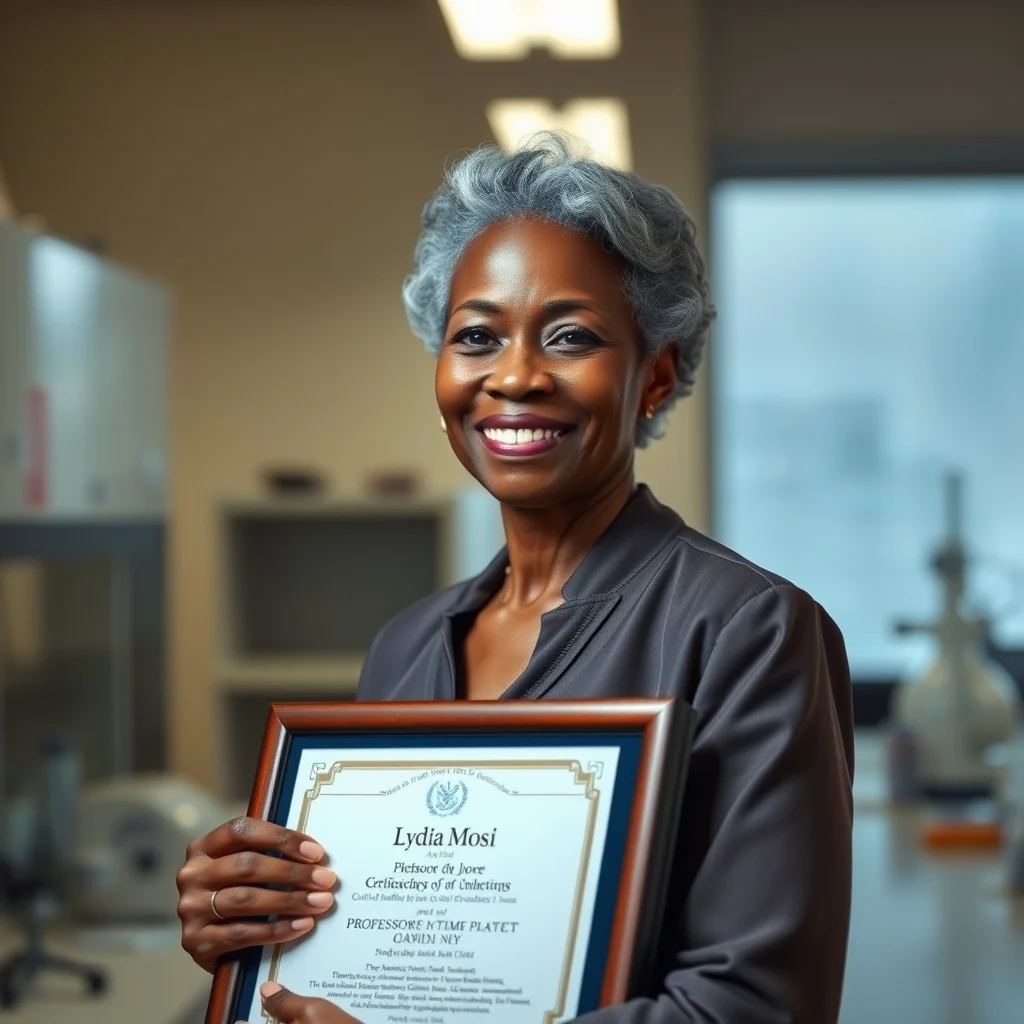
Professor Lydia Mosi, an Associate Professor of Cell and Molecular Biology at the University of Ghana, received a prestigious international lifetime achievement award from the Anesvad Foundation on Thursday for her extensive research into Buruli ulcer and other neglected tropical skin diseases. The award ceremony, held in Spain, recognized her decades of work that have significantly impacted the understanding and combating of these often-overlooked conditions.
A Career Dedicated to Neglected Diseases
The Anesvad Foundation’s annual awards ceremony celebrates individuals and organizations committed to fighting neglected tropical diseases (NTDs), a group of infections affecting over one billion people worldwide, as per the World Health Organization (WHO).
Professor Mosi, who teaches at the Department of Biochemistry, Cell and Molecular Biology, was lauded for her prolific career. This includes authoring more than 50 high-impact scientific publications focused on NTDs, influencing health policy, and successfully securing over $20 million in crucial research funding.
Each Anesvad award is accompanied by a €15,000 prize, intended to further support the recipient’s ongoing work and research endeavors.
From Undergraduate Curiosity to Global Recognition
Professor Mosi shared that her dedication to this field began during her undergraduate studies when she encountered her first patient suffering from Buruli ulcer. She described the experience of seeing a patient with a large, yet painless, lesion as the catalyst for her lifelong commitment.
“To be recognised for work in neglected tropical skin diseases and my work in Buruli ulcer is especially meaningful because these conditions have, for far too long, reflected a deeper neglect, not only of diseases, but of the people who live with them,” Professor Mosi stated upon receiving the award.
She dedicated the honor to the memory of her late mother, who she said was always confident in her future success.
The Human Cost of Neglected Diseases
Professor Mosi emphasized the profound social and economic consequences of neglected tropical skin diseases. These conditions extend beyond mere medical ailments, impacting critical aspects of life.
“Neglected tropical skin diseases are more than medical conditions. They affect education, livelihoods, mental health, and social inclusion,” she explained.
She painted a stark picture of the human impact, noting, “Behind every statistic is a child excluded from school, a parent unable to work, or an individual facing stigma and isolation.”
Professor Mosi urged emerging scientists to actively challenge indifference, bolster local leadership, and ensure that no disease or individual is deemed too neglected to warrant attention.
Ghanaian Organizations Also Recognized
Ghana’s contribution to combating NTDs was further highlighted as the Ark Development Organisation also received an award. This organization was honored for its comprehensive approach to addressing the environmental, social, and economic factors contributing to NTDs with cutaneous manifestations.
Their work, which notably integrates mental health support and stigma reduction strategies, was recognized for its holistic impact. Emmanuel Kwafo Mintah, the director of Ark Development Organisation, accepted the award on behalf of the group.
Additionally, the National Podoconiosis Action Network in Ethiopia received an award for their effective communication strategies aimed at influencing policy concerning cutaneous neglected tropical diseases.
Anesvad Foundation’s Commitment
Since its inception in 2015, the Anesvad Foundation has demonstrated a significant commitment to supporting research and professional careers in the fight against NTDs. The foundation has funded 48 projects and supported numerous individuals across more than a dozen African countries, with total funding amounting to €865,000.
Looking Ahead
Professor Mosi’s international recognition underscores the critical need for continued investment and focus on neglected tropical diseases. Her call to action for young scientists and policymakers suggests a future where greater emphasis is placed on equitable research and support for affected communities. The ongoing work of organizations like Ark Development and the Anesvad Foundation indicates a growing momentum in tackling these pervasive health challenges, with future efforts likely to focus on integrated care models and strengthened advocacy to ensure no one is left behind.










Leave a Reply