
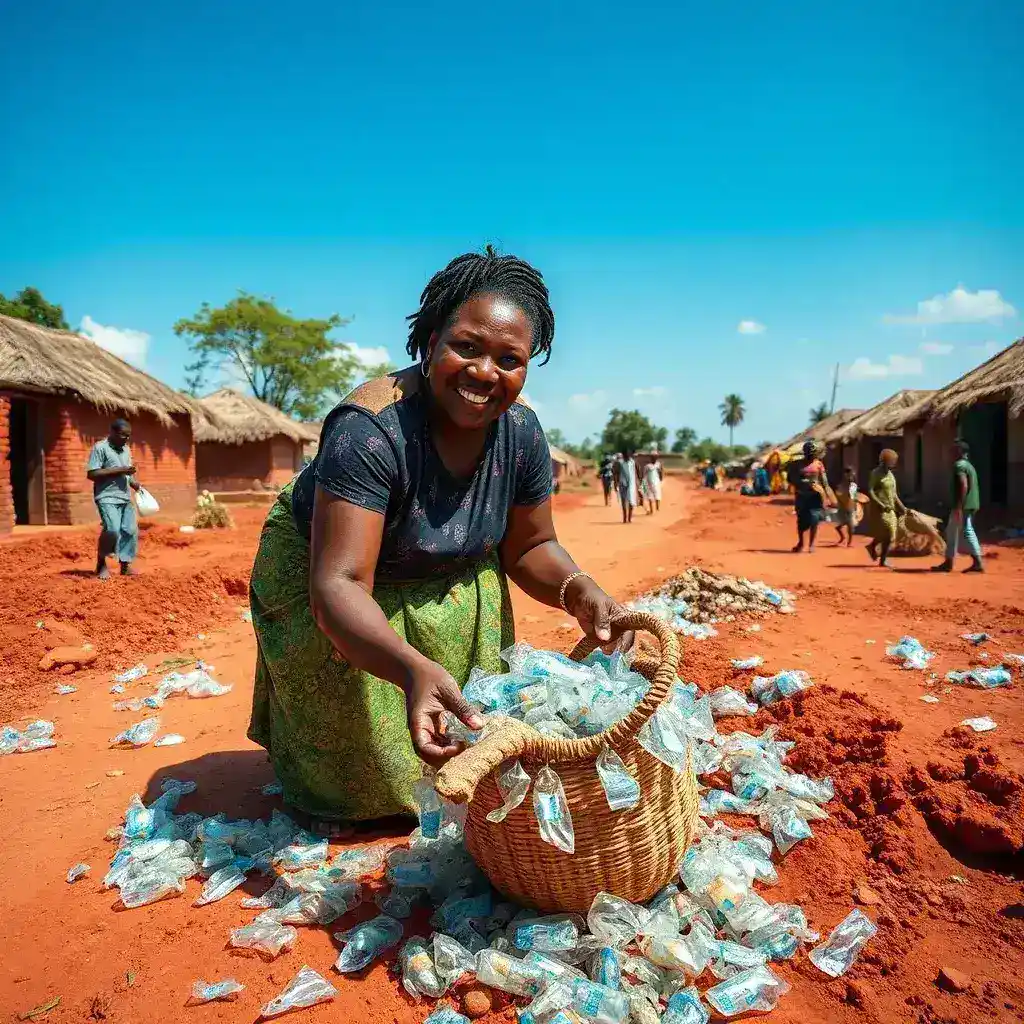
In the rural Ghanaian village of Asaloko, residents like Mary Asaah are transforming discarded plastic water sachets into a valuable resource, exchanging them for fresh drinking water. This community-led initiative, active every Saturday morning, tackles both plastic pollution and air quality issues by incentivizing the collection of sachets that would otherwise clog waterways or be burned, releasing harmful pollutants.
Community-Driven Waste Management
Asaloko, a community of approximately 1,200 people, has adopted a novel approach to managing plastic waste, particularly the ubiquitous empty water sachets. Residents actively collect these sachets, which are the primary source of drinking water for many Ghanaians lacking reliable piped supplies. These collected sachets are then exchanged at a local water company in the nearby town of Balungu for new supplies of potable water.
“The water sachet is like our gold,” says Mary Asaah, a resident of Asaloko, speaking in her local Gurune language. “People guard their water sachets jealously and are always on the lookout for sachets that blow in from other communities or are dropped by passersby.” This sentiment highlights the perceived value and importance of the collected plastic within the community.
This program reportedly results in about 5 tonnes of sachets being collected from Asaloko annually, according to a local coordinator for the sachet water company. This success is attributed to a broader shift in community awareness and behavior.
The WASH Program’s Ripple Effect
The initiative’s roots trace back to a Water, Sanitation, and Hygiene (WASH) program implemented by WaterAid Ghana. While the initial focus was on improving access to clean water, sanitation, and hygiene practices, the program’s educational component fostered a deeper understanding of environmental health.
“This behaviour change is what has enabled initiatives like community clean-up exercises and the collection and trading of used water sachets instead of burning them,” stated Fauzia Aliu, WaterAid Ghana’s Advocacy, Campaigns and Inclusion manager. “While plastic waste management was not the original entry point, the environmental awareness created through WASH interventions naturally extended to plastic waste.”
Before the WASH program, residents of Asaloko, like many in rural Ghana, relied on burning waste as the primary disposal method. This practice releases fine particulate matter (PM2.5) and toxic pollutants into the air, contributing to severe health problems.
Health Implications of Burning Plastic
The burning of plastics, including water sachets, releases PM2.5 particles, which are small enough to enter the bloodstream and have been linked to serious health issues. Scientists estimate that air pollution from burning waste contributes to thousands of deaths in Ghana annually, exacerbating conditions such as diabetes, hypertension, stroke, and cancer.
WaterAid’s Aliu further warned that women and children are disproportionately affected by this indoor air pollution, as they are often the primary managers of household waste.
In contrast, Asaloko has implemented a more sustainable waste management system. Organic waste is composted, and trees are planted. Community members engage in weekly clean-up exercises, fostering a sense of collective responsibility for their environment.
A Business-Driven Solution and a Call for Scale
The sachet water company in Balungu, Dem Dhat, views its participation in the exchange program as a corporate social responsibility, acknowledging the role businesses play in creating plastic waste. This model offers a practical, market-based solution to a problem that formal waste management systems have struggled to address.
However, the community recognizes the limitations of their current system. Non-recyclable items like diapers and food wrappers still require disposal, often through burning. To achieve near-complete elimination of air pollution, Asaloko requires a composting and recycling plant.
The estimated cost for such a facility is substantial, reported to be around GHC224 million (approximately US$20 million), according to a quote from Zoomlion Ghana, a waste management company. The community elder, Achinges Abeliwine, has appealed to authorities, private organizations, and NGOs for assistance in establishing such a plant.
Contrasting Realities: The Failure at Sherigu
The challenges faced by Asaloko are starkly contrasted with the situation in Sherigu, a community near Bolgatanga. Despite the groundbreaking ceremony for a composting and recycling plant in 2020, the facility remains incomplete due to land disputes, according to local officials. The adjacent landfill in Sherigu continues to burn, emitting smoke that causes chronic respiratory and eye problems for nearby residents.
Ghana has policies in place, including bans on certain plastic imports and a dedicated recycling fund, but enforcement and implementation remain weak. A 2024 performance audit by the Auditor-General highlighted these deficiencies, leaving many communities to manage plastic pollution independently.
The Path Forward
Experts like Fauzia Aliu from WaterAid Ghana advocate for scaled solutions that include household waste sorting, stronger links between communities and recycling markets, dedicated funding at the district level, and sustained behavior-change campaigns. Empowering communities with knowledge and ownership is crucial for driving transformative change in both sanitation and environmental management.
Back in Asaloko, the Saturday morning routine continues, with residents diligently collecting sachets, contributing to a cleaner environment and a more sustainable future, one water pouch at a time. The community’s efforts demonstrate the potential for localized, community-driven solutions to address pressing environmental challenges, even in the absence of large-scale infrastructure.










Leave a Reply