
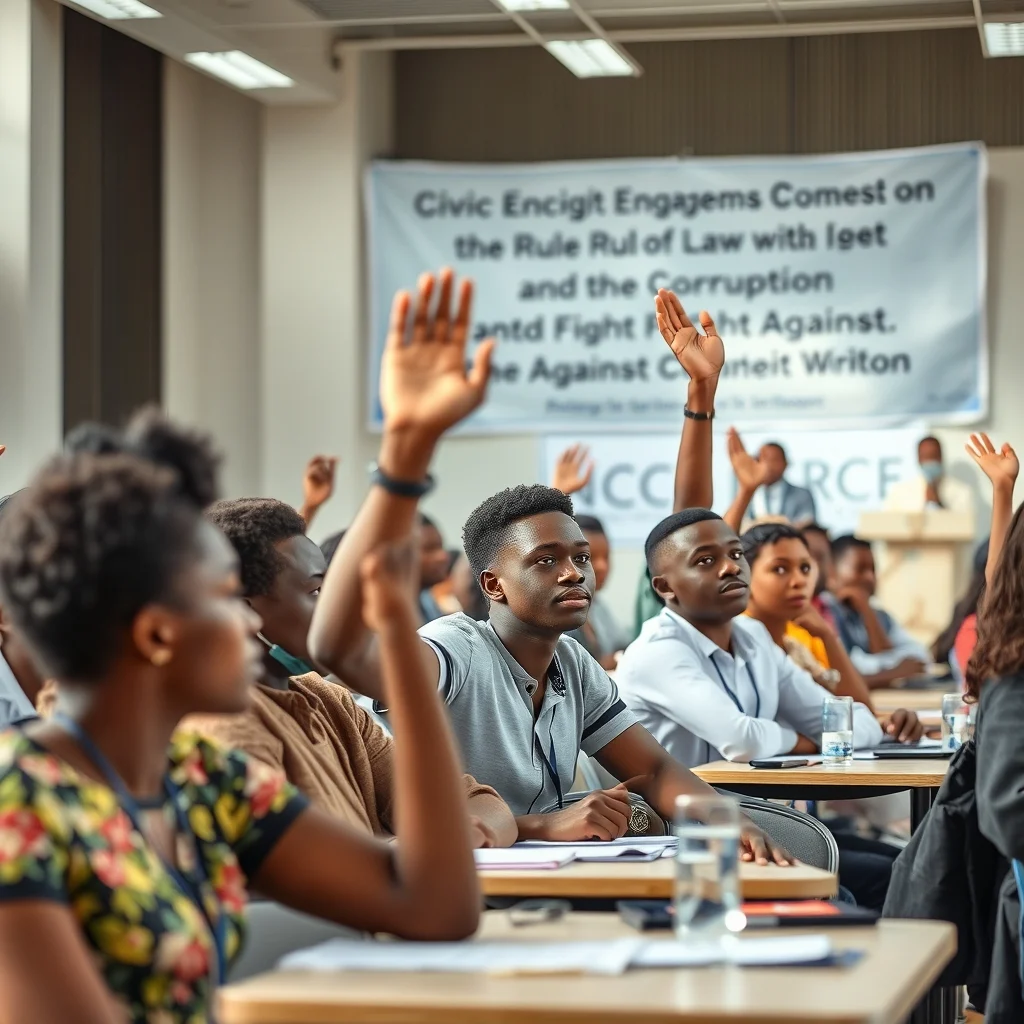
Students and young people in Ghana have been urged by the National Commission for Civic Education (NCCE) to spearhead the nation’s fight against corruption. This call to action comes as the NCCE highlights the pervasive impact of corruption on fundamental societal values and national development.
Context: Corruption’s Deep Roots
Corruption has been identified as a significant impediment to Ghana’s progress, deeply ingrained in societal norms and practices. The NCCE emphasizes that this menace retards development and erodes trust in public institutions.
To combat this, the Commission stresses the importance of instilling values of integrity, accountability, and respect for the rule of law among the youth. These principles are seen as crucial for building a more ethical and transparent society.
Empowering Future Leaders
The Deputy Upper East Regional Director of the NCCE, Augustine Akugri, articulated the need to equip young people with the necessary knowledge and values. This empowerment is essential for them to demand accountability and champion ethical leadership.
Akugri made these remarks at a tertiary-level symposium held in Navrongo. The event was a collaborative effort between the NCCE and the University of Technology and Applied Sciences (UTAS).
Funding for the initiative was provided by the Deutsche Gesellschaft für Internationale Zusammenarbeit (GIZ) and the European Union. The symposium gathered student leaders, university officials, and civic stakeholders to deliberate on ethical leadership, accountability, and the rule of law.
Addressing Weaknesses in Governance
Mr. Akugri pointed out that Ghana faces challenges due to weak adherence to ethical standards. Furthermore, limited public understanding of accountability mechanisms contributes to a decline in public trust and the credibility of institutions.
This engagement is part of the broader “Civic Engagements on the Rule of Law and the Fight Against Corruption” initiative. It falls under the Participation, Accountability, and Integrity for a Resilient Democracy (PAIReD) programme.
The PAIReD programme recognizes the pivotal role of young people as future leaders and decision-makers. Its objective is to cultivate a generation of youth ambassadors dedicated to promoting transparency, integrity, and responsible leadership within their educational institutions, communities, and wider society.
Promoting Civic Responsibility
Students are encouraged to actively engage in fostering accountability and responsible civic conduct. Regular civic education is deemed vital for imparting an understanding of ethical leadership principles and accountability frameworks to the youth.
Expert Insights on Ethical Leadership
Edmond Alagpulinsa, Principal Investigative Officer at the Commission on Human Rights and Administrative Justice (CHRAJ), underscored the significance of ethical leadership. He described it as the bedrock of good governance and democratic progress.
Alagpulinsa defined ethical leadership as encompassing honesty, fairness, integrity, and professionalism. Leaders who prioritize public interest over personal gain are instrumental in building confidence and strengthening democratic structures.
Combating Malpractice and Conflict of Interest
He cautioned against influence peddling, identifying it as an abuse of power, authority, or personal connections to gain unfair advantages. This practice undermines meritocracy, transparency, and justice.
Alagpulinsa also addressed conflicts of interest, advising public officials to avoid situations where personal or financial interests could sway official decisions. Such conduct opens avenues for corruption and abuse of office.
Upholding the Rule of Law and Whistleblower Protection
Regarding the rule of law, Alagpulinsa affirmed that no individual is above legal scrutiny, irrespective of their status or political affiliation. Citizens are urged to pursue grievances through lawful channels while respecting the rights of others.
Participants received education on the Whistleblower Act, 2006. This legislation provides a framework for reporting corruption and mismanagement to designated institutions such as the Police, CHRAJ, the Economic and Organised Crime Office, the National Media Commission, traditional leaders, religious figures, and District Assemblies.
Young people are encouraged to utilize the Whistleblower Act to report corrupt practices, abuse of office, and mismanagement of public resources. The Act includes provisions for rewards through the Whistleblowers Reward Fund for disclosures that lead to the recovery of public funds or the conviction of offenders.
Student Engagement and Future Commitments
Professor Ohene Boansi Apiah, Dean of Students at UTAS, commended the NCCE and its partners for organizing the initiative. He urged students to internalize the lessons to enhance their social and civic responsibilities.
During an open forum, students voiced concerns regarding corruption in recruitment, the impact of ‘protocol’ in job acquisition, and the effectiveness of state institutions in combating corruption.
The symposium concluded with participants pledging to apply their newfound knowledge to expose corrupt practices and promote integrity and accountability within their respective spheres of influence.
Looking Ahead: Youth as Agents of Change
The initiative signifies a strategic move to empower Ghana’s youth to become active participants and leaders in the anti-corruption agenda. The focus on education, ethical values, and legal recourse through mechanisms like the Whistleblower Act suggests a comprehensive approach to fostering a culture of integrity. Observers will be watching to see how effectively these young ambassadors translate their pledges into tangible actions and contribute to systemic change in combating corruption across Ghana.










Leave a Reply