
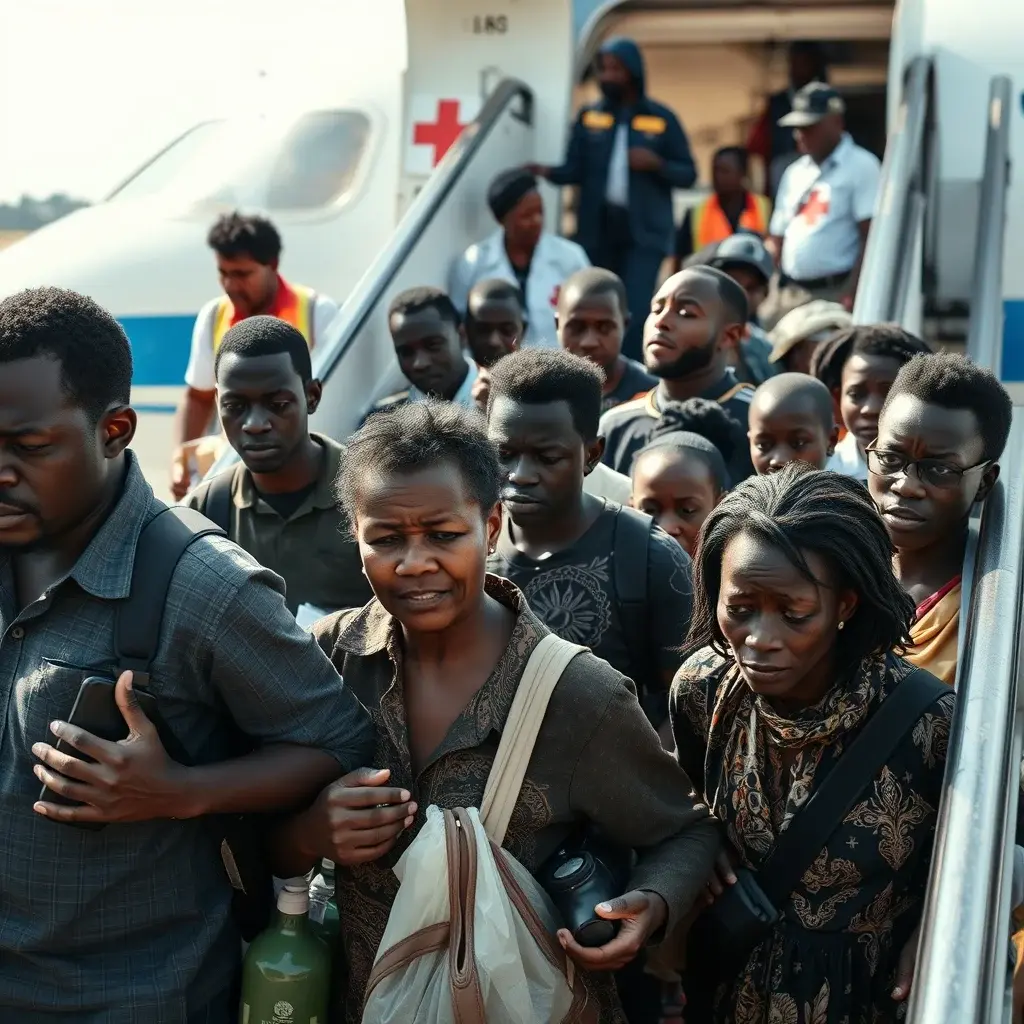
The first group of Ghanaian citizens seeking to escape escalating xenophobic attacks in South Africa arrived at Accra International Airport on Wednesday, May 27, at approximately 3:00 PM. This repatriation effort fulfills a commitment made by the Ghanaian government to assist its nationals wishing to return home from the Southern African nation.
Government-Facilitated Repatriation
The evacuation was organized by the Ghanaian government in response to a surge in anti-immigrant sentiment and violence that has targeted foreign nationals, including Ghanaians, in various parts of South Africa. The arrival marks a significant moment for those who felt unsafe and compelled to leave their lives behind.
Details regarding the number of individuals in this initial batch have not been extensively publicized, but the government has stated its readiness to facilitate further returns for any Ghanaian national in South Africa who expresses a desire to come back.
Context of Xenophobic Violence in South Africa
Xenophobia, characterized by hostility towards people from other countries, is a recurring issue in South Africa. It often flares up, leading to violence, looting, and displacement of foreign nationals, particularly those from other African countries. These attacks are frequently attributed to economic anxieties, unemployment, and perceptions that immigrants are straining public services and competing for jobs.
The current wave of violence has prompted concern from international bodies and governments of affected nations, including Ghana. Past incidents have seen similar calls for government intervention and repatriation, highlighting the persistent nature of the problem.
Challenges and Support for Returnees
Upon arrival, returnees are expected to undergo necessary health screenings and receive support from government agencies. The Ghanaian government has indicated that mechanisms are in place to assist them in reintegrating into society. However, the long-term support and rehabilitation for individuals displaced by such events remain a significant challenge.
Many returnees may face difficulties readjusting, having left behind livelihoods, businesses, and established lives. The psychological impact of experiencing or witnessing xenophobic violence can also be profound, requiring comprehensive support systems.
Broader Regional Implications
The situation underscores the complex dynamics of intra-African migration and the challenges of ensuring the safety and dignity of citizens across borders. It raises questions about regional cooperation and the effectiveness of existing frameworks to protect migrants and refugees within the African continent.
The incident also puts a spotlight on South Africa’s efforts to combat xenophobia and protect its international reputation. Reports from organizations like the UN Refugee Agency (UNHCR) have consistently documented the prevalence and impact of xenophobic violence in the country.
What to Watch Next
Attention will now turn to the scale of further repatriation efforts and the support structures established for returnees. Observers will also be monitoring South Africa’s response to addressing the root causes of xenophobia and ensuring the safety of foreign nationals. The long-term implications for Ghanaian-South African relations and broader regional stability will also be a key area to watch.










Leave a Reply