
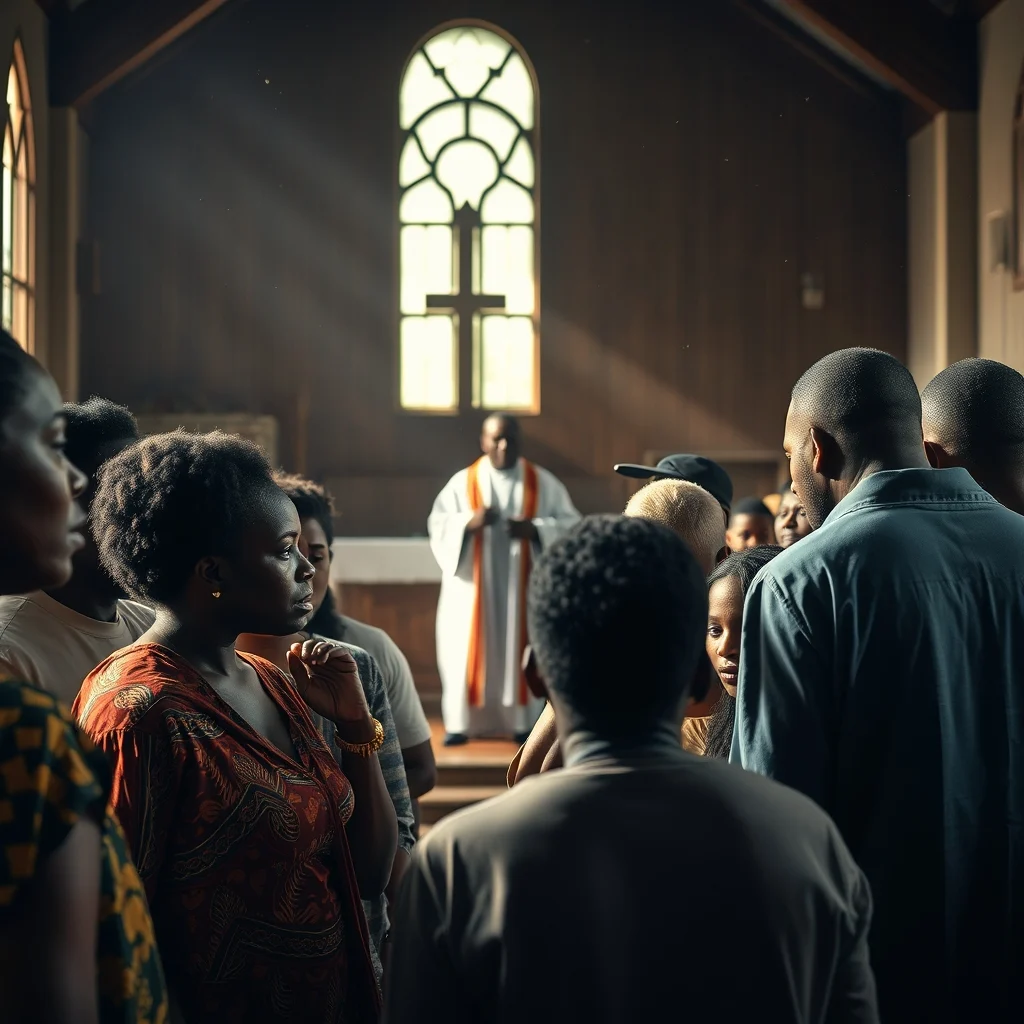
Accra, Ghana – Amidst viral confrontations and public discourse on national issues, questions are being openly asked across Ghana about whether religious institutions, particularly the church, are maintaining their role as sanctuaries of faith or are experiencing a decline in moral authority. Recent events, including a public dispute over tithing within the Methodist Church and discussions surrounding the Church of Pentecost’s stance on illegal mining, have intensified this debate, highlighting a growing tension between church leadership and congregants.
Shifting Perceptions of Authority
A widely circulated video capturing a disagreement over tithing within the Methodist Church has become a flashpoint for this broader conversation. The incident, where a priest reportedly labeled non-tithing members as “armed robbers,” has sparked significant public reaction, dividing opinions between those who defend doctrinal adherence and those who question the aggressive framing of financial obligations in worship settings.
This reaction underscores a deeper concern for many observers: the perceived imbalance between spiritual guidance and institutional power. The manner in which authority is exercised and received within the church is under increasing scrutiny, suggesting a growing discomfort with traditional hierarchical structures.
Moral Engagement in National Crises
In parallel, the Church of Pentecost has faced public discourse regarding its engagement with the national fight against illegal mining, famously known as “galamsey.” The severe environmental degradation caused by galamsey—polluted waterways, damaged landscapes, and long-term ecological harm—has amplified expectations for religious bodies to act as moral compasses in societal crises.
The public discourse reflects a shift in expectations for religious institutions. It is no longer sufficient to provide only spiritual leadership within church walls; there is an increasing demand for visible moral engagement on pressing national issues. Perceived silence or insufficient response on such matters fuels conversations about the relevance and responsibility of these institutions.
The Amplifying Power of Digital Platforms
These developments, though distinct in their specifics, converge in their consequence: a heightened questioning of institutional credibility. The church, historically somewhat insulated from public criticism, now operates in a digitally interconnected environment where its pronouncements, actions, and even inactions are instantly amplified and debated online.
Ghana’s evolving digital landscape has fundamentally reshaped how authority is perceived. Social media platforms have transformed religious practices from private matters into public discussions, open to interpretation, critique, and comparison by a wider audience.
Beyond Crisis: Enduring Influence and Evolving Expectations
While these events highlight challenges, it would be an oversimplification to frame this moment solely as a crisis of faith. Religious institutions in Ghana continue to play vital roles in education, healthcare, community support, and moral development, remaining deeply woven into the nation’s social fabric.
However, mere influence is no longer a shield against public scrutiny. Congregants’ expectations are evolving, with a growing demand for transparency in financial management, consistency in moral advocacy, and greater sensitivity in communication from church leadership.
Tradition Versus Accountability
The current tension is less about faith versus disbelief and more about tradition versus accountability. It represents a generational shift where established structures of authority are increasingly being questioned regarding their exercise and relevance in contemporary society.
Whether the church is fundamentally losing moral authority or is undergoing a necessary period of adjustment and adaptation is a matter of ongoing interpretation. What is undeniable is that these institutions are facing unprecedented levels of examination.
The Path Forward
The defining challenge for Ghana’s religious institutions moving forward is their ability to preserve their role as sanctuaries of faith while adapting to a society that increasingly demands explanation and accountability alongside spiritual leadership. The coming months and years will reveal how effectively these institutions can navigate this evolving landscape, balancing tradition with the demands for transparency and relevance in a rapidly changing world.










Leave a Reply