
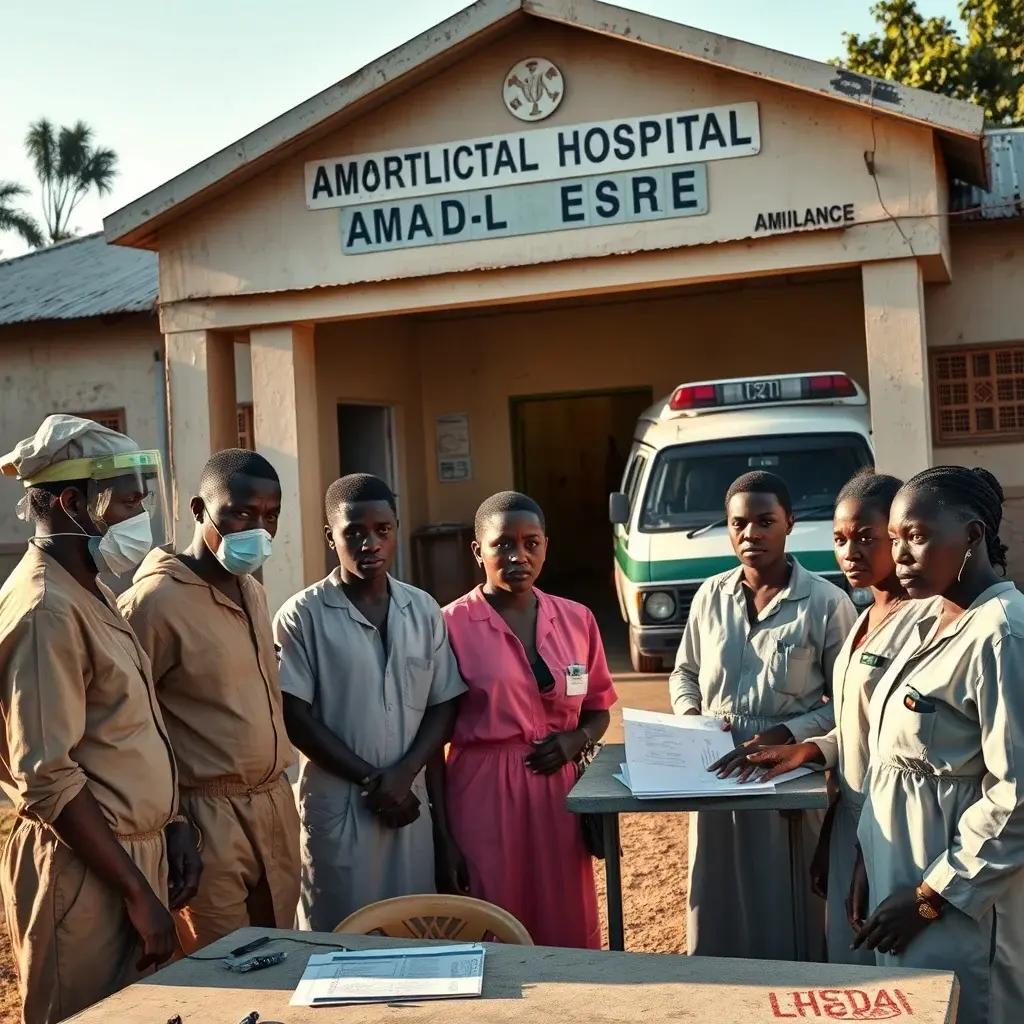
Accra, Ghana – Concerns over Ghana’s readiness to combat a potential Ebola outbreak have been voiced by Dr. Kingsley Agyemang, a member of Parliament’s Health Committee, who argues that the nation’s emergency response systems are significantly weaker outside the capital. This warning comes as the World Health Organization (WHO) escalates its alert regarding the rapid spread of Ebola in the Democratic Republic of Congo (DRC) and neighboring Uganda, declaring the situation a Public Health Emergency of International Concern due to fears of cross-border transmission.
Regional Context and WHO Alert
The current Ebola outbreak, linked to the rare Bundibugyo strain, presents a significant challenge as there is no approved vaccine or specific treatment available. The WHO reports the outbreak’s expansion across eastern DRC provinces, including Ituri, North Kivu, and South Kivu, with confirmed cases now extending into Uganda.
As of May 21, the WHO documented 746 suspected cases and 176 suspected deaths in the DRC alone. More recent figures suggest these numbers have surpassed 900 suspected cases and over 220 suspected deaths across both nations. Factors exacerbating the outbreak include ongoing insecurity, attacks on healthcare facilities, crowded displacement camps, and pre-existing weak healthcare systems in affected regions.
Assessing Ghana’s Preparedness
Professor Samuel Kaba Akoriyea, Director-General of the Ghana Health Service, has publicly assured the nation that surveillance, screening, and emergency response mechanisms have been bolstered to prevent any potential incursion of the virus.
However, Dr. Agyemang disputes this assertion, suggesting that preparedness assessments have disproportionately focused on select facilities within Accra. This, he contends, creates a misleading perception of nationwide readiness.
He emphasized that a true measure of health security must begin at the district level, particularly in remote and underserved areas where essential emergency response infrastructure is often limited. Dr. Agyemang questioned the capacity of district and regional hospitals to manage an Ebola case if detected in peripheral areas like Sege or Ada.
Gaps in Response Capacity
According to Dr. Agyemang, judging preparedness based on demonstrations in a few urban hospitals overlooks the persistent struggles of numerous facilities nationwide with basic logistics, surveillance capabilities, and coordinated emergency response systems. He characterized Ghana’s overall capacity to handle highly infectious diseases as










Leave a Reply