
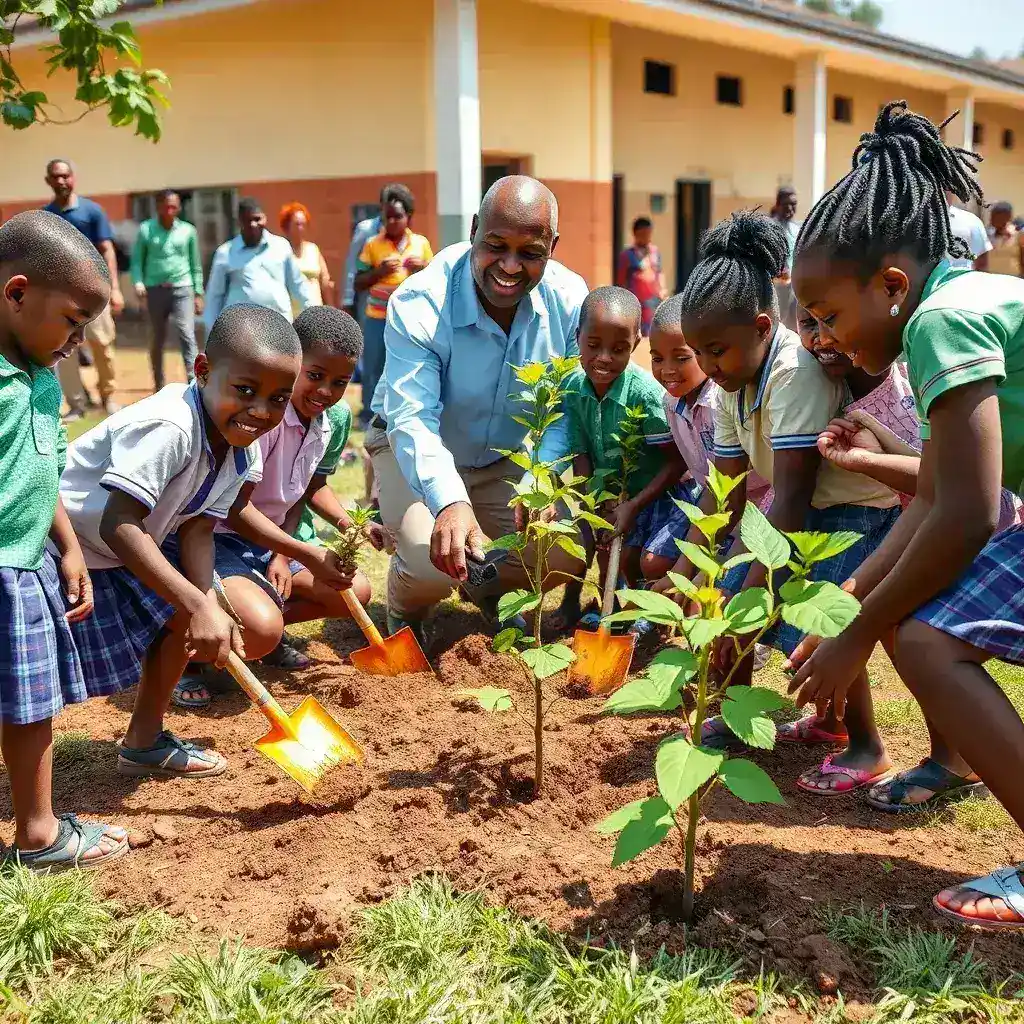
The Environmental Protection Authority (EPA) in Ghana is actively engaging schoolchildren across the Effutu Municipality, Gomoa East District, and Agona West Municipality to foster climate-resilient communities. This initiative, part of World Environment Day 2026 activities, aims to educate hundreds of pupils on environmental stewardship and climate action, embedding crucial knowledge from an early age.
Building a Climate-Resilient Ghana Through Education
Under the global theme “Climate Action” and the national “Building a Climate-Resilient Ghana through Responsible Stewardship,” the EPA’s Kasoa Area Office conducted a week-long campaign. The program focused on equipping young students with practical understanding of climate change’s causes and effects.
EPA officers visited 25 basic schools, delivering lessons on environmental conservation, effective waste management, and the importance of tree planting. The campaign encouraged students to adopt sustainable habits and disseminate climate-smart behaviors within their families and social circles.
Assessing and Rewarding Climate Action
The initiative went beyond mere awareness, incorporating an assessment phase. Schools in the Effutu Municipality were evaluated on their comprehension of climate change, their commitment to environmental cleanliness, and their active participation in sustainability practices and climate action activities.
Unipra South Junior High School achieved the top position, with Don Bosco ‘A’ Junior High School and Winneba M/A Junior High School securing second and third places, respectively. These leading schools received grass trimmers and waste bins to bolster their environmental management efforts.
All participating schools were recognized with certificates and waste bins, acknowledging their involvement and encouraging continued engagement in environmental protection.
Expert Perspectives on Youth Engagement
Dawood Abbas, Kasoa EPA Area Head, emphasized the immediate impact of climate change on lives, livelihoods, and natural resources. He highlighted resilience-building as a critical priority for Ghana.
Abbas stated that educating young people is a highly effective strategy for driving enduring environmental change. He urged educational institutions to translate climate knowledge into tangible, practical actions within their communities.
The Municipal Chief Executive for Effutu Municipality, Rev. Atta Mensah, speaking at the climax event in Winneba, echoed the call for collective action. He urged students, teachers, and community members to embrace sustainable practices and actively participate in conservation efforts.
Symbolic Commitment to Sustainability
A significant tree-planting exercise, involving students, teachers, local authorities, and EPA officials, marked the culmination of the campaign. This activity symbolized a unified commitment to environmental sustainability and the future health of the planet.
EPA officials view this program as a vital component of broader strategies to empower youth. By fostering a sense of ownership in environmental protection, the initiative aims to cultivate communities better equipped to withstand and adapt to climate-related challenges.
Looking Ahead: Scaling Up Environmental Education
The EPA’s focus on integrating climate education into the school curriculum signifies a forward-thinking approach to national development. Future efforts will likely involve expanding these programs to more regions and incorporating advanced climate adaptation strategies into educational materials.
The success of this campaign could serve as a model for other districts and potentially influence national educational policy, ensuring that environmental stewardship is a core competency for Ghana’s future generations. What remains to be seen is how effectively these young climate advocates will translate their classroom learning into sustained community action and policy influence.










Leave a Reply