
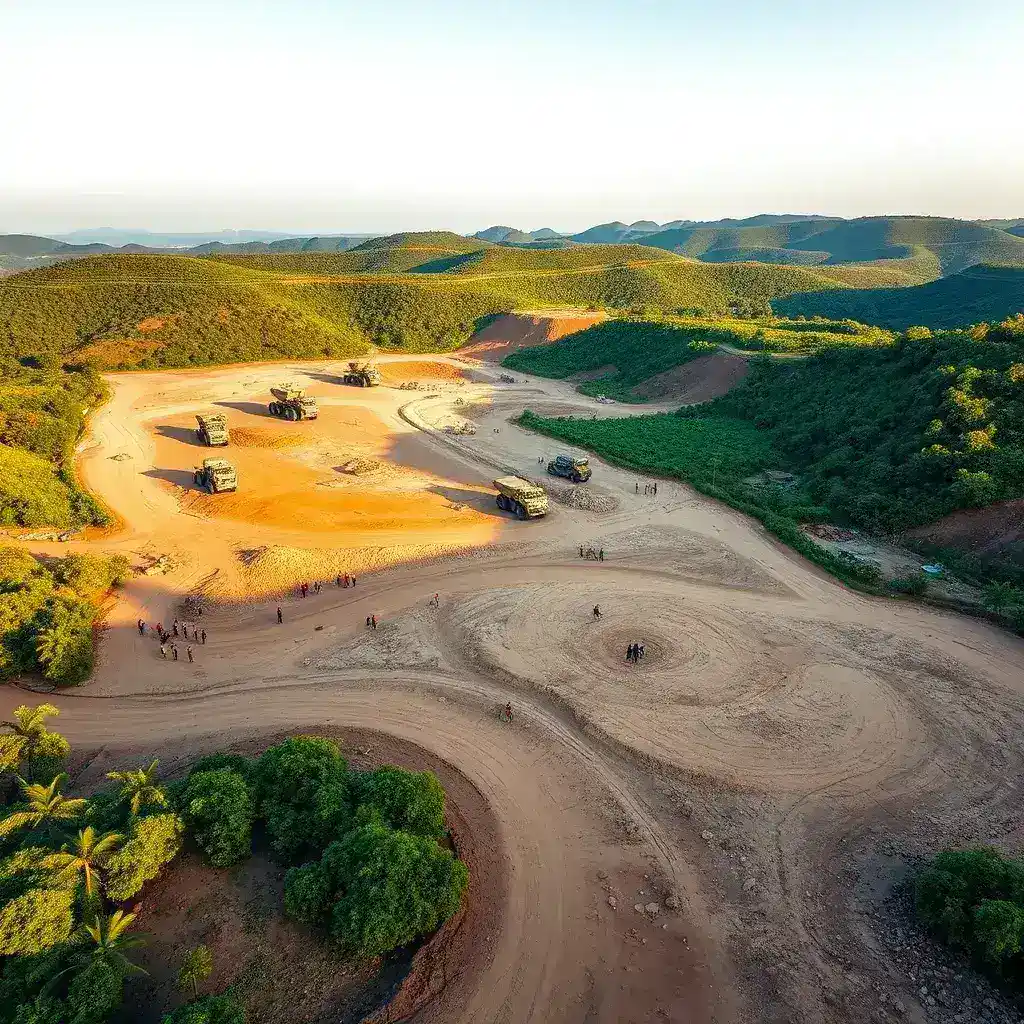
Parliament’s ratification of Ghana’s first lithium mining lease for the Ewoyaa project, operated by Barari DV Ghana Limited (a subsidiary of Atlantic Lithium), was expected to ignite immediate large-scale development. However, weeks after the approval, the site remains relatively quiet, indicating that the path to full mine operation is more complex than anticipated, largely due to a protracted three-year delay in securing the lease and the need for an updated Definitive Feasibility Study (DFS) amidst evolving market conditions and a potential acquisition.
Project Ratification and Initial Expectations
The granting of the mining lease to Barari DV Ghana Limited was hailed as a pivotal moment, signaling Ghana’s entry into the global lithium market. Observers anticipated swift commencement of construction and development activities following parliamentary ratification. This optimism was rooted in the project’s perceived readiness and the strategic importance of lithium for the burgeoning electric vehicle and battery industries.
The Impact of Prolonged Regulatory Uncertainty
A significant hurdle for the Ewoyaa project has been the nearly three-year period of regulatory limbo before parliamentary ratification. This extended delay critically hampered Atlantic Lithium’s ability to secure essential funding, strategic investors, and offtake agreements. Without a finalized legal and fiscal framework, potential financiers were hesitant to commit the substantial capital required for a mine of this magnitude.
This prolonged uncertainty weakened investor confidence and stalled progress towards financing the mine’s construction. Consequently, the expectation of immediate, large-scale construction activity post-ratification did not align with the realities of project financing, which requires a stable and predictable investment environment.
The Critical Role of the Definitive Feasibility Study
Another key factor influencing the project’s pace is the status of its Definitive Feasibility Study (DFS). The DFS is a critical document that investors and lenders rely on to assess a project’s commercial viability, profitability, and sustainability.
Atlantic Lithium’s previous DFS was completed in 2023, coinciding with the initial signing of the lease. However, since then, several variables have changed significantly. Global lithium prices have seen a considerable decline from their 2023 peaks. Furthermore, Ghana’s fiscal regime for lithium has undergone substantial renegotiations, impacting royalty rates and state participation levels.
Adding to the complexity, Atlantic Lithium’s strategic relationship with its former funding and offtake partner, Elevra, has reportedly weakened due to ongoing disputes. Without a revised feasibility assessment that accounts for these new market dynamics and regulatory changes, securing financing from major institutions remains challenging.
Ongoing Work and Community Engagement
Ahmed-Salim Adam, General Manager for Operations at Atlantic Lithium, confirmed that work on an updated DFS is underway and expected to be completed in the coming months. This revised study will form the basis for potential investors, lenders, and offtakers to evaluate the project and will guide the Final Investment Decision (FID).
In parallel, the company continues to engage with host communities regarding compensation and resettlement arrangements. Discussions reportedly involve a tentative compensation figure of approximately US$20 million for affected communities. Additionally, Atlantic Lithium is working to renew several permits that expired or neared expiration during the lengthy ratification process, a necessary step before full-scale development can commence.
Potential Acquisition by Huayou Cobalt
A new development has emerged with Chinese battery materials giant Zhejiang Huayou Cobalt announcing plans to acquire Atlantic Lithium for US$210 million, pending shareholder, court, and regulatory approvals. This potential acquisition could significantly alter the Ewoyaa project’s outlook.
Huayou Cobalt possesses substantial financial capacity, established lithium supply chains, and extensive operational experience from its existing mining ventures in Zimbabwe and the Democratic Republic of Congo. Such backing could potentially alleviate financing constraints and accelerate the Ewoyaa mine’s development.
However, Huayou’s potential entry also presents broader policy questions for Ghanaian regulators. These include managing transfer pricing risks across Huayou’s integrated supply chain and effectively monitoring production volumes, pricing, and royalty payments under Ghana’s new sliding scale royalty regime. The long-term value captured by Ghana from the project will heavily depend on how the lithium is priced, processed, and sold.
Looking Ahead
The immediate focus remains on the completion and release of the updated Definitive Feasibility Study. This study will be crucial in determining whether the Ewoyaa project remains economically viable under current market conditions and regulatory terms, and whether investors will commit the necessary financing for its development. The outcome of the proposed acquisition by Huayou Cobalt will also be a key factor to watch, potentially injecting the capital and expertise needed to move the project forward or introducing new complexities for Ghanaian regulators.










Leave a Reply