
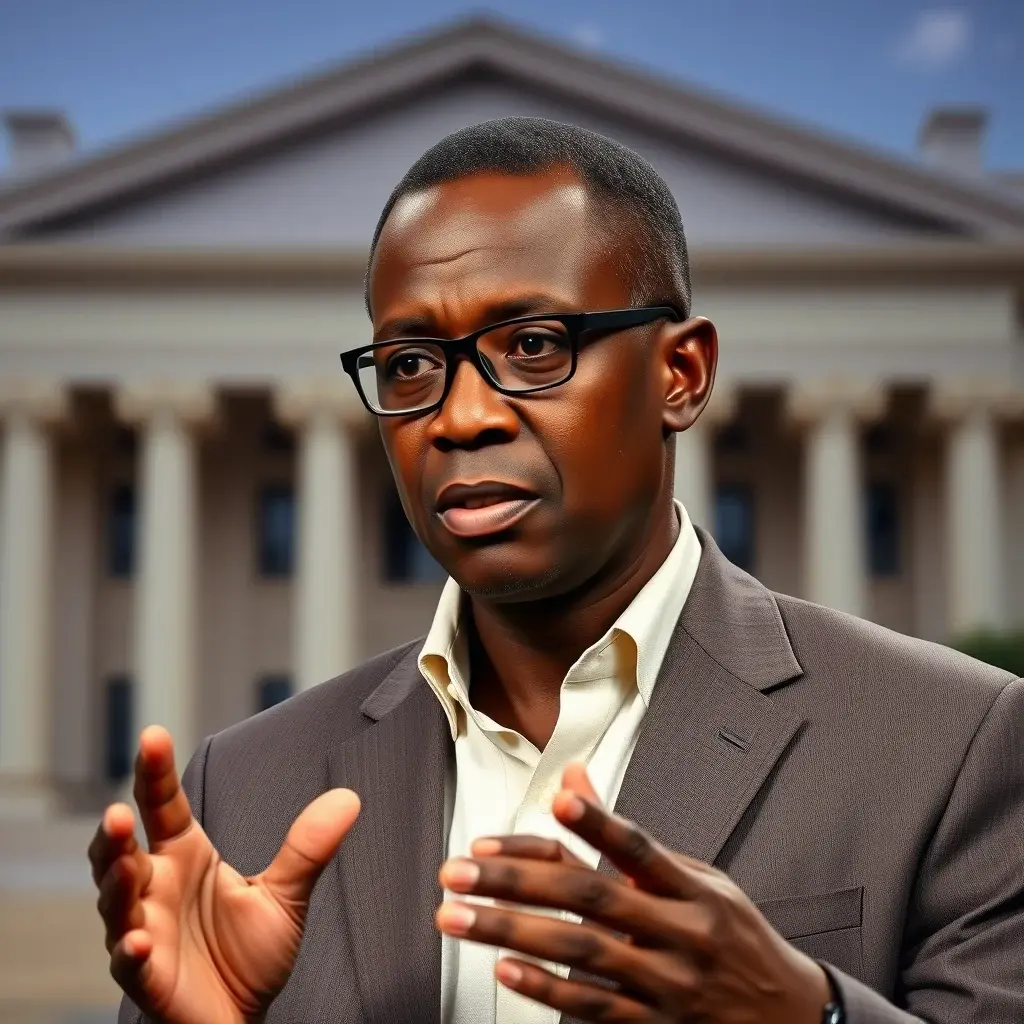
Professor of Finance and Economics at the University of Ghana, Godfred Bokpin, stated on Thursday, May 21st, that Ghana’s government has aggressively cut expenditures beyond the International Monetary Fund’s (IMF) expectations for 2025. While this fiscal strategy has yielded better-than-anticipated results, Professor Bokpin cautioned that these gains might not be sustainable in the long run due to underlying economic weaknesses.
A Shift in Fiscal Strategy
Professor Bokpin highlighted a significant departure from previous IMF-supported programs. Historically, such initiatives in Ghana leaned heavily on increasing revenue through taxation. The current government, however, has pivoted towards expenditure rationalization as its primary fiscal consolidation tool.
“Government, we over-impressed the IMF in 2025,” Bokpin remarked during an appearance on Joy FM’s Super Morning Show. He explained that earlier programs often saw fiscal adjustments concentrating on revenue generation rather than expenditure discipline.
“The fiscal adjustments tend to be heavy on the side of revenue versus expenditure rationalisation or expenditure cuts,” he elaborated. The 2025 approach, by contrast, deliberately switched this calibration.
Surpassing Targets at a Cost
This expenditure-focused strategy has led to substantial reductions in government spending. The government not only met but exceeded its primary surplus target for 2025. Initially aiming for a primary surplus of 1.5%, the government achieved a primary balance of 2.6%, surpassing the target by 1.1% of GDP.
Professor Bokpin acknowledged this achievement as a display of “renewed leadership in terms of expenditure discipline.” However, he stressed that this success came at a significant cost.
“That will come with huge expenditure cuts, foregone infrastructure spending, foregone development, and bear that in mind,” he cautioned. The aggressive cuts have likely impacted crucial areas such as infrastructure development and other long-term growth projects.
Sustainability of Gains Questioned
Despite the positive fiscal outcomes and a notable drop in inflation, Professor Bokpin expressed strong reservations about the long-term viability of these improvements. He argued that the underlying economic structure remains fragile and has not been fundamentally transformed by the measures employed.
“It will come back to bite you because you cannot sustain that level of gains with those kind of approach,” he warned. The sharp decline in inflation, while welcome, was achieved through methods that did not address the core issues plaguing the economy.
“The structure of our economy currently cannot and will not be able to support low inflation for long at 3.2% or 3.4% or so, because the measures we adopted in bringing inflation down did not alter the structure of the economy,” Bokpin explained.
Potential for Reversal
The professor further posited that as the government eventually eases its stringent expenditure controls, the economic gains achieved could easily be reversed. This suggests that the current stability is temporary and dependent on continued austerity.
“So once you exit, you unwind. When you unwind, you begin to see how the economy itself would also reverse,” he concluded. This outlook implies that a return to more expansionary fiscal policies could quickly undo the progress made, particularly if structural economic reforms are not simultaneously implemented.
Looking Ahead
The key challenge for Ghana moving forward will be to balance fiscal discipline with necessary investments in development and infrastructure. Observers will be watching closely to see if the government can transition from expenditure cuts to sustainable revenue generation and structural reforms that can support long-term economic stability and growth without triggering a reversal of recent gains.










Leave a Reply