
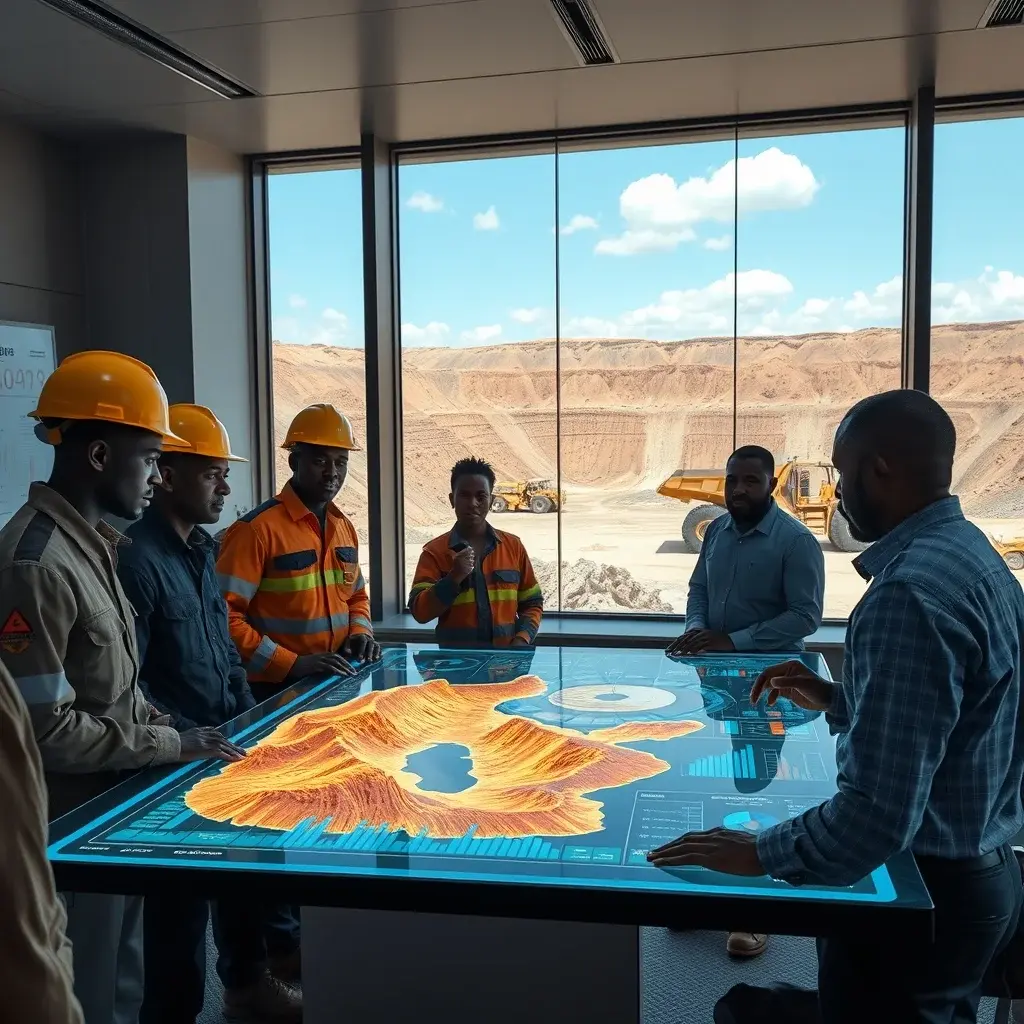
Ghana possesses the technical expertise and experience to significantly develop its extractive sector, but a critical shortage of capital remains the primary obstacle to fully exploiting its vast mineral resources, according to Dr. Frank Boateng, Acting Director of the Institute of Mining Research and Governance (IMRIG) at the University of Mines and Technology.
Technical Capacity Abounds
Speaking at a recent JoyBusiness Roundtable discussion focused on Ghana’s approach to gold mining, oil, and critical minerals, Dr. Boateng highlighted Ghana’s established position in the global mining landscape.
He asserted that Ghana is a mature gold-producing nation, ranking among the continent’s leading producers and standing alongside established mining powerhouses like Canada, Australia, and the United States in terms of experience and technological application.
“We have the experience and the technology,” Dr. Boateng stated, emphasizing that the nation’s human capital and knowledge base are well-equipped for advanced mining operations.
Capital: The Missing Link
Despite this strong technical foundation, the main impediment to scaling up mining operations is the substantial financial investment required for both exploration and production phases.
Dr. Boateng explained that the challenge lies not in skills or technology, but in securing the necessary large-scale financing. “What we don’t have is the financial resources,” he noted, adding that Ghana needs to leverage its human capital and knowledge to attract these funds from external sources.
The Exploration-Financing Nexus
Successful mining ventures, Dr. Boateng elaborated, are heavily contingent on early-stage exploration investment and the establishment of robust balance sheets before companies can effectively access capital markets.
He provided a practical example from his professional experience. A mining company he was involved with successfully raised approximately A$260 million on the Australian capital market.
This significant capital infusion followed an initial investment of nearly A$90 million dedicated solely to exploration activities, which confirmed viable mineral reserves and an appreciable mine life.
“Before we went to the capital market, we had already spent close to $90 million in exploration,” he explained. “We were very clear that we had the resource and an appreciable life of mine.”
Innovative Financing Models
Once the resource base was firmly established, a major Australian bank agreed to finance the operational phase under structured conditions designed to mitigate risk and ensure project accountability.
This financing arrangement included the bank taking a 7% equity stake in the mine. Dr. Boateng clarified this was not due to an interest in direct mining operations but rather to maintain oversight and confidence in the project’s management.
“They said they want 7% equity stake in the mine… not because they are interested in mining, but because they want their eyes in the operations,” he said.
Furthermore, the bank introduced hedging arrangements to protect the company against fluctuations in global gold prices. This strategy helped stabilize cash flows and supported predictable production planning.
“We will hedge the gold for you at about $200 below the spot price at the time. This helped our cash flow projections,” Dr. Boateng revealed.
Unlocking Ghana’s Potential
These structured financing models, combining equity stakes, risk management, and price hedging, enabled the company to commence production and successfully repay its investments over time.
Dr. Boateng stressed that these examples underscore the potential of innovative financing arrangements to unlock Ghana’s substantial mining potential, provided they are thoughtfully applied.
Future Outlook
The key takeaway from Dr. Boateng’s analysis is that Ghana’s path to maximizing its mining sector’s contribution to the economy lies in developing sophisticated financial strategies and fostering partnerships that can bridge the capital gap. The nation must focus on creating an environment attractive to international finance, demonstrating clear resource viability and offering structured investment vehicles that provide security and return for investors. The success of such models will be crucial in determining Ghana’s ability to transition from a technically capable nation to a leading global player in mineral resource development.










Leave a Reply