
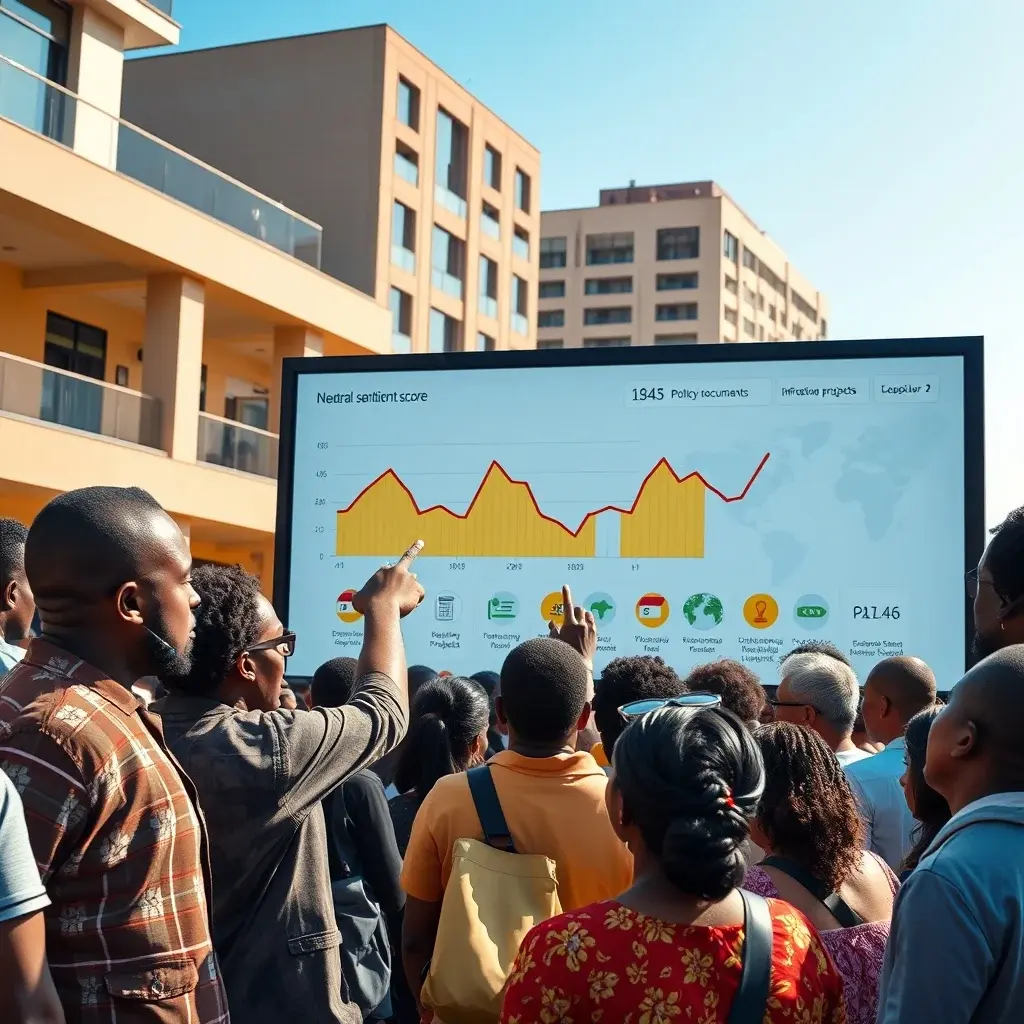
Accra, Ghana – May 2026 – Ghana’s online political conversation has undergone a significant transformation, moving away from a focus on political personalities and towards an evaluation of governance outcomes, policy delivery, and economic credibility. This shift was revealed in the latest IMANI-PULSE Sentiment Analysis Report, released in May 2026, which analyzed 10,000 online mentions across various digital platforms.
Context: The Evolving Political Landscape
Historically, Ghanaian political discourse, like many democracies, has often been dominated by the charisma and perceived strengths or weaknesses of individual political figures. Public engagement frequently centered on party loyalty and the personalities of presidential candidates and leading politicians. This often overshadowed substantive policy debates and the critical assessment of government performance.
However, recent socio-economic pressures and a growing demand for tangible results have begun to reshape citizen expectations. Increased access to information and diverse digital platforms has empowered the public to scrutinize leadership more closely and demand accountability for governance promises.
Analysis Reveals Performance-Centric Discourse
The IMANI-PULSE report, which analyzed data from Facebook, X, TikTok, YouTube, podcasts, web sources, and news feeds, found that policy discussions constituted a substantial 78.2% of classified conversations. This indicates a clear public appetite for substantive debate on governance issues.
Infrastructure delivery and accountability emerged as key drivers of public engagement. Citizens are actively discussing the progress and effectiveness of development projects and holding leaders accountable for their commitments. This focus on tangible results suggests a maturing electorate that prioritizes concrete achievements over ideological alignments.
Foreign policy and international engagement also rose to prominence, particularly in the latter half of May. This cluster of discussions highlights public interest in Ghana’s standing on the global stage and its diplomatic relations. Economic credibility, closely tied to accountability concerning International Monetary Fund (IMF) programs, remained a persistent and central theme throughout the period analyzed.
The report also noted increasing discussions surrounding opposition rebuilding and political preparedness. These conversations are increasingly framed around the capacity of various political actors to address future challenges effectively, rather than solely on their past affiliations or personal histories.
Neutral Sentiment Suggests Increased Objectivity
The overall sentiment score recorded by the report was a near-perfect neutral -0.01. This suggests a move away from strong emotional partisanship towards a more objective assessment of political performance. Citizens appear less driven by blind loyalty and more inclined to critically evaluate whether leaders can deliver on their promises and possess the credibility to navigate future challenges.
“Rather than asking who they support, citizens appeared to be asking whether leaders can deliver, whether promises have been fulfilled, and whether competing political actors possess the credibility required to address future challenges,” the report stated.
Implications for Ghana’s Democracy
This shift towards issue-driven political discourse has significant implications for Ghana’s democratic evolution. It signals a growing demand for evidence-based governance and a more informed citizenry that is capable of holding its leaders accountable based on performance metrics.
For political parties and individual politicians, this trend necessitates a strategic reorientation. Future campaigns and governance strategies must prioritize substantive policy proposals, transparent delivery mechanisms, and demonstrable economic management. Personality-driven politics may become less effective as voters increasingly weigh performance against electoral promises.
The focus on foreign policy and international engagement also suggests a desire for Ghana to play a more impactful role globally, with citizens keen to understand and evaluate the nation’s diplomatic efforts and economic partnerships.
Looking Ahead
The trend towards performance-based political evaluation is likely to intensify. Future reports will monitor whether this shift solidifies and how political actors adapt to this more demanding public scrutiny. Key areas to watch include the specific policy areas that gain traction, the depth of accountability discussions, and how opposition parties position themselves based on performance-based critiques rather than solely on ideological opposition. The ability of the government and opposition to demonstrate credibility in economic management and policy delivery will be crucial in shaping public opinion in the coming electoral cycles.










Leave a Reply