
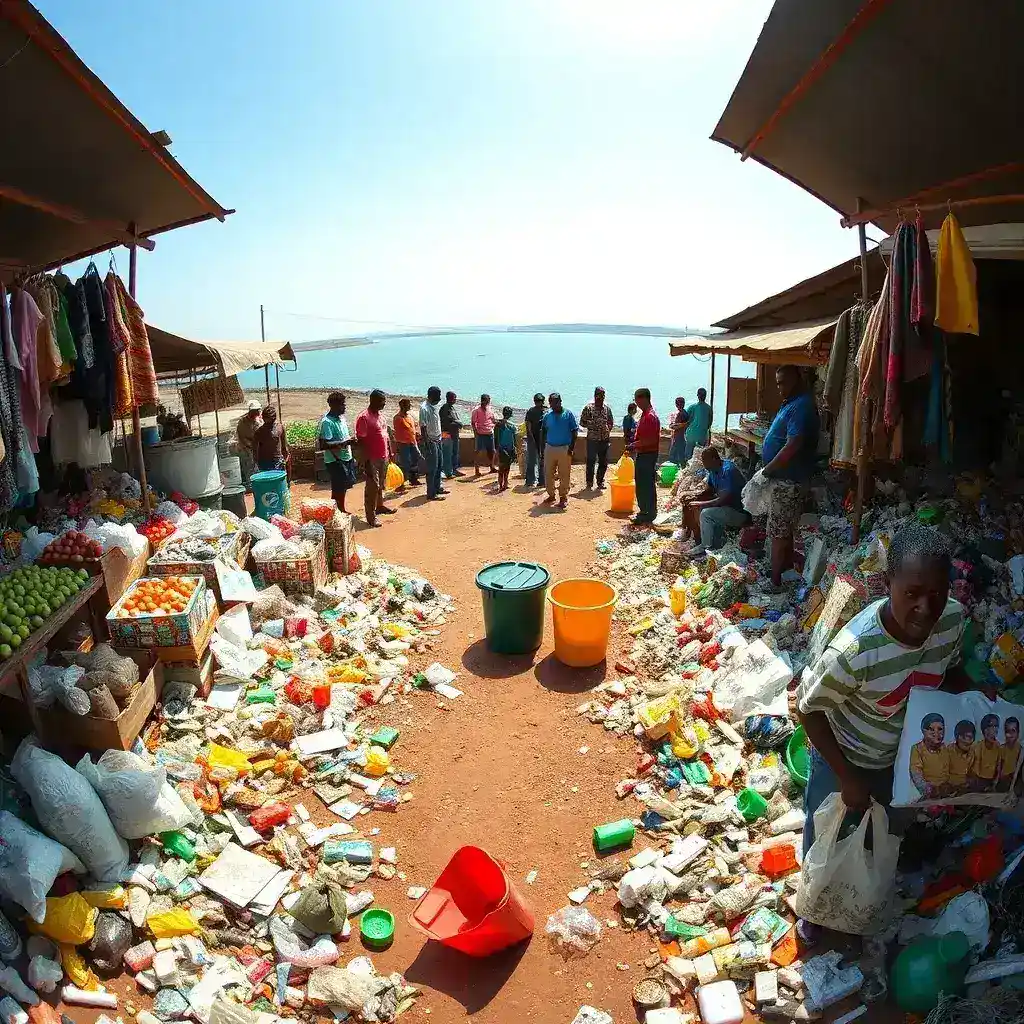
Ghana’s Environmental Protection Authority (EPA) announced a significant ban on selected plastic products, including polystyrene, effective May 25, 2026. This policy marks a crucial environmental milestone for the nation, confronting escalating challenges like deforestation and pervasive plastic pollution. The decision comes amid alarming statistics, with an estimated 8.2 billion water sachets consumed annually and over 3,000 metric tons of plastic waste generated daily in Ghana.
Context: The Scale of Ghana’s Plastic Problem
Ghana grapples with a monumental plastic waste crisis. An estimated 86 percent of the plastic waste generated is improperly disposed of, leading to blocked drainage systems, polluted rivers, and ultimately, the contamination of the Atlantic Ocean. The World Bank reported in 2020 that Ghana dumps approximately 250,000 metric tons of plastic waste into the ocean annually.
Adding to the domestic challenge, Ghana’s imports of plastic products were substantial, valued at approximately USD 2.311 billion between 2017 and 2019, according to the United Nations Conference on Trade and Development (UNCTAD). While plastic waste itself constitutes less than 1% of these imports, the influx of plastic packaging materials, valued at around USD 56 million in 2019, contributes significantly to the pollution load due to their short product lifecycles.
Control Factors: Addressing Human-Induced Pollution
The widespread reliance on single-use plastics, particularly for food packaging and takeaway services, has become a primary driver of environmental degradation and poor sanitation across Ghana. This human-induced issue necessitates long-term strategies, policy interventions, and a fundamental shift in public behavior.
Plastic waste chokes drainage systems, exacerbating flooding, pollutes water bodies, contaminates soil, and poses serious threats to human health and biodiversity. The continuous generation of plastic waste without adequate management systems has overwhelmed sanitation infrastructure. However, recent policy efforts and increased public awareness campaigns signal a growing commitment to tackling these issues.
The Cost-Benefit Debate: Beyond Immediate Financials
Discussions surrounding the plastic ban often center on the perceived higher cost of alternatives. While affordability and accessibility are valid concerns, this perspective frequently overlooks the extensive environmental, social, and health costs associated with continued plastic use.
The short-term convenience and apparent low cost of plastics mask their long-term detrimental impacts. Improper disposal leads to clogged drains, causing severe urban flooding that results in property damage, displacement, economic disruption, and loss of life. Furthermore, the burning of plastic waste releases toxic gases, contributing to respiratory illnesses and other health hazards.
Beyond health and environmental damage, plastic pollution tarnishes Ghana’s national image, impacting tourism and investment. A comprehensive cost-benefit analysis must encompass the long-term advantages of environmental protection, improved public health, reduced flooding, enhanced sanitation, and the promotion of sustainable lifestyles.
Adopting Best Practices: The Path Forward
Lasting environmental change stems from intentional behavioral shifts by governments, businesses, and citizens. Ghana is observing a positive trend, with increasing use of paper bags, paper packaging, and wooden cutlery at events and in commercial establishments.
For this transition to be successful, Ghana must implement deliberate, long-term policies that support local manufacturers of eco-friendly alternatives. A common pitfall is banning products without first bolstering domestic production capacity, which can lead to a resurgence in plastic use if alternatives remain unavailable or prohibitively expensive.
Government support through tax incentives, financing, technical assistance, and market access is crucial for industries producing paper packaging, reusable containers, and biodegradable materials. As highlighted by Benyah (2026), such policies encourage green procurement practices among businesses.
Rwanda’s experience offers a valuable model, where reusable ceramics, metal cutlery, and glass cups are standard practice, with plastic disposables virtually absent. This shift was driven by consistent government policy that shaped public attitudes and business culture over time, making environmental responsibility the norm.
Ghana’s planned ban on polystyrene and certain plastics is a positive step. However, its success hinges on more than just policy announcements. Citizens must adapt consumption habits, and businesses must invest in sustainable alternatives, prioritizing long-term national interest over short-term profits.
Collaboration among government agencies, manufacturers, hospitality businesses, local authorities, environmental groups, and consumers is essential. Enforcement must be consistent, public education continuous, and affordable alternatives readily accessible. By learning from successful models and adapting them to local realities, Ghana can significantly curb plastic pollution, improve sanitation, safeguard public health, and build a cleaner, more sustainable future.










Leave a Reply