
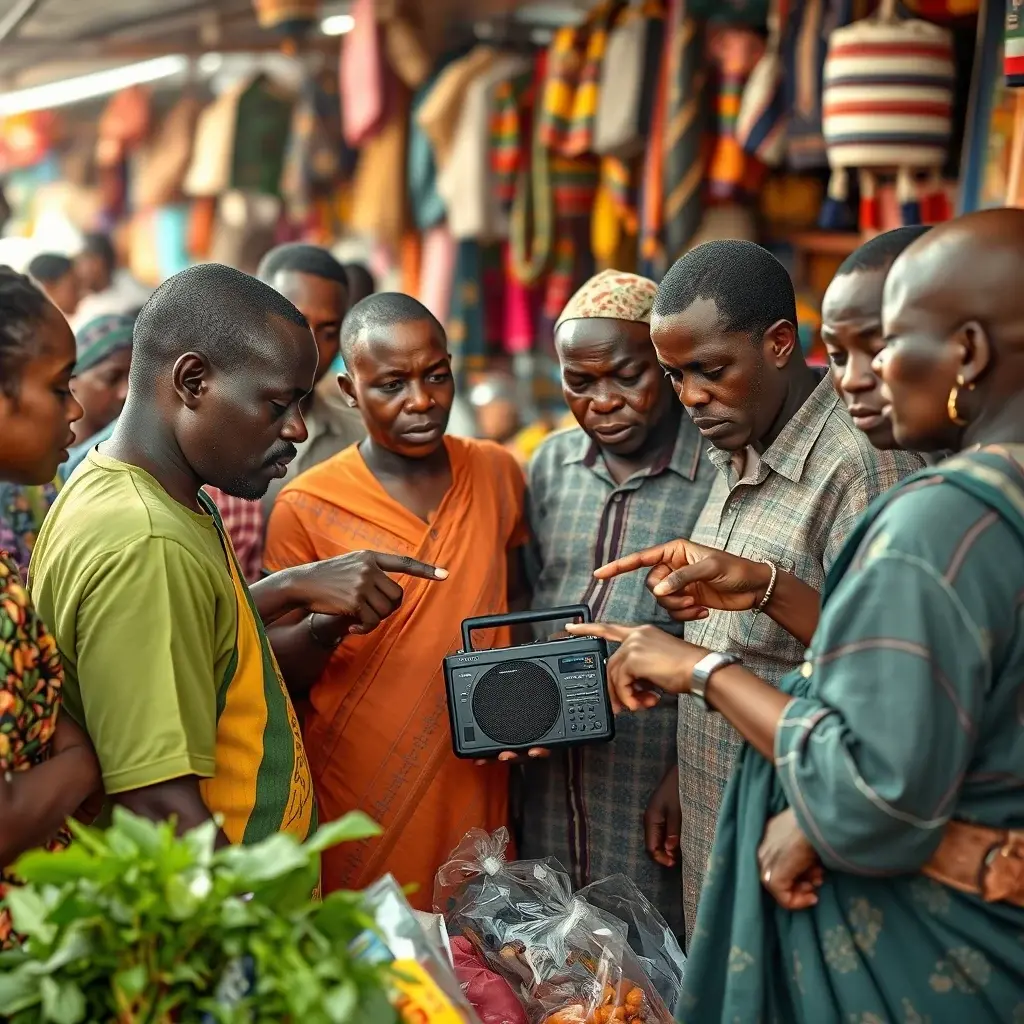
Private broadcasters have emerged as crucial pillars supporting Ghana’s democratic processes, enhancing public accountability, and driving national development by significantly expanding citizen participation and access to information. This trend has been amplified following the liberalization of broadcasting, which introduced a multiplicity of editorial voices and localized content into public discourse.
Transforming Public Discourse
According to Abdulai Awudu, President of the Ghana Independent Broadcasters Association (GIBA) and a media executive, the liberalization of Ghana’s airwaves fundamentally reshaped public discourse. It introduced diverse editorial perspectives, political viewpoints, and importantly, programming tailored to local languages and regional communities.
“Independent broadcasters introduced multiple editorial voices, political perspectives, local-language programming and region-specific reach content into national discourse,” Awudu stated during a recent address.
Radio, in particular, has become Ghana’s most accessible democratic platform, owing to its affordability, extensive geographical reach, and widespread use of local languages, Awudu highlighted. This makes it an indispensable tool for reaching populations, especially in rural areas where other media may not be as prevalent.
Enhancing Accountability and Governance
Call-in programs, political discussions, and community talk shows hosted by these broadcasters have empowered citizens to engage directly with governance and national policy debates. This direct line of communication fosters a more participatory democracy.
Awudu credited independent broadcasters with significantly strengthening accountability mechanisms. Through investigative journalism and sustained coverage of critical national issues, they hold institutions and public officials under scrutiny. Topics frequently covered include corruption, electoral processes, illegal mining, education reforms, healthcare delivery, and the implementation of major government programs.
He referenced public examination of initiatives like the Free Senior High School (SHS) policy and various agricultural development programs as prime examples of how media engagement influences national dialogue and policy direction.
Championing Development Journalism
Beyond political oversight, private broadcasters have increasingly embraced development journalism. Their focus extends to vital areas such as health education, agricultural advancements, environmental conservation, and promoting civic awareness among the populace.
During critical public health emergencies, such as the COVID-19 pandemic, media organizations played a pivotal role. They were instrumental in disseminating accurate information, combating misinformation, and bolstering national response efforts.
Commercial Challenges and Constitutional Mandate
Despite their vital role, Awudu acknowledged that many of these public-interest programs are not commercially lucrative. This often subjects broadcasters to considerable financial pressure and significant operational risks.
“Ask any commercial broadcaster, and they will tell you how these national development issues are not commercially rewarding and come with huge risks to their commercial interest and the safety of their employees and business,” Awudu emphasized. This financial reality poses a constant challenge to maintaining such programming.
Nonetheless, the sector continues to fulfill its constitutional mandate within Ghana’s democratic framework. This mandate requires the media to foster informed public opinion and contribute to building national consensus, even in the face of commercial hurdles.
Future Outlook
The ongoing commitment of private broadcasters to informing the public and holding power accountable, despite financial constraints, underscores their importance to Ghana’s democratic health. Future developments will likely focus on sustainable models for public-interest journalism and the continued evolution of media’s role in national development, particularly as digital platforms offer new avenues for engagement and potential revenue streams.










Leave a Reply