
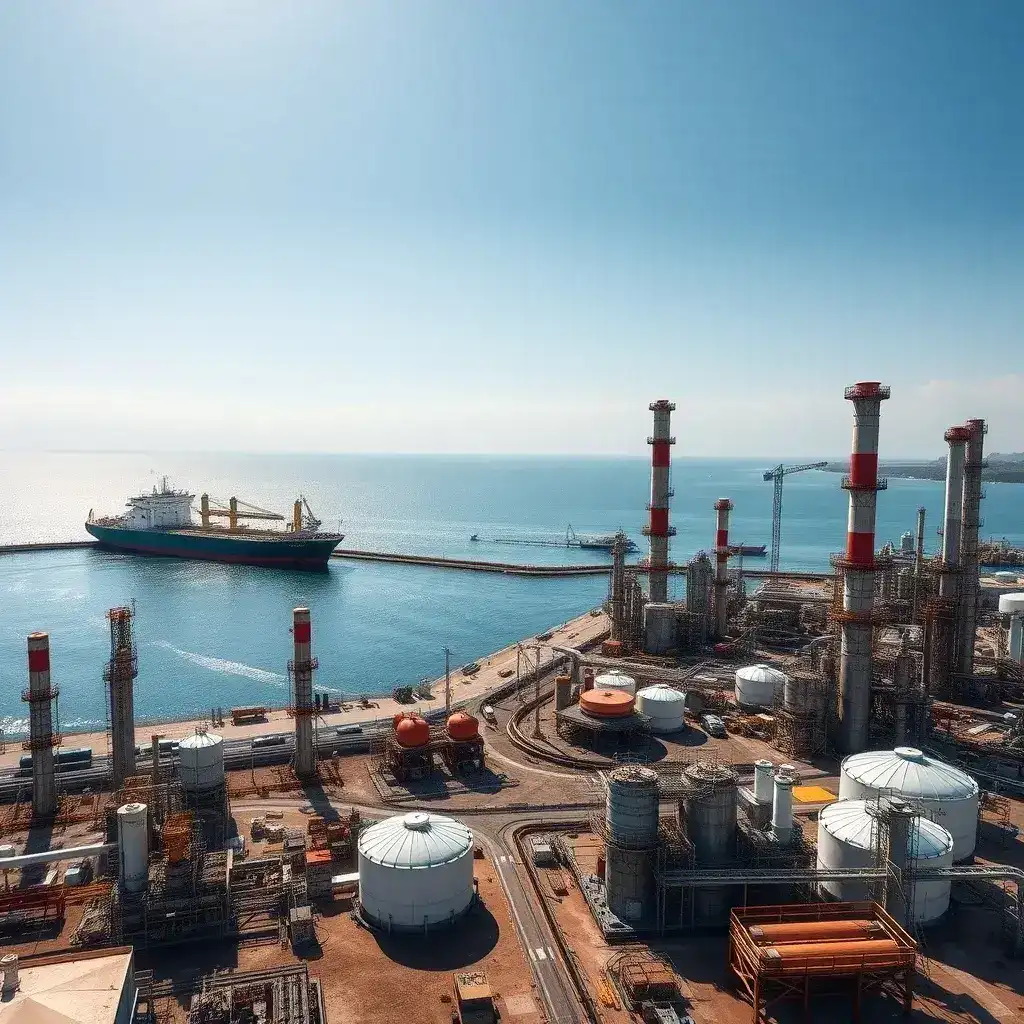
President John Dramani Mahama announced Sunday, May 31, 2026, that the Tema Oil Refinery (TOR) in Ghana will commence processing the nation’s own crude oil by June 2026. This initiative aims to boost local value addition for natural resources and decrease reliance on imported refined petroleum products. A shipment of crude from Ghana’s offshore fields is slated for delivery to TOR for processing, marking a revival of a policy from Mahama’s previous administration.
Reviving Local Value Addition
Speaking at a diaspora town hall meeting in London, President Mahama emphasized the strategic importance of processing Ghana’s natural resources domestically. He highlighted the current practice of exporting raw materials like gold, bauxite, and manganese, only to re-import finished products at a higher cost.
“We are just about to make history again. We did it in my first term, but after we left office, it didn’t continue. We are about to start refining our crude,” President Mahama stated. “In June, we are delivering a parcel of Ghanaian crude from our own oil fields to the Tema Oil Refinery to process.”
The President elaborated on the economic inefficiencies of exporting raw materials. “We process manganese, bauxite, gold, and everything, and then we ship them out to be processed by somebody else. In that processing, we are creating jobs in that other person’s economy, and then the products for which we sent the ores abroad are made into finished products, and those finished products are exported back to us,” he explained.
Strengthening the Energy Sector
President Mahama also addressed the state of Ghana’s energy sector, noting that his administration inherited an estimated US$1.5 billion in energy sector debt. He specifically mentioned that a US$500 million World Bank Partial Risk Guarantee, intended for payments to Italian energy company ENI for gas from the Sankofa Field, had been depleted prior to his government taking office.
The administration has since worked to restore this guarantee. “At the time we took over, that World Bank guarantee had been drawn down to zero. Today, through the work of the Minister of Energy and the Minister of Finance, we have restored that World Bank guarantee fully to US$500 million,” President Mahama reported. This restoration has allowed for an increased supply of gas, crucial for power generation.
Attracting Upstream Investment
Further bolstering the energy sector, President Mahama announced significant new investment commitments from existing partners in Ghana’s upstream petroleum sector. Partners involved in the Jubilee Field have committed an additional US$2 billion towards drilling new wells, aiming to enhance oil and gas production.
Additionally, ENI is set to invest another US$1.5 billion in the Offshore Cape Three Points (OCTP) project. “The Jubilee partners and we signed an agreement for them to invest another US$2 billion in drilling new wells offshore Ghana to increase the amount of oil and gas that we produce. We have also signed with ENI to invest another US$1.5 billion in the OCTP field to increase the amount of gas and oil that we produce,” he detailed.
Stabilizing Power Producer Relations
Addressing debts owed to independent power producers (IPPs), President Mahama stated that liabilities totaling approximately US$1.5 billion have been refinanced. A clear payment schedule has been established and is being adhered to.
“We have refinanced that debt, given them a payment plan, and we have met every single payment to them. They, too, are happy and producing power, and our power sector is stable,” he affirmed. This stability is crucial for national development and economic growth.
Future Outlook
The recommencement of domestic crude oil refining at TOR represents a significant step towards economic self-sufficiency for Ghana. The substantial new investments in the upstream petroleum sector signal continued confidence from international partners and are expected to bolster production levels. The successful refinancing of IPP debts and restoration of World Bank guarantees point to a more stable and predictable energy landscape. The focus will now be on the successful execution of TOR’s refining operations and the sustained delivery of increased oil and gas production, crucial for meeting domestic energy needs and potentially increasing export revenues.










Leave a Reply