
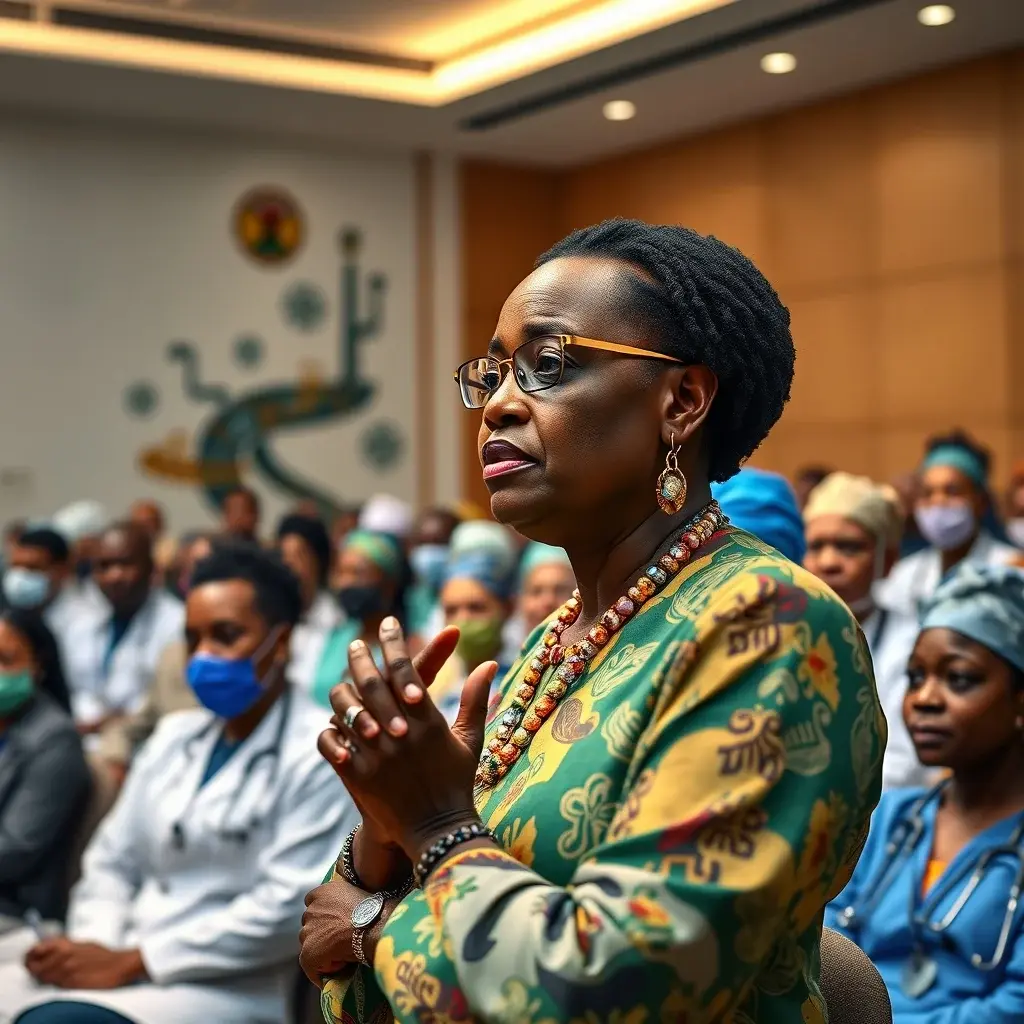
Vice President Jane Naana Opoku-Agyemang has spearheaded a call for comprehensive reforms within Ghana’s health sector, highlighting the critical need for enhanced training, robust technical support, and improved public engagement to elevate healthcare delivery across the nation. The Vice President articulated these urgent needs during a significant health sector engagement held recently.
Rethinking Health Professional Training
Central to the Vice President’s address was the imperative to re-evaluate how healthcare professionals are trained. She stressed that current training paradigms must adapt to meet the evolving demands of the country’s healthcare landscape. This includes moving beyond a singular, generic understanding of roles like nursing.
Opoku-Agyemang emphasized the necessity for closer integration between the training of doctors and nurses. She argued that a more collaborative approach during their formative years would better equip nurses to provide effective support to physicians. This, she explained, is crucial for seamless assistance and the delivery of quality care.
The Vice President urged training institutions to critically assess their curricula. She posed questions about current national needs, the adequacy of existing training, and potential gaps in specialization or the need for entirely new educational frameworks. These challenges, she noted, should spur innovation among educators.
Strengthening Technical Support for Medical Equipment
Another significant concern raised was the maintenance of medical equipment. Vice President Opoku-Agyemang pointed out that technicians responsible for equipment upkeep are frequently overlooked in the procurement and deployment processes. This oversight often leads to prolonged downtime for essential medical machinery.
She illustrated this by describing scenarios where minor issues, such as a loose bolt, render complex equipment unusable for extended periods. The Vice President suggested that involving technicians earlier, perhaps even during the assembly and installation phases, would empower them with the knowledge to perform effective maintenance.
This proactive involvement, she argued, would ensure that medical facilities are not left with sophisticated equipment that quickly becomes non-operational due to a lack of understanding of their intricacies. Furthermore, she questioned the lengthy servicing intervals for medical equipment, asking if current schedules align with the actual usage patterns and operational demands.
Enhancing Public Engagement and Regional Access
Vice President Opoku-Agyemang also called upon the media to play a more active role in fostering public discourse on healthcare issues. She recognized the media’s power in communicating the importance of healthcare services and engaging citizens in the ongoing dialogue about improvements.
Addressing regional disparities, the Vice President specifically highlighted the need to extend healthcare access beyond major urban centers. She urged a focus on underserved communities in the Savannah, Northern, Upper East, and Upper West Regions, emphasizing that quality healthcare should reach all corners of the country.
The interconnectedness of infrastructure and healthcare delivery was also underscored. The Vice President pointed out the direct link between road networks and the ability to provide timely medical assistance, particularly in remote areas. Improved roads, she indicated, are fundamental to effective healthcare outreach and patient transport.
Looking Ahead
The Vice President’s calls signal a potential shift towards a more holistic and integrated approach to Ghana’s health sector. The emphasis on training reform, coupled with a renewed focus on technical capacity and equitable access, suggests a strategic effort to address systemic weaknesses. Stakeholders in the health sector, including educational institutions, medical equipment suppliers, and government agencies, will likely face pressure to adapt their strategies. The involvement of the media and the focus on infrastructure development indicate that future reforms may extend beyond clinical services to encompass broader societal factors influencing health outcomes. Observers will be watching to see how these proposed reforms translate into concrete policy changes and tangible improvements in healthcare delivery across Ghana.










Leave a Reply