
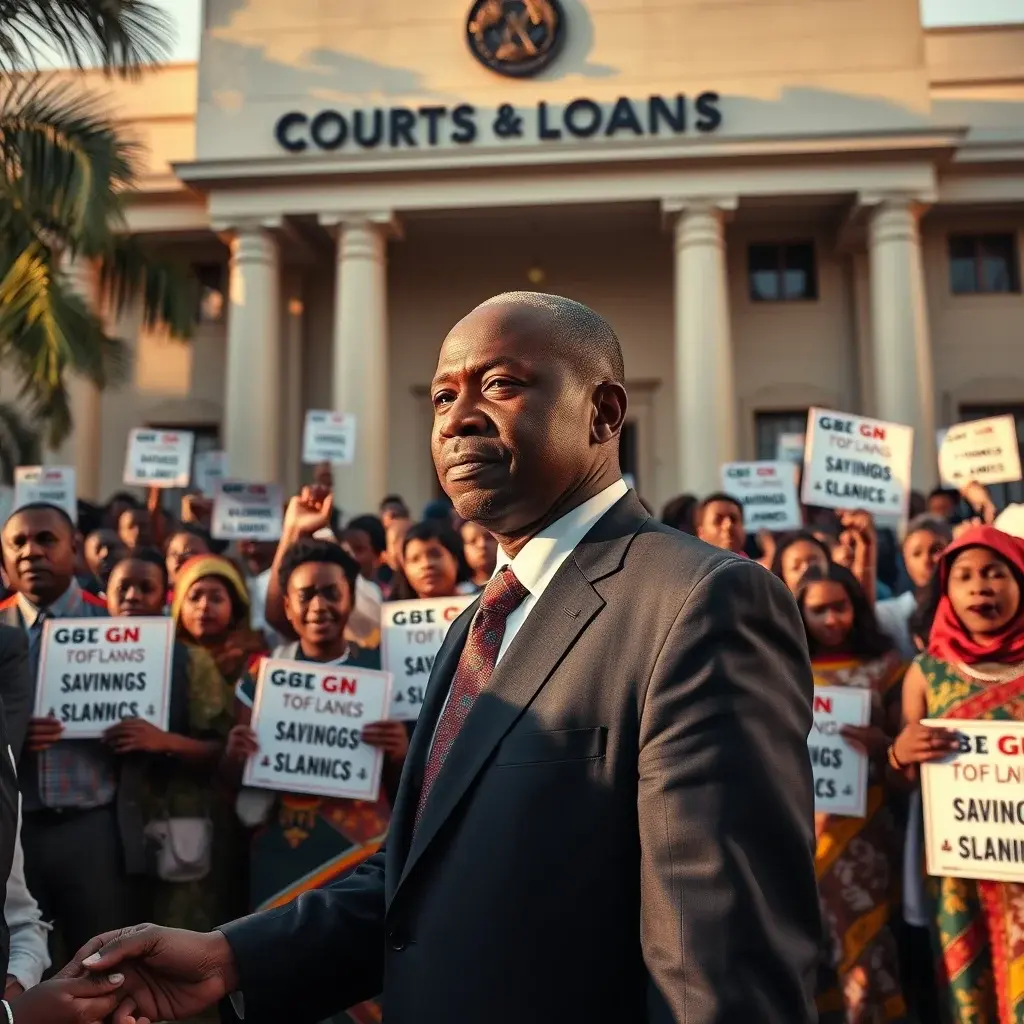
Founder of GN Savings and Loans, Dr. Papa Kwesi Ndoum, publicly thanked former President John Dramani Mahama on Saturday, May 23rd, following a Court of Appeal ruling that restored the financial institution’s license and ordered the return of its assets. The victory comes after a protracted legal dispute stemming from the 2019 banking sector clean-up exercise conducted by the Bank of Ghana.
Background of the Financial Sector Clean-up
In 2019, the Bank of Ghana initiated a widespread clean-up of the banking sector, revoking the licenses of several financial institutions. This action was justified by the central bank as a necessary measure to ensure financial stability, address liquidity challenges, and protect depositors’ funds. The exercise led to the collapse of numerous banks, microfinance companies, and savings and loans institutions, causing significant disruption within the financial landscape of Ghana.
Court of Appeal Ruling and Ndoum’s Gratitude
The Court of Appeal’s decision on Thursday, May 21st, overturned previous rulings that had upheld the revocation of GN Savings and Loans’ license. The court’s order mandates the return of the company’s assets and those of its shareholders, marking a significant reprieve for the institution and its founder. Dr. Ndoum, in a series of social media posts, expressed profound gratitude to former President Mahama, specifically referencing a campaign promise made by Mahama as a presidential candidate.
In a Facebook post, Dr. Ndoum stated, “Gratitude Four. To H.E. John Dramani Mahama for the promise he made as a presidential candidate to return banks collapsed unjustly.” He further commended Mahama for fostering an enabling social and economic environment in Ghana. These statements position the court’s decision as a fulfillment, at least in part, of a political pledge.
Contrasting Legal Interpretations Emerge
However, the narrative of the victory being directly tied to a political promise was immediately contested. Cletus Alengah, Dr. Ndoum’s lawyer, speaking on the program ‘Newsfile’ on the same day as Ndoum’s Facebook post, asserted that the Court of Appeal’s ruling was independent of any government promise regarding license restoration.
Alengah clarified that the legal basis for the victory rested on the merits of the case presented before the court. He emphasized that the court’s decision was a judicial pronouncement based on legal arguments and evidence, rather than a consequence of executive or political intervention. This distinction highlights a potential divergence in how the outcome is being perceived and communicated by different stakeholders.
Implications for GN Savings and Loans and the Financial Sector
The Court of Appeal’s decision has immediate and substantial implications for GN Savings and Loans. The restoration of its license allows the institution to resume operations, subject to regulatory oversight from the Bank of Ghana. The return of assets is crucial for the company to potentially meet its obligations to depositors and shareholders, and to rebuild its financial standing.
For the broader Ghanaian financial sector, this ruling could set a precedent. It may encourage other institutions that had their licenses revoked during the clean-up to explore legal avenues for redress. The case underscores the complexities of regulatory actions and the judiciary’s role in reviewing such decisions. It also raises questions about the process and criteria used during the banking sector clean-up and the potential for judicial review to alter outcomes.
Looking Ahead: Regulatory Scrutiny and Market Impact
Moving forward, the focus will be on how GN Savings and Loans navigates its re-emergence in the market. The Bank of Ghana will likely maintain a close watch on its operations to ensure compliance with all regulatory requirements. The institution’s ability to regain public trust and attract customers will be critical for its long-term viability.
Furthermore, the differing interpretations of the court’s victory—one emphasizing political fulfillment and the other stressing judicial independence—will continue to be a subject of discussion. Observers will be watching to see if this ruling influences future regulatory approaches or legal challenges within Ghana’s financial industry, and how the Bank of Ghana responds to such judicial reversals.










Leave a Reply