
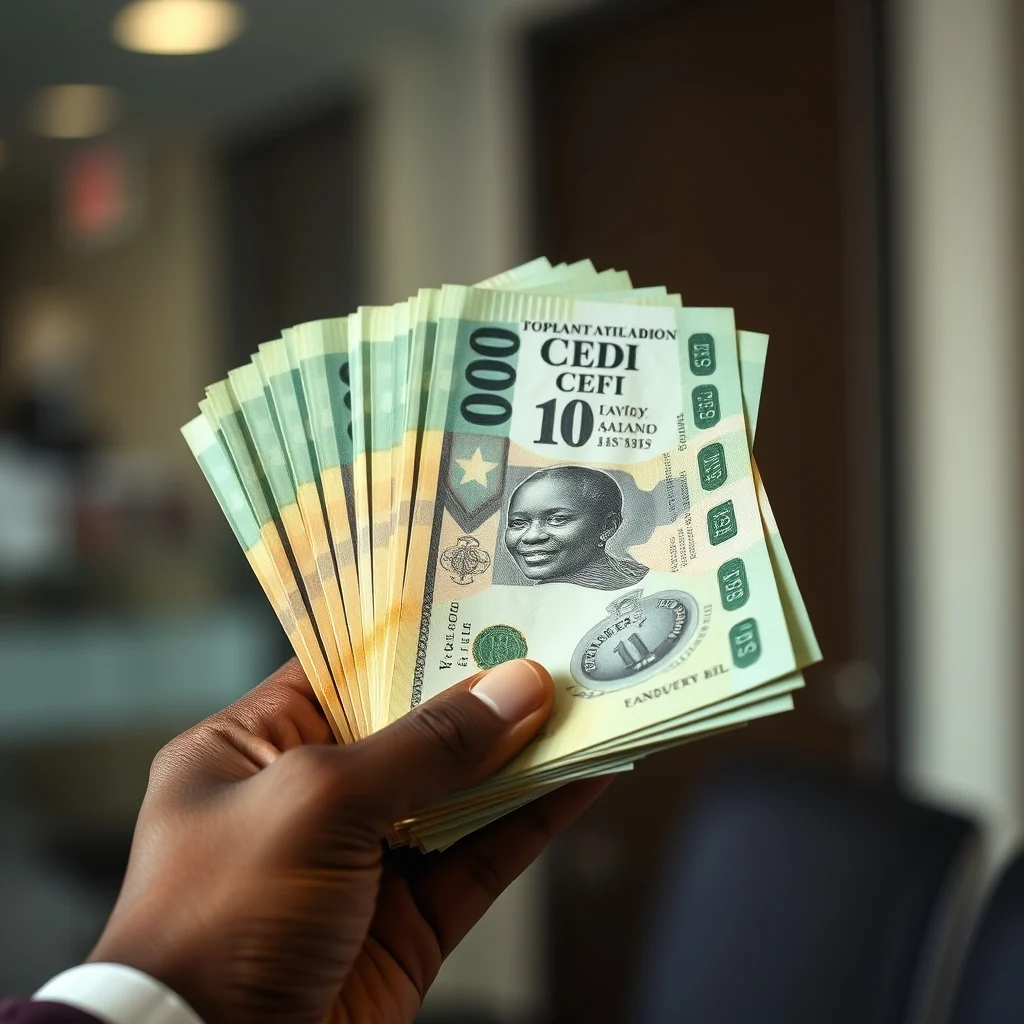
The Ghanaian government has failed to meet its target for treasury bill auctions for the seventh consecutive week, signaling investor reluctance to accept prevailing interest rates and a growing demand for higher returns. The Bank of Ghana’s latest auction results reveal a continued undersubscription, with investors purchasing T-bills worth slightly over GH¢4.48 billion against a target of GH¢4.89 billion.
This persistent undersubscription, exceeding 10% in the most recent auction, raises concerns about the government’s ability to finance its short-term debt obligations and manage its cash flow effectively. The central bank accepted approximately GH¢4.0 billion of the tendered bids, further highlighting the gap between the government’s financing needs and investor appetite.
Context of Declining Investor Confidence
Treasury bills are short-term debt instruments issued by the government, typically with maturities of 91, 182, or 364 days. They are considered low-risk investments, and their yields are closely watched as indicators of the government’s borrowing costs and broader economic conditions. Historically, these auctions have been crucial for the government to raise funds for its operational expenses and development projects.
The current trend of undersubscription suggests a significant shift in investor sentiment. This reluctance stems from a complex interplay of factors, including rising inflation, currency depreciation, and broader economic uncertainties. Investors are increasingly demanding higher yields to compensate for the perceived risks associated with holding government debt in the current economic climate.
Auction Performance and Yield Movements
In the latest auction, the 91-day bill remained the most sought-after instrument, attracting bids totaling GH¢1.89 billion. The government accepted GH¢1.88 billion of these bids. The 364-day bill also saw substantial interest, with bids reaching approximately GH¢1.8 billion, of which GH¢1.7 billion was accepted.
The 182-day bill garnered bids of GH¢764.25 million, and all these bids were accepted by the Bank of Ghana. Despite the overall undersubscription, the accepted amounts indicate that the government is still securing a significant portion of its targeted financing, albeit at a potentially higher cost.
While interest rates have been on an upward trajectory, the surge is more pronounced at the longer end of the yield curve. The yield on the 91-day bill remained stable at 4.92%. However, the 182-day bill saw a slight increase, moving to 6.97% from the previous week’s 6.96%. The most significant movement was observed in the 364-day bill, where the yield inched up by 7.0 basis points to 10.19%.
Expert Perspectives and Data Analysis
Financial analysts suggest that the consistent undersubscription points to a hardening of investor expectations regarding interest rates. “Investors are recalibrating their risk premiums in light of persistent inflation and a challenging macroeconomic outlook,” noted a senior economist at a local financial institution. “They are no longer willing to lend to the government at previous rates without adequate compensation for the erosion of purchasing power and potential currency risks.”
Data from the Bank of Ghana highlights the widening gap between bids tendered and bids accepted, particularly for longer-dated bills, reinforcing the trend of rising yields. The increasing cost of borrowing could put pressure on the government’s budget, potentially leading to cuts in public spending or a need to explore alternative, possibly more expensive, financing options.
Implications for the Economy and Investors
The sustained failure to meet T-bill targets has several implications. For the government, it means higher borrowing costs, which can strain public finances and potentially crowd out private sector investment. It could also signal a need for fiscal consolidation measures or policy adjustments to restore investor confidence.
For investors, the rising yields on T-bills, while potentially attractive, also reflect underlying economic instability. Savers might find better returns on government debt, but the broader economic environment remains a concern. The situation also puts pressure on the central bank to manage inflation and stabilize the currency to create a more predictable investment landscape.
Looking ahead, market participants will be closely watching the Bank of Ghana’s upcoming auctions and the government’s fiscal strategies. The ability of the government to address investor concerns and demonstrate a clear path towards economic stability will be critical in determining whether the undersubscription trend reverses in the coming weeks. Further increases in borrowing costs could have ripple effects across the economy, influencing everything from loan rates for businesses and individuals to the overall cost of capital.










Leave a Reply