
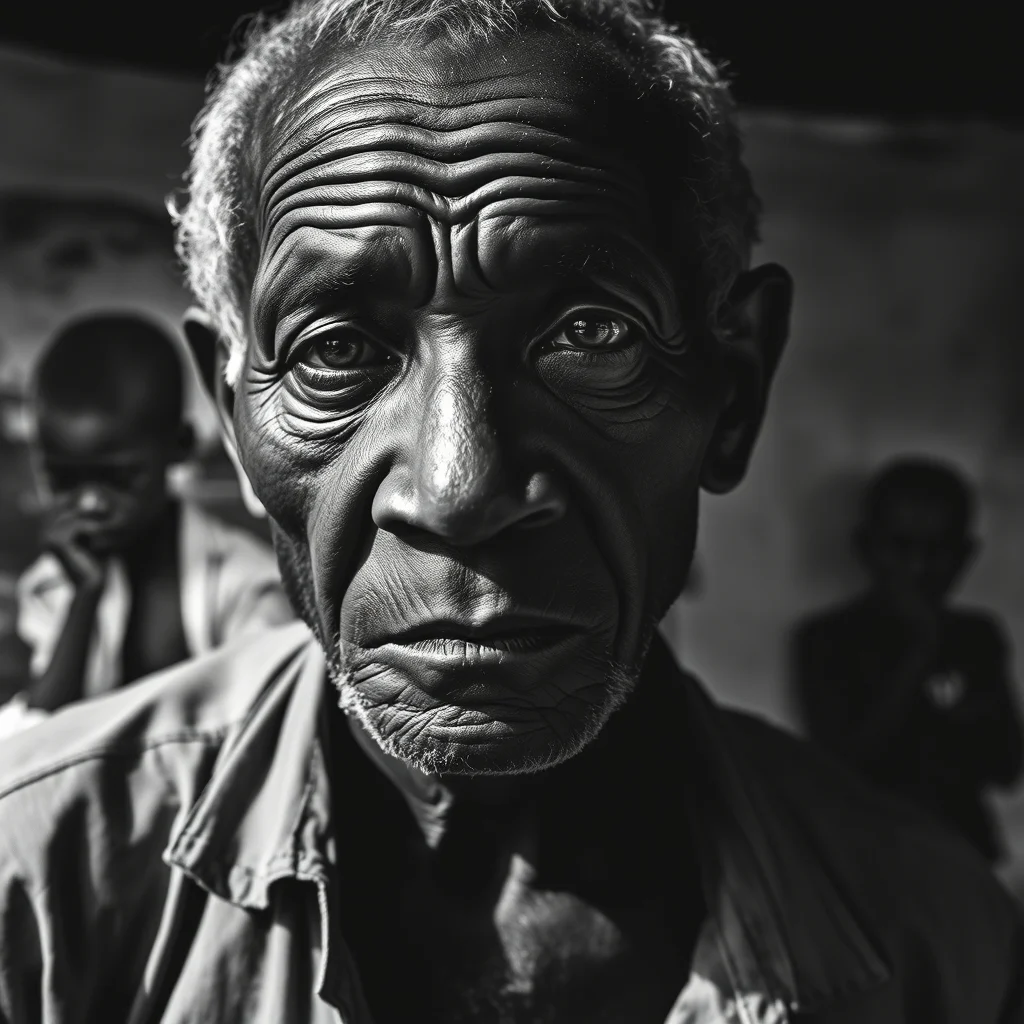
Grammy Award-winning director Meji Alabi, known for his work with global music superstars like Beyoncé and Burna Boy, has turned his attention to a deeply personal and historically significant project: a documentary exploring his Nigerian grandfather’s role in the devastating Biafran War. Titled ‘Surviving Biafra: Voices from the Nigerian Civil War,’ the BBC Africa Eye production delves into the brutal conflict that raged from 1967 to 1970, a period of immense ethnic tension that nearly tore the young West African nation apart.
Alabi, 37, who was born in London to Nigerian parents and later moved to Texas, admitted his prior knowledge of the war was minimal. “It was very much an eye-opener for me. I just grew up not knowing much about the war at all, or who was fighting who,” he stated. This revelation came as he collaborated with his uncle, filmmaker Leke Alabi-Isama, on the documentary.
A Family Connection to the Conflict
The documentary’s genesis lies in the personal history of their grandfather, Godwin Alabi-Isama, a former army commando who fought for the federal army against the ethnic Igbo separatists seeking an independent state of Biafra in the southeast.
While Alabi explored the federal army’s perspective through his grandfather’s experiences, his uncle Leke, who co-founded their Lagos-based production company PriorGold Pictures, discovered a more profound and harrowing understanding of the war’s impact.
“I only just saw it from a Nigerian [federal army] perspective,” Leke explained. “I never knew of the horrors. I never knew of the suffering and the pain of the other side.” He and his numerous siblings had grown up hearing war stories from their father, Godwin, who served as chief of staff to Brigadier Benjamin Adekunle of the 3 Marine Commando.
Unearthing Hidden Histories and Traumas
The conflict, also known as the Biafran War, erupted following a series of military coups and widespread massacres against the Igbo people in northern Nigeria. Approximately a million Igbos subsequently returned to their ancestral lands in the southeast, where three states declared independence as the Republic of Biafra. The Nigerian government responded with force, initiating one of the continent’s bloodiest civil wars.
Estimates suggest between 500,000 and three million people perished, many of them children. The war became notorious as the world’s first televised humanitarian disaster, with graphic images of starving children broadcast globally.
For decades, many Nigerians learned about this critical chapter primarily through oral traditions. History was not consistently included in the national school curriculum for many years, with Leke describing it as “a line or two lines in a book.”
“It’s still not fully covered, you know, the extent of the suffering. And I think, for me, Nigeria is just scared to confront its own truth,” Leke commented.
Revisiting a Hero’s Legacy
Leke’s perception of his father as a “war hero” began to shift in his early thirties when he started researching the war. He discovered the mass starvation in Biafra and his father’s potentially controversial role, including allegations of war crimes against the 3 Marine Commando, such as the execution of civilians.
“The first time I saw those clips of people, children starved… it was horrific. And I think that was a moment of truth for me,” Leke confessed. “That was the moment for me where the horrors of the war then became facts. Like, OK, something really terrible happened and my dad was on the other side of it.”
He added, “When you find out that, you know, your truth is not the only truth, it was a humbling moment.”
A Call for Confrontation and Healing
The filmmakers noted the scarcity of Nigerian-made films about the civil war and the difficulty in finding truthful accounts, motivating their decision to tackle the subject. “It’s a topic that, you know, is whispered,” Meji remarked, contrasting it with his high-profile music video work that has showcased Nigerian culture globally.
“It hasn’t been attacked head on and, you know, presented from an inquisitive younger generation like this before,” he added. The documentary features music by Ghanaian composer Ray Michael Djan Jr. and draws on the expertise of the BBC’s Igbo service, Igbo historians, and first-hand accounts from survivors, some speaking publicly for the first time.
“This generation is slowly fading, and if we do not preserve their testimonies now, we risk losing not only their memories, but the chance to fully document this history in a way that can contribute to understanding and healing,” Leke emphasized.
The documentary includes interviews with former female soldiers from opposing sides, an aid worker, and former BBC correspondent Martin Bell, who critique the international community’s response. The BBC editorial team specifically guided the interviews to challenge Godwin Alabi-Isama on the war crime allegations.
The Nigerian government’s blockade of food and supplies into Biafra exacerbated the famine, contributing to hundreds of thousands of deaths. Leke recounted showing his father footage of emaciated children, noting his father’s voice shook for the first time in his 43 years of existence.
During the interview, Godwin Alabi-Isama also revealed he unknowingly consumed human flesh when his unit was served food by villagers in occupied Biafran territory.
In response to the documentary, Nigeria’s government expressed hope that it would serve as a reminder of national progress and the importance of “dialogue, reconciliation and shared purpose.”
Both Leke and Meji hope for deeper engagement. “My hope is that this film encourages Nigerians to confront the darker parts of our shared history with honesty, reflection, and empathy,” said Leke. Meji added, “We really hope this documentary encourages more survivors to tell their stories and document our history further. It’s up to us to do it.”










Leave a Reply