
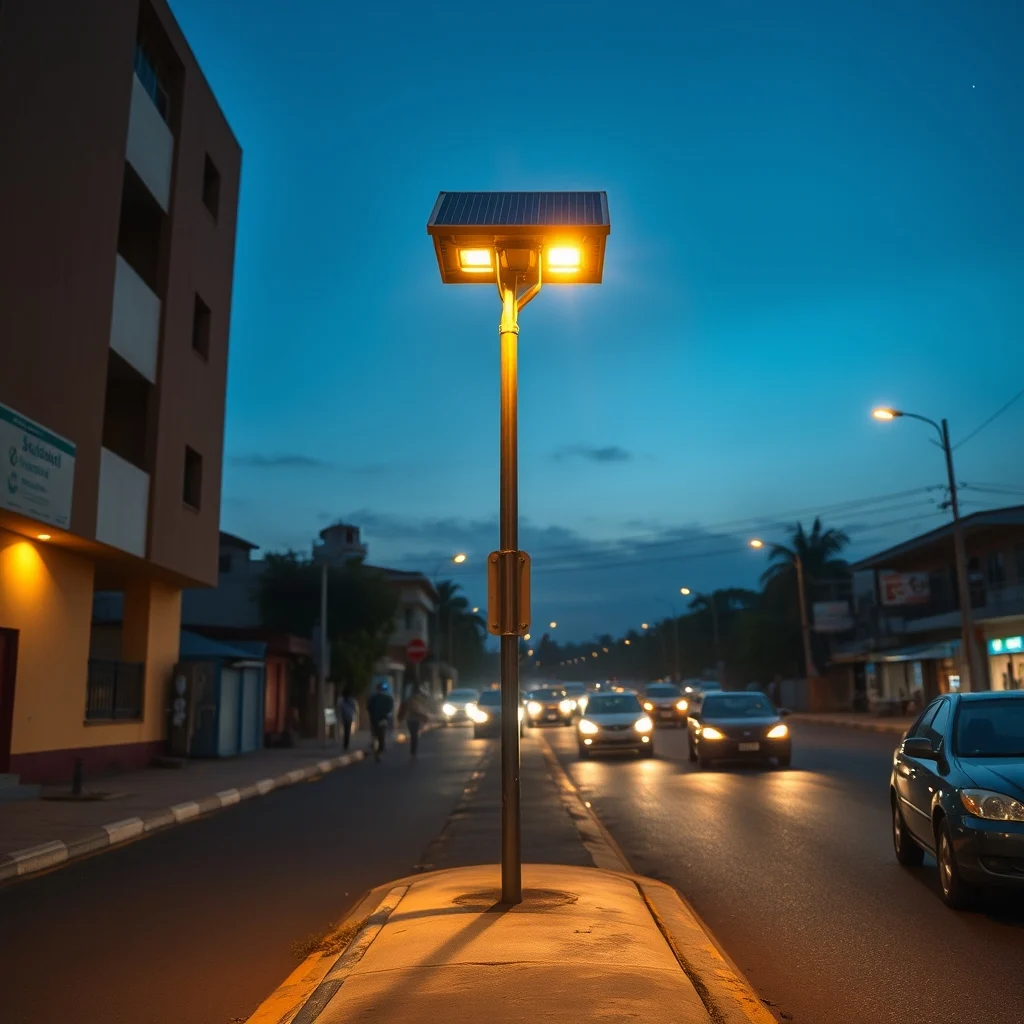
The Greater Accra Region has seen the installation of 3,000 solar-powered streetlights across major roads, a move announced by the Regional Minister, Linda Obenewaa Ocloo, on May 28. This initiative, a collaboration between the Greater Accra Regional Coordinating Council (RCC) and the Ministry of Energy and Green Transition, aims to significantly improve visibility and enhance public safety throughout the region.
Context of the Initiative
The deployment of these solar streetlights is part of a broader strategy to upgrade the region’s lighting infrastructure. Poor visibility can contribute to increased crime rates and traffic accidents, particularly during nighttime hours. Furthermore, the use of solar power offers an environmentally friendly and potentially cost-effective solution for street lighting, reducing reliance on the national grid and mitigating issues related to cable theft.
Detailed Rollout and Affected Areas
Minister Ocloo detailed that the 3,000 solar streetlights have been strategically placed along several key routes within the Greater Accra Region. These include the stretch from Katamanso School Junction to Botwe School Junction, Ntreh Avenue, Amankani Avenue, Adjei Onanor Street, Ashyie Fulani Road, and the corridor from the Palace Mall to Aglizaa Road. Additional streets have also undergone rehabilitation as part of this comprehensive effort to bolster lighting conditions.
The initiative addresses specific concerns, such as reducing cable theft, which is often more prevalent in poorly lit areas. By providing reliable and efficient lighting, the RCC hopes to deter criminal activities and create a more secure environment for residents and commuters alike.
Call for Enhanced Vigilance from Local Leaders
In her address, Minister Ocloo emphasized the critical need for heightened vigilance from Metropolitan, Municipal, and District Chief Executives (MMDCEs). She urged them to move beyond office-based duties and actively monitor public spaces, including roads, markets, and schools, to ensure the safety of their constituents. This directive underscores the government’s commitment to proactive public safety measures.
“These are not normal times,” Minister Ocloo stated, highlighting the current security landscape. Her call to action signifies a demand for increased on-the-ground presence and responsiveness from local administrators in safeguarding communities.
Stakeholder Collaboration and Future Outlook
The successful implementation of this project was attributed to the collaborative efforts of various stakeholders. Minister Ocloo extended her gratitude to the National Disaster Management Organisation (NADMO), security services, Metropolitan, Municipal, and District Assemblies (MMDAs), sanitation workers, and community volunteers for their continuous contributions to regional safety. She stressed the importance of sustained collaboration to achieve a safer, cleaner, and flood-resilient Greater Accra Region.
Implications for Residents and Road Users
For the residents and road users in the affected areas, the installation of 3,000 solar streetlights promises improved safety and convenience. Enhanced visibility at night will likely reduce the risk of accidents and deter opportunistic crime, making streets feel more secure. The adoption of solar technology also aligns with broader goals of sustainable development and energy efficiency within the region.
The push for MMDCEs to be more actively involved in public space monitoring signals a potential shift towards more responsive local governance. Citizens can anticipate greater accountability and a more visible presence of officials addressing safety concerns directly within their communities. The ongoing emphasis on stakeholder collaboration suggests that future initiatives will continue to rely on partnerships to tackle complex urban challenges.
Looking ahead, the success of this solar streetlight project could pave the way for further expansions to other parts of the Greater Accra Region and potentially serve as a model for other regions in Ghana. Continued monitoring of crime statistics and accident rates in the newly lit areas will be crucial in evaluating the long-term impact of this significant infrastructure upgrade.










Leave a Reply