
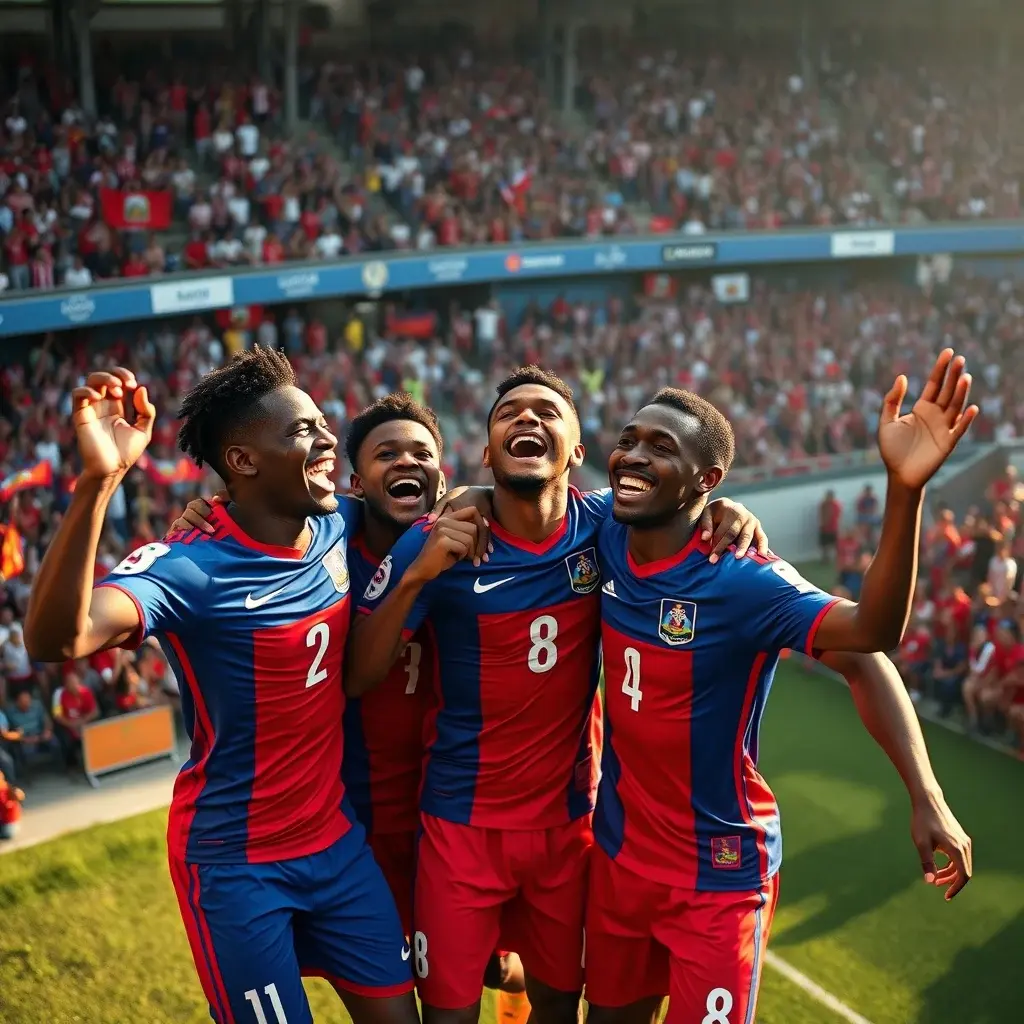
Haiti’s qualification for the 2026 World Cup marks an inspiring story of resilience, a testament to human triumph over adversity, sacrifice, and unwavering spirit. The national team, known as the Grenadiers, achieved this remarkable feat despite playing all their qualifying matches away from home due to the country’s deep political instability and a relentless security crisis. This return to the World Cup stage, their first since 1974, carries the hopes of an entire nation.
A Nation’s Resilience on the Global Stage
The journey to the 2026 World Cup has been extraordinary, not just for the sporting achievement but for the profound human narrative it represents. Haiti has faced immense challenges, including significant political turmoil and a pervasive security crisis. These circumstances forced the national team to compete in neutral venues, deprived of the home advantage and the passionate support of their own fans.
Despite these considerable obstacles, the Grenadiers demonstrated an unyielding determination. They not only competed but excelled, securing their place in the tournament and becoming a symbol of hope and pride for a nation grappling with hardship. Their qualification is a powerful reminder of the unifying force of sport, even in the most difficult times.
Tactical Acumen and Key Personnel
Under the guidance of French head coach Sébastien Migné, Haiti has transformed into a fierce and tactically disciplined unit. Migné has instilled a style of play characterized by intensity, organized defense, and rapid transitions. The team is adept at defending with discipline before launching dangerous counter-attacks.
The squad benefits from the experience and composure of key leaders such as striker Duckens Nazon, midfielder Frantzdy Pierrot, and defender Ricardo Adé. These players provide crucial balance and leadership during critical moments of matches. This blend of tactical structure and experienced leadership has been instrumental in their success.
Road to Qualification
Haiti’s path to the World Cup involved navigating the competitive Concacaf region. They initially secured second place in Group C behind Curaçao. Subsequently, they triumphed in their third-round qualifying section, notably achieving key victories against Costa Rica and Nicaragua. These performances have firmly established the Grenadiers as one of the Caribbean’s most respected footballing nations.
Migné’s Tactical Blueprint
Coach Sébastien Migné has implemented a modern, vertical, and transition-based system. The team typically lines up in a 4-4-2 formation, utilizing attacking full-backs to provide width and deliver crosses. In defense, this often shifts to a 4-2-3-1, with the striker dropping deeper to create midfield overloads. If the midfielders maintain their discipline when the full-backs advance, this system provides a strong platform for competitive play. Recent results indicate that this strategy is proving effective.
Migné himself has expressed clear ambitions for the tournament. “In one match anything can happen. The idea is to write a new story with these players,” he stated. Facing formidable opponents like Brazil, Scotland, and Morocco in their group, Migné acknowledged the challenge but also saw the opportunity. “We’ve been handed a tough group… but looking on the bright side, we’ll certainly be in the limelight, which is a tremendous reward for the boys. We’ll now have to go out there and prove that we’re up to the challenge,” he told Fifa.com.
Key Players to Watch
Several players are pivotal to Haiti’s World Cup campaign. Veteran goalkeeper Johny Placide anchors the defense, providing experience and stability. Jean-Ricner Bellegarde serves as the midfield engine, driving the team’s play. On the offensive front, Wilson Isidor is a primary threat, utilizing his pace, intelligent movement, and technical ability.
The Coach: Sébastien Migné
Appointed in June 2024, Sébastien Migné has been the architect of Haiti’s football revival. With prior experience as an assistant to Claude Le Roy and head coach roles with African nations like Congo and Kenya, Migné brought discipline, unity, and belief to the Haitian squad. Significantly, Migné has never set foot in Haiti due to the dangerous security situation. “It’s impossible because it’s too dangerous,” he revealed to France Football. “I usually live in the countries where I work, but I can’t here. There are no more international flights landing there.” Despite this, his impact on the team’s performance has been profound.
Star Player: Duckens Nazon
Explosive striker Duckens Nazon embodies the passion, resilience, and pride of Haitian football. His goal-scoring prowess is matched by his role as a leader. Nazon’s journey to the World Cup has been fraught with challenges, including playing his club football in Iran amidst geopolitical tensions. He recounted a harrowing experience of being stuck at a border for 48 hours due to war, narrowly avoiding being stranded by leveraging an eSIM for communication after internet disruptions.
One to Watch: Ruben Providence
Ruben Providence, a 24-year-old winger, is poised to be one of Haiti’s breakout stars. Quick, fearless, and adept at one-on-one situations, Providence offers explosive creativity. Having developed at top European clubs like PSG and Roma before finding stability at Almere City in the Dutch second division, his technical flair and confidence under pressure could make him a significant threat.
Unsung Hero: Danley Jean Jacques
Midfielder Danley Jean Jacques is the indispensable engine of the Haitian team. His tireless work rate in midfield involves breaking up opposition attacks, dictating the tempo, and providing crucial balance with quiet efficiency. Playing for Philadelphia Union after joining from Metz in 2024, Jean Jacques spoke about his personal growth. “Changing countries and discovering a new culture forces you to step out of your comfort zone,” he stated. “I’ve had to take on more responsibilities and grow as a person… As a teammate, I’m always there for the team, to defend the club’s colors and represent our fans.”
Probable Starting XI
Haiti’s likely starting formation is a 4-4-2, featuring: Placide – Arcus, Adé, Delacroix, Lacroix – Deedson, Bellegarde, Jean-Jacques, Providence – Isidor, Nazon.
Fan Atmosphere and National Pride
Supporters attending Haiti’s matches can anticipate an atmosphere charged with raw emotion and national pride. From Port-au-Prince to diaspora communities worldwide, Haitians are expected to unite in blue and red, transforming every game into a celebration of their identity. Despite ongoing challenges back home, fans are determined to rally behind the Grenadiers. The Haitian diaspora is anticipated to bring vibrant energy, drumming, chanting, and unwavering passion to the stands.
This collaboration is part of JoySports’ initiative with The Guardian, providing comprehensive team news and previews for all 48 qualified teams for the FIFA World Cup 2026.










Leave a Reply