
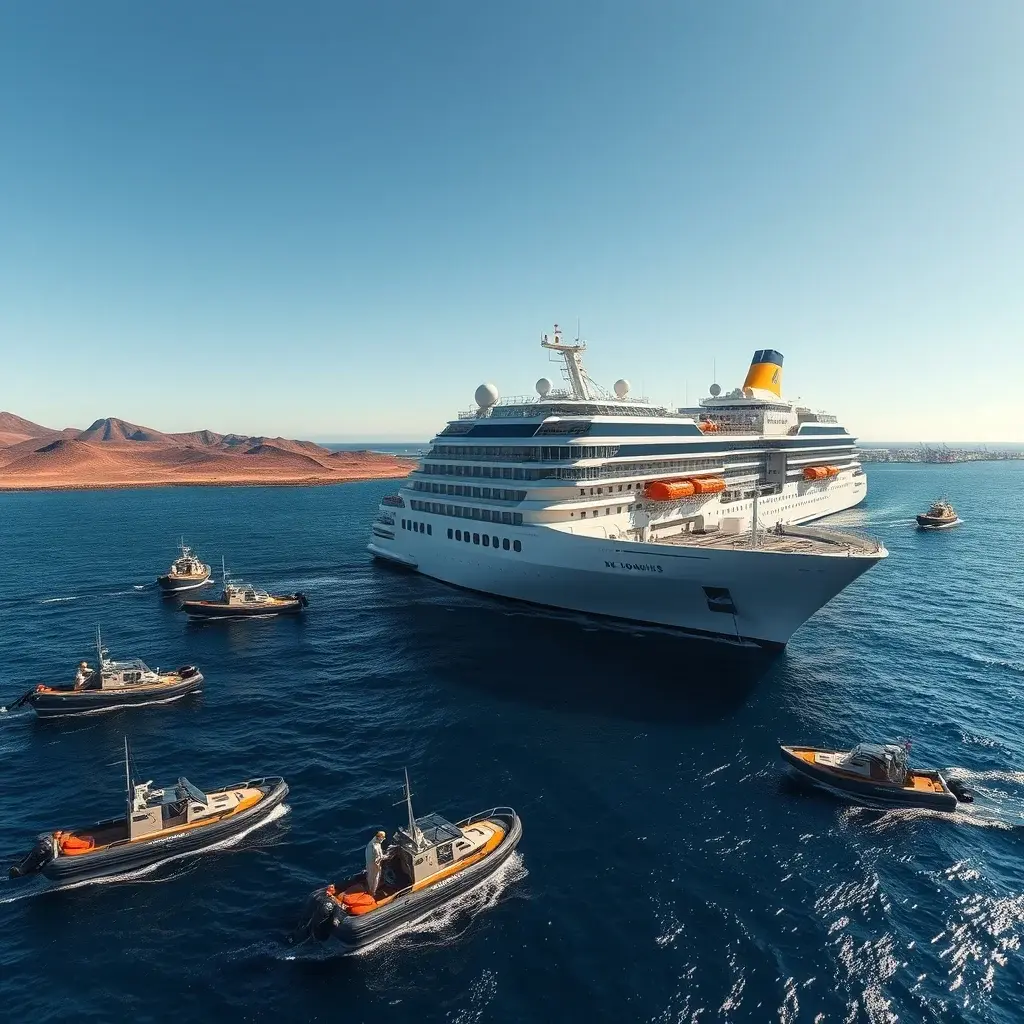
The cruise ship MV Hondius arrived near Tenerife in the Canary Islands early Sunday morning, nearly a month after the first passenger succumbed to the rare Andes strain of hantavirus, initiating an unprecedented quarantine operation involving over 100 passengers and crew from 23 countries. The ship, carrying individuals who may have been exposed to the virus, will not dock but will anchor offshore as medical teams prepare to board and assess everyone before repatriation efforts begin, aiming to prevent further spread of the deadly illness.
Complex Evacuation Underway
Intensive preparations have been underway in the port of Granadilla to receive the MV Hondius, which reached the waters off Tenerife before dawn. Spain’s health minister, Mónica García, described the operation as “unprecedented,” emphasizing meticulous planning for maximum safety and addressing local concerns. A security perimeter of one nautical mile has been enforced around the vessel as it approaches the island, and it will drop anchor at sea to maintain isolation.
Security measures at the port, an industrial facility in southern Tenerife, were significantly heightened. Spain’s military police and disaster response teams have established large reception tents, and access to the waterfront is restricted. Medical teams are slated to board the ship once it is maneuvered into position, expected around 07:00 (06:00 GMT) on Sunday, to screen all individuals for hantavirus symptoms. Initial reports indicate no other passengers or crew are currently showing signs of the virus.
Repatriation and Quarantine Protocols
Following medical assessments, passengers will be divided by nationality and transported to shore in small boats. Charter planes, with medically-equipped aircraft on standby for potential isolation cases, are expected to be ready at the local airport for repatriation. The United Kingdom, the United States, and several EU member states are sending aircraft to collect their citizens.
Spanish nationals will be flown to Madrid, where they will undergo a mandatory quarantine at the Gomez Ulla military hospital. The duration of quarantine for individuals in Spain and elsewhere remains unclear, a significant consideration given the virus’s incubation period of up to nine weeks.
Expert Oversight and Public Reassurance
The head of the World Health Organization (WHO), Tedros Adhanom Ghebreyesus, is in Tenerife to oversee the disembarking process. He commended the Spanish authorities for their “solid and effective response” to the outbreak. Dr. Ghebreyesus acknowledged public anxiety, noting the lingering trauma from the COVID-19 pandemic, but urged trust in the government’s preparedness, stating the risk of wider contagion is low due to the virus’s transmission patterns and Spain’s stringent safety measures.
The outbreak has been traced to a landfill site in southern Argentina frequented by birdwatchers, where rodents carrying the virus are present. While human-to-human transmission of the Andes strain is rare, three cruise passengers have tragically died from the illness.
Local Preparedness and Concerns
Dozens of intensive care specialists are on standby at Tenerife’s Candelaria hospital, ready to manage any severe cases arising during the transfer. A dedicated isolation facility, equipped with a ventilator and testing kits, is fully prepared for infectious disease emergencies. Dr. Mar Martin, chief intensive care doctor at the unit, expressed confidence in the medical team’s readiness, stating, “We are absolutely ready.”
The diversion of the Hondius to Tenerife initially sparked protests from some port workers concerned about the adequacy of safety measures. However, increased clarity on the protocols has led to a calmer atmosphere. Local residents, while aware of the virus’s danger, express a degree of reassurance, understanding that close contact is typically required for transmission. Some voiced political frustration over the decision to route the ship to their island, recalling past reassurances during the COVID-19 pandemic.
End of a Voyage, Beginning of Quarantine
While approximately 30 crew members will remain on board to sail the ship back to the Netherlands, the majority of passengers face the end of their ordeal at sea and the commencement of a lengthy quarantine period. The operation marks a critical juncture in managing a rare but dangerous viral outbreak, balancing public health imperatives with the well-being of affected individuals and local communities.
The meticulous coordination of this international repatriation and quarantine effort will be closely watched as a model for future public health crises involving complex logistical and containment challenges. The long-term implications for cruise industry health protocols and international cooperation in managing infectious disease outbreaks at sea remain a significant area to observe.










Leave a Reply