
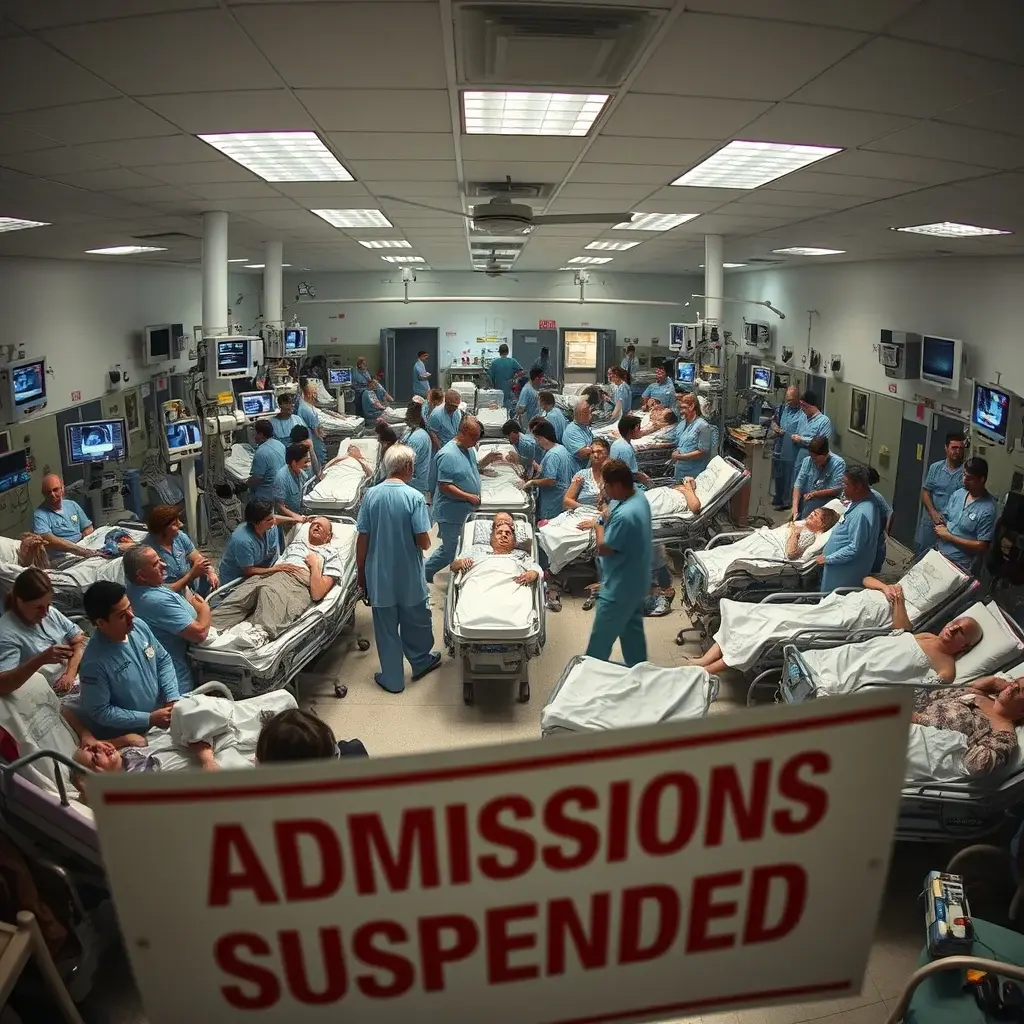
The Ministry of Health has summoned Kwame Frimpong, Head of Public Affairs at the Komfo Anokye Teaching Hospital (KATH), following public statements announcing a temporary suspension of admissions at the hospital’s Accident and Emergency (A&E) Centre. This action follows reports that Ghana’s second-largest referral hospital halted new emergency case admissions for a 24-hour period, a decision the Ministry states contradicts a presidential directive against turning away emergency patients.
Ministry’s Concern and Summons
In a formal letter issued on Wednesday, June 3, the Ministry of Health directed Mr. Frimpong to appear before the Minister for Health by noon on Thursday, June 4, 2026. The purpose of the summons is to provide an explanation for his public affirmation of the hospital management’s decision and to determine why disciplinary action should not be taken against him.
The Congestion Crisis at KATH
The controversy originated from a statement released by KATH’s Public Affairs Unit, which declared the hospital’s A&E Centre had reached critical capacity. The statement indicated that the facility could no longer safely admit additional patients due to overwhelming numbers.
Hospital authorities revealed that the emergency unit, originally designed for 37 patients, was accommodating 61 patients across its Orange, Yellow, and Red critical care wards. An additional 34 patients were awaiting medical attention, exacerbating the strain on resources and staff.
Hospital’s Public Stance and Advisory
Speaking on Channel One Television News, Mr. Frimpong reportedly reinforced the hospital’s position. He explained that the sheer volume of patients placed immense pressure on the hospital’s staff, resources, and available bed space. Consequently, the hospital advised the public and ambulance services to seek alternative healthcare facilities for emergency referrals during this period of extreme congestion.
Ministry’s Rebuttal and Presidential Directive
The Ministry of Health has taken strong issue with KATH’s public announcement, asserting that the hospital’s stance directly contravenes established government policy on emergency healthcare delivery. The Ministry’s correspondence highlighted that the statement circulated widely on social media and that Mr. Frimpong’s television comments affirmed the hospital’s inability to admit new emergency cases.
Officials emphasized President John Dramani Mahama’s clear directive to all healthcare facilities nationwide. This directive explicitly prohibits the rejection or turning away of emergency patients under any circumstances, regardless of the operational challenges faced by the institutions.
Healthcare Obligations and Tertiary Centres
The Ministry stressed that while hospitals may encounter operational difficulties, providing emergency care is a fundamental obligation. This responsibility is particularly critical for tertiary referral centers like KATH, which are entrusted with managing the care of critically ill and injured patients.
The Ministry’s letter stated, “The Ministry of Health has taken note of a statement with the above caption making rounds on social media.” It further noted that the Public Affairs Head had publicly affirmed the hospital management’s decision regarding the emergency centre’s inability to admit new cases.
Implications and Future Watch
This incident highlights the persistent challenges of healthcare infrastructure and resource allocation in managing high patient volumes at major referral hospitals. The Ministry’s swift intervention underscores the government’s commitment to ensuring universal access to emergency care, even in the face of severe operational constraints.
The situation raises questions about the adequacy of existing emergency service protocols and the need for sustainable solutions to prevent future occurrences. The Ministry’s decision on disciplinary action against Mr. Frimpong, and any subsequent policy reviews or resource allocations for KATH, will be closely watched. Observers will also be looking at how other tertiary hospitals manage similar pressures and whether this event spurs broader systemic changes in emergency healthcare delivery across the country.










Leave a Reply