
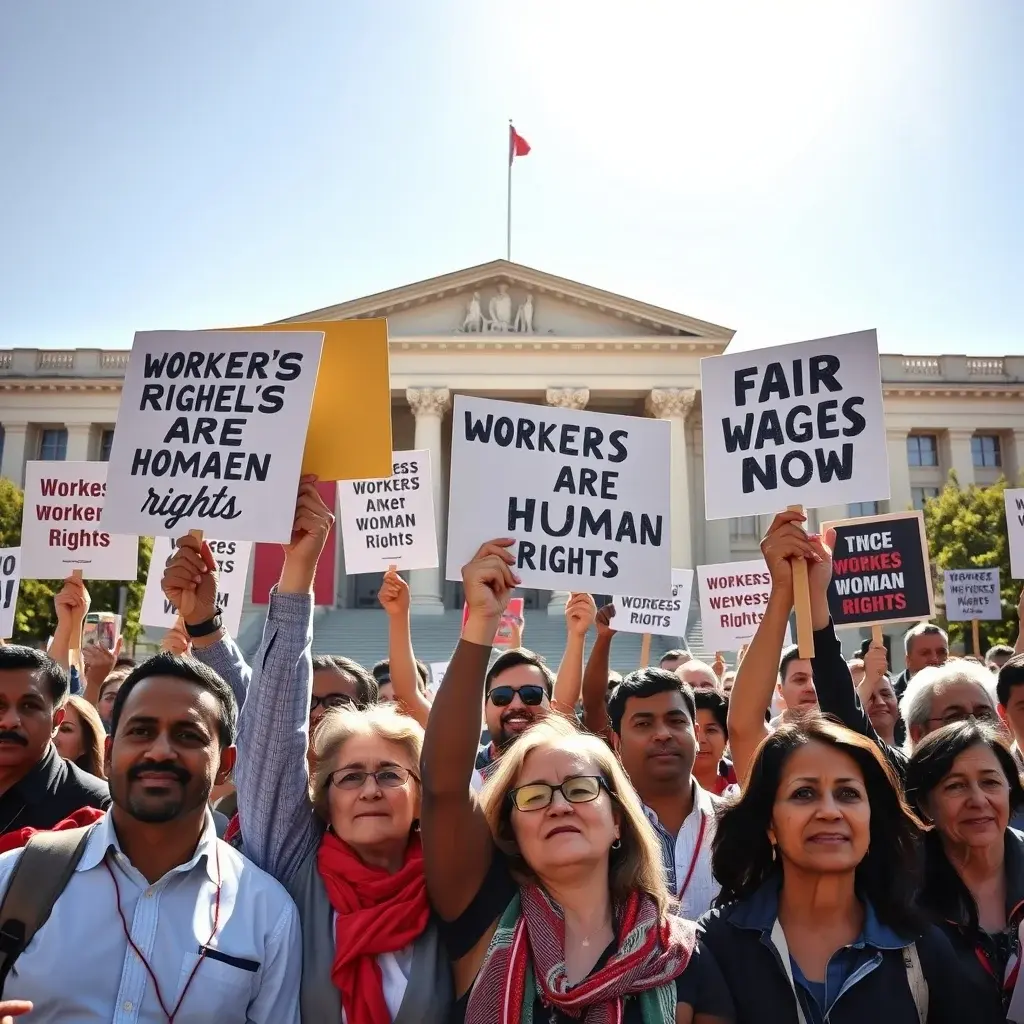
The Trades Union Congress (TUC) Ghana has welcomed a significant advisory opinion from the International Court of Justice (ICJ) delivered on May 21, 2026. This ruling unequivocally affirms that the right to strike is protected under international labour conventions, marking a historic victory for workers and trade unions globally. The TUC hailed the decision as a powerful reinforcement of the global labour movement’s long-held stance that the right to strike is intrinsically linked to freedom of association and collective bargaining.
Context: The Foundation of Workers’ Rights
The ICJ’s advisory opinion specifically addresses the International Labour Organisation’s Freedom of Association and Protection of the Right to Organise Convention, 1948 (Convention No. 87). This convention is a cornerstone of international labour law, designed to protect the rights of workers and employers to form and join organizations of their own choosing.
Historically, the right to strike has been a contentious issue, with some governments and employers viewing it as a privilege that can be restricted. However, international labour standards, championed by organizations like the ILO and trade unions, have increasingly recognized it as a fundamental right essential for maintaining fair working conditions and preventing exploitation.
A Historic Victory for Labour
In its statement, the TUC Ghana emphasized that the ICJ’s ruling sends a clear message to governments, employers, and institutions worldwide. It underscores that workers’ collective action is not merely a disruption but a vital component of fairness, dignity, and equality within the workplace.
The TUC stressed that the right to strike must be understood as a fundamental democratic and labour right, not a concession granted at the discretion of authorities. “This historic decision is a resounding affirmation that the right to strike is not a privilege to be granted at will, but a fundamental workers’ right and an essential pillar of democracy, social justice and decent work,” the statement declared.
This landmark opinion is seen as a defining moment in the evolution of international labour rights. It validates decades of persistent advocacy by trade unions around the globe, reinforcing their efforts to secure and protect workers’ fundamental freedoms.
Freedom of Association and Collective Bargaining Strengthened
The advisory opinion further clarified that the principles of freedom of association and collective bargaining cannot be fully realized without robust legal protections for workers to engage in industrial action. This means that without the ability to strike, workers’ capacity to negotiate effectively and protect their interests is significantly diminished.
The TUC also extended commendation to the International Trade Union Confederation (ITUC) and its legal team. Their efforts in defending workers’ rights before the world court were described as principled and courageous. The ITUC’s intervention underscored the global labour movement’s consistent position: workers must retain the legal right to organize and strike to safeguard their welfare and working conditions.
A special tribute was paid to Mr. Paapa Danquah, Director of Legal Affairs at the ITUC and former Director of Legal Affairs at TUC Ghana. His significant contribution and compelling advocacy before the ICJ were highlighted as instrumental in securing this favorable outcome for workers globally.
Implications for Labour Legislation and Industrial Relations
Labour experts anticipate that the ICJ’s advisory opinion will have a considerable impact on labour legislation, industrial relations policies, and judicial decisions in numerous countries. This is particularly relevant in jurisdictions where governments have previously attempted to restrict organized labour’s right to strike.
While advisory opinions from the ICJ are not legally binding in the same manner as judgments between states, they carry substantial legal and moral weight within the international legal framework and among multilateral institutions. This authority means the ruling will likely be cited and influential in future legal and policy discussions.
The decision is expected to bolster organized labour movements worldwide, especially at a time of increasing global tensions related to wages, working conditions, unemployment, and economic hardship. These challenges often lead to heightened industrial disputes.
In Ghana, organized labour has actively engaged in industrial actions in recent years, addressing concerns over salary negotiations, pension issues, conditions of service, and the rising cost of living. The TUC believes this ruling should encourage governments and employers to prioritize dialogue, fairness, and respect for workers’ rights when resolving such disputes.
Upholding Workers’ Dignity and Democratic Governance
The TUC reiterated that workers’ voices are crucial for democratic governance and economic development. The ability of workers to organize collectively and, when necessary, to withdraw their labor peacefully is fundamental to protecting human dignity and promoting social justice.
The Congress reaffirmed its dedication to defending workers’ rights within Ghana and supporting international endeavors aimed at fostering decent work, social protection, and equitable labor practices. This ruling serves as a powerful reminder that collective action is central to achieving fairness, dignity, and equality in the workplace.
Looking Ahead
The coming months and years will likely see trade unions globally leveraging this ICJ advisory opinion to challenge restrictive labor laws and advocate for stronger protections. Businesses and governments may face increased pressure to engage in more transparent and fair negotiations with organized labor. Observers will watch closely how national courts and legislative bodies interpret and implement the principles affirmed by the ICJ, potentially leading to significant shifts in industrial relations and labor jurisprudence worldwide.










Leave a Reply