
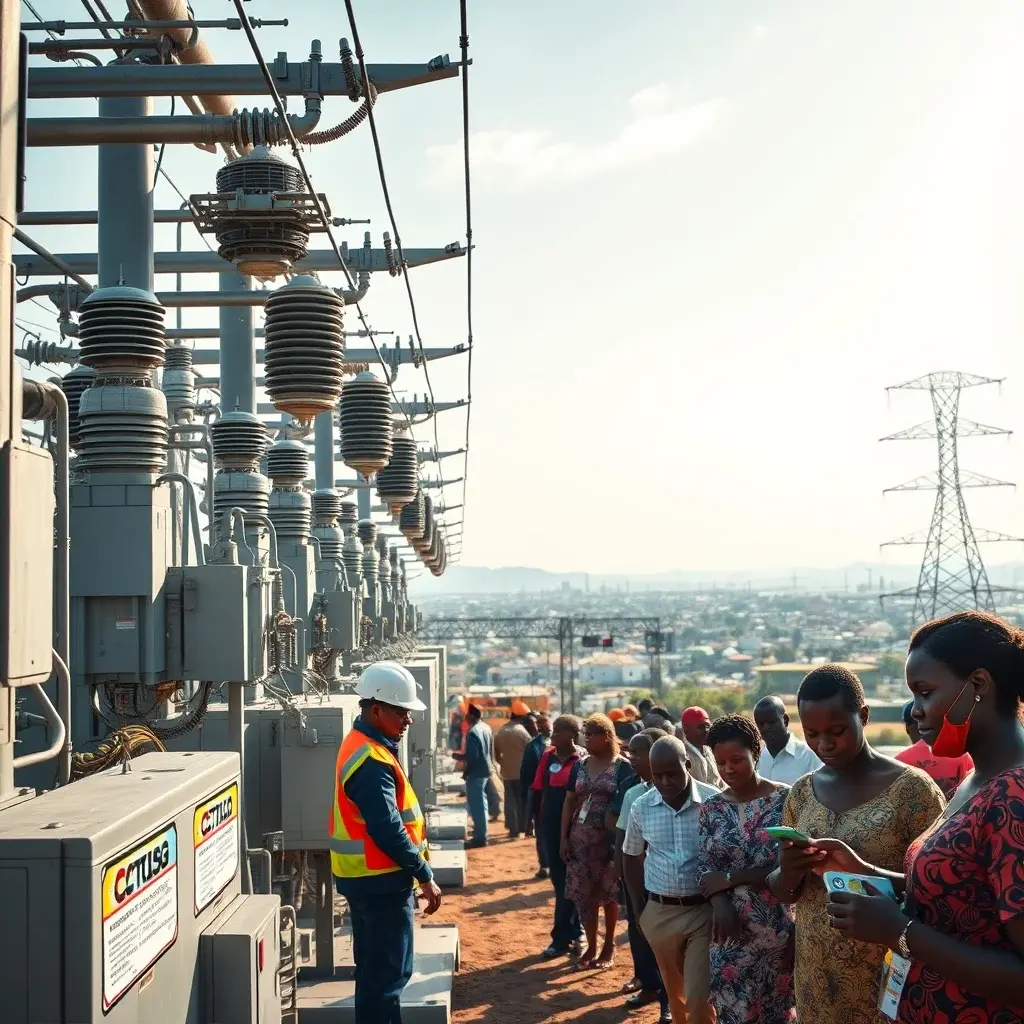
Accra, Ghana – The International Monetary Fund (IMF) has strongly urged the Ghanaian government to accelerate private sector involvement in the operations of the Electricity Company of Ghana (ECG). This call comes as the IMF mission, led by Ruben Atoyan, concluded its sixth and final review of Ghana’s Extended Credit Facility program in Accra between April 29 and May 15. The IMF warns that persistent, deep-seated issues within the energy sector pose a significant threat to public finances and overall economic stability.
Context: Ghana’s Economic Recovery and Energy Sector Challenges
Ghana has been engaged in an economic recovery program supported by the IMF, which has shown positive signs. The IMF mission acknowledged substantial stabilization gains, including a rapid decline in inflation, improved foreign exchange reserves, and a strengthening of the Ghanaian cedi. Fiscal performance has also seen significant improvement, with economic growth exceeding projections in 2025, driven by broad economic activity and robust gold export earnings.
However, the IMF emphasizes that sustaining this recovery hinges on continued reforms and fiscal discipline. The global economic environment remains uncertain, with potential impacts from rising energy, food, and fertilizer prices linked to geopolitical events in the Middle East.
The ECG, Ghana’s primary electricity distributor, has long been a focal point of concern due to operational inefficiencies, mounting debts, and challenges in revenue collection. These issues not only strain public resources but also hinder the reliability and affordability of electricity supply across the nation.
IMF’s Call for Private Sector Participation
In its concluding statement, the IMF highlighted the necessity of protecting public resources through stronger reforms in both the energy and cocoa sectors. Specifically, for the energy sector, the Fund recommended prioritizing the reduction of distribution and collection losses at the ECG.










Leave a Reply