
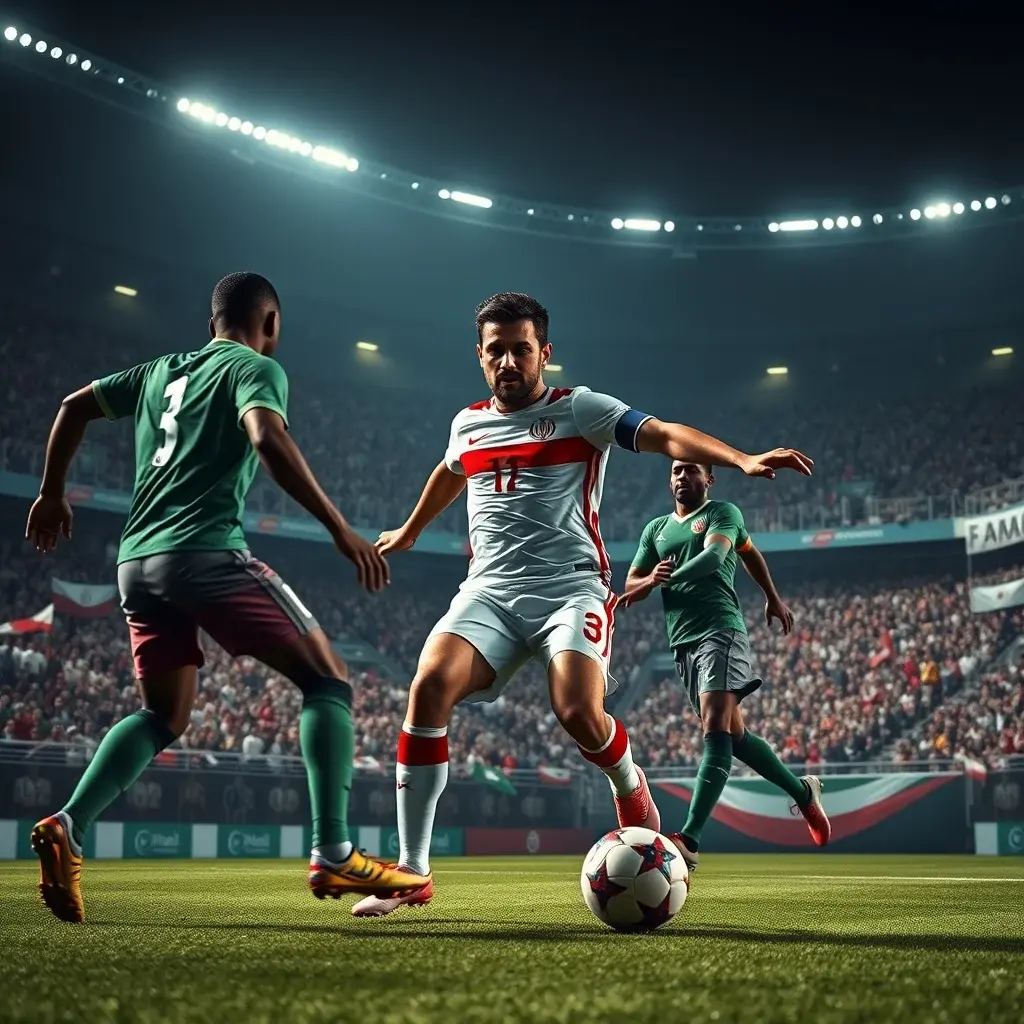
Iran, one of the first nations to secure qualification for the 2026 FIFA World Cup, faces a turbulent path to the tournament, marked by geopolitical tensions and strategic tactical adjustments. The team’s preparations have been significantly impacted by the ongoing conflicts involving the United States and Israel, with all their group stage matches scheduled to take place in the US, prompting a last-minute relocation of their base camp to Mexico.
Navigating Unprecedented Challenges
The political climate surrounding Iran’s participation has cast a long shadow over their World Cup aspirations. Despite these external pressures, head coach Amir Ghalenoei has been diligently working to shield his squad from disruption.
Recent friendly matches against Nigeria and Costa Rica in March showcased Ghalenoei’s tactical flexibility. A 3-6-1 formation was deployed against Nigeria, identified as a “defensive plan B” potentially aimed at neutralizing Belgium’s attack. Subsequently, a 4-4-2 system was utilized against Costa Rica, signaling Ghalenoei’s intent to adapt his strategy based on the opponent. The team’s primary formation, however, remains the 4-2-3-1, which proved successful during their qualifying campaign.
Key Players and Controversies
Certain players are considered indispensable to Iran’s starting lineup, irrespective of the formation. Alireza Beiranvand is set to be the first-choice goalkeeper for his third consecutive World Cup. Shojae Khalilzadeh is the sole guaranteed starter in central defense.
In midfield, Saeid Ezatolahi’s fitness will be crucial, as he is the undisputed defensive anchor. Upfront, Mehdi Taremi, the team captain, will lead the attack, whether deployed as a lone striker or in a partnership. Notably, star forward Sardar Azmoun has been excluded from the squad, a decision stemming from controversy surrounding photos with the ruler of the United Arab Emirates, a nation that supported the US and Israel during recent conflicts.
Coach’s Vision and Determination
Amir Ghalenoei, a former midfielder with a decorated coaching career in Iran, is known for his assertive personality. This marks his second tenure as the national team’s head coach, having previously managed the squad after the 2006 World Cup.
Despite the numerous challenges and controversies, Ghalenoei remains optimistic about his team’s potential. He recently stated, “We’ve had many problems recently, but the players tried their best and made sacrifices. They worked so hard [through qualification] and sacrificed a lot, so it is my job to thank them. They can do something epic in the World Cup. They can do it, they have the technical potential to make this a World Cup to remember.” A successful tournament could offer Ghalenoei an opportunity to silence his long-time critics.
Star Power and Emerging Talent
Mehdi Taremi is expected to carry significant responsibility for Iran’s success. Having gained extensive experience at top European clubs like Porto and Inter Milan, Taremi brings confidence, authority, and a strong work ethic to the team. His ability to exploit space behind defenses and his clinical finishing make him a constant threat.
Mehdi Ghayedi, a winger for Al-Nasr (UAE), is another player to watch. Despite past off-field distractions, his blistering pace, dazzling dribbling, and precise finishing could make him a surprise weapon. Ghayedi recently marked his return to the national team with a spectacular goal against Costa Rica.
The Unsung Contributor
Saman Ghoddos has been a consistent and reliable presence in the Iran squad for nearly a decade. Playing exclusively for foreign clubs, he has garnered less media attention but is highly respected within the team for his professionalism and versatility, capable of playing in multiple positions.
Anticipated Starting XI
Iran’s probable starting lineup in a 4-2-3-1 formation is anticipated to be: Alireza Beiranvand; Ramin Rezaeian, Shojae Khalilzadeh, Hossein Kanaanizadegan, Ehsan Hajsafi; Saeid Ezatolahi, Amir Mohammad Razzaghinia; Mohammad Mohebbi, Saman Ghoddos, Mehdi Ghayedi; Mehdi Taremi.
Fan Dynamics and Potential Disruptions
Fan support for the Iranian national team is divided, mirroring broader societal divisions. Some fans remain staunchly behind “Team Melli,” while others, opposing the government in Tehran, may even welcome the team’s defeat. Given visa restrictions for Iranians traveling to the US, a significant portion of the crowd is expected to be from the Iranian diaspora, many of whom hold anti-government sentiments.
FIFA is likely to prohibit the pre-revolutionary “Shir-o-Khorshid” (lion and sun) flag, as seen in Qatar. However, chants supporting Reza Pahlavi, the former crown prince, are probable. Open celebrations of opposing goals or losses by segments of the crowd cannot be ruled out, potentially adding another layer of complexity to the team’s tournament experience.
Looking Ahead
As Iran prepares for the 2026 World Cup, their journey will be closely watched, not only for their on-field performance but also for how they navigate the intricate web of political and social dynamics. The team’s ability to maintain focus amidst external pressures and the tactical innovations introduced by coach Ghalenoei will be key determinants of their success. The unfolding fan sentiments within stadiums will also be a significant factor to observe.










Leave a Reply