
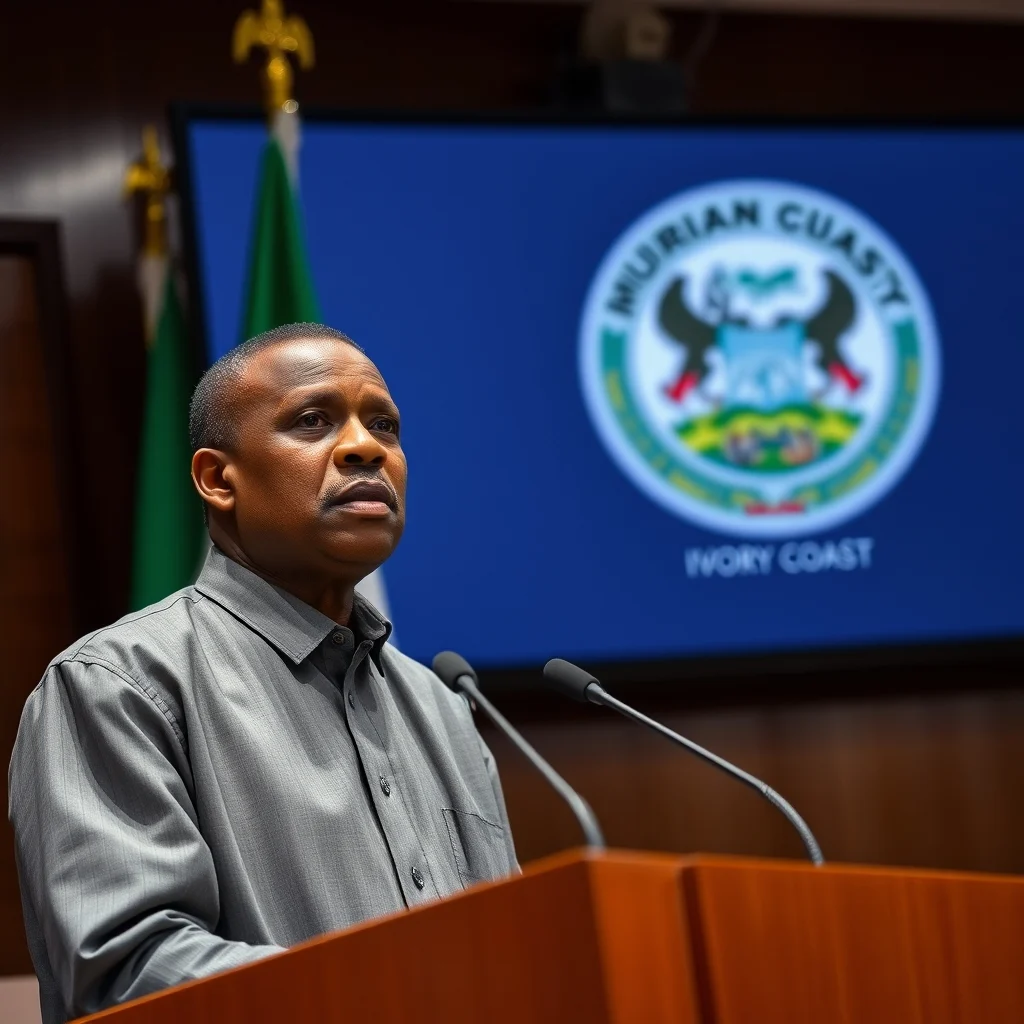
Abidjan, Ivory Coast – The Ivorian government announced on Wednesday the dissolution of its Independent Electoral Commission (CEI), a move widely seen as a response to persistent criticism regarding its impartiality and management of electoral processes. Government spokesperson Amadou Coulibaly revealed the decision following a cabinet meeting, stating the aim is to establish a new electoral framework and restore public trust to ensure peaceful elections.
Background to the Dissolution
The CEI, established in October 2001, has been responsible for overseeing all major elections in Ivory Coast since the end of military rule. However, it has frequently found itself at the center of electoral disputes. A notable instance includes the 2010 presidential election, where the contested results led to several months of violent conflict.
More recently, the 2025 presidential election saw President Alassane Ouattara secure a fourth term with a significant majority. This victory, however, was met with criticism from opposition parties and civil society groups who pointed to the barring of prominent opposition figures from running. They argued that the process lacked inclusivity and questioned the CEI’s role in ensuring a fair contest.
Criticism Over Independence
A core issue fueling the calls for reform has been the perceived lack of independence of the CEI. Opposition parties have consistently accused the commission of having a membership that is overly aligned with the ruling coalition. These allegations have been a recurring point of contention, though authorities have previously refuted such claims.
The government’s decision to dissolve the CEI signifies an acknowledgment of these long-standing concerns. The spokesperson indicated that discussions are already underway to determine the structure of a new body that will manage future elections. This restructuring is intended to create a more trusted and impartial electoral management system.
Restoring Public Confidence
The dissolution is explicitly aimed at rebuilding confidence in Ivory Coast’s democratic institutions. By creating a new electoral management system, the government hopes to address the criticisms and ensure that future elections are conducted transparently and inclusively. This is seen as crucial for maintaining political stability and fostering a peaceful electoral environment.
The move comes at a critical juncture for the nation, as it seeks to consolidate its democratic progress. The effectiveness of the new electoral framework will be closely watched by both domestic stakeholders and international observers.
What to Watch Next
The coming months will be pivotal as the government works to define and implement the new electoral structure. Key questions remain regarding the composition of the successor body, its mandate, and the mechanisms in place to guarantee its independence and transparency. The engagement of opposition parties and civil society in this reform process will be crucial for its legitimacy and success. Observers will be looking for concrete steps that demonstrate a genuine commitment to electoral integrity and inclusivity ahead of future electoral cycles.










Leave a Reply