
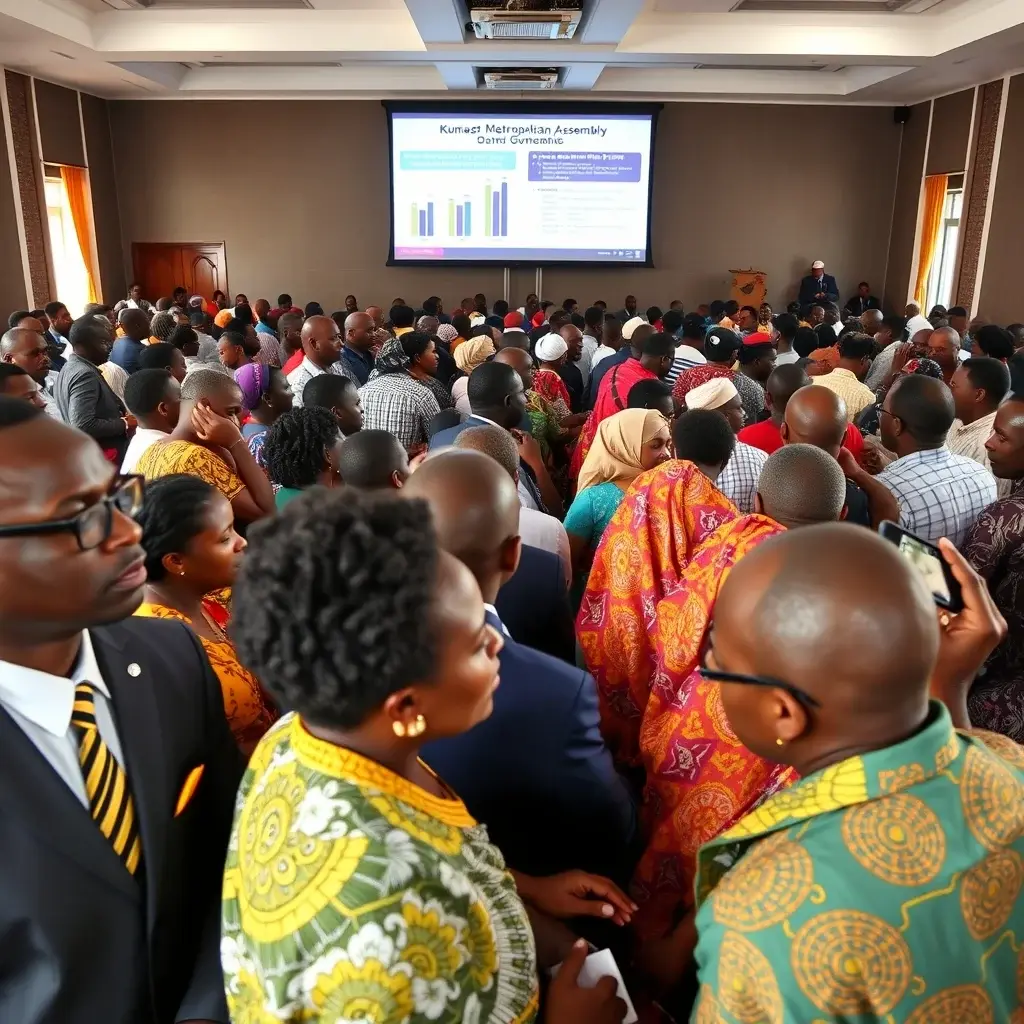
The Kumasi Metropolitan Assembly (KMA) recently hosted a social accountability town hall meeting, reaffirming its commitment to involving citizens in governance. This initiative aims to promote transparency, accountability, and inclusive development by ensuring that the city’s priorities align with the needs of its residents.
Mayor of Kumasi, Mr. Richard Ofori-Agyemang Boadi, emphasized that citizen participation is not merely encouraged but a statutory obligation and a fundamental aspect of effective local administration. He stated that this principle would guide the Assembly’s duties, fostering greater accountability and improving service delivery through regular public engagement.
Strengthening Public Trust and Development Priorities
The town hall meeting served as a crucial platform for dialogue, bringing together a diverse group of stakeholders. Attendees included residents, representatives from civil society organizations, traditional authorities, business operators, and youth and women’s groups.
The forum provided an opportunity for these groups to deliberate on the KMA’s performance and its development agenda. Mayor Boadi highlighted that creating such spaces for public input helps the Assembly better tailor its policies and projects to meet the expectations of the populace.
He urged residents to actively participate in these engagements and support the Assembly’s ongoing efforts to enhance the living conditions within the metropolis. This collaborative approach is seen as vital for the successful implementation of development initiatives.
Addressing Key Urban Challenges
A significant portion of the discussion focused on pressing urban issues, particularly sanitation. Mayor Boadi expressed concern over the escalating costs associated with waste management, revealing that a substantial amount of the KMA’s internally generated funds is allocated to this sector.
This financial strain, he explained, hampers the Assembly’s capacity to fund other critical development projects. He appealed to residents to adopt more responsible waste disposal practices, stressing that maintaining a clean environment requires a collective effort.
The Mayor called for public support for measures designed to make waste management more efficient and cost-effective, underscoring the link between public behavior and the Assembly’s financial health and project execution capabilities.
Legal Framework and Budgetary Transparency
The town hall meeting was organized in accordance with the Public Financial Management Regulations and the Local Governance Act. These legal frameworks mandate such engagements to ensure that public funds are managed effectively and that governance remains accountable to the citizens.
Beyond discussing performance, the Assembly used the event to present its 2025 budget proposals and provide updates on ongoing development projects. This transparency aims to build confidence and allow for informed public feedback.
Participants actively raised concerns across various sectors, including street lighting, urban congestion, law enforcement effectiveness, and revenue mobilization strategies. These discussions highlighted the ongoing need for sustained dialogue between the KMA and the community it serves.
Stakeholder Feedback and Future Engagements
Mr. Francis Dwira Darko, the Metro Coordinating Director, acknowledged the valuable contributions made by the participants. He assured them that their concerns would be carefully considered and addressed by the Assembly.
Nana Poku Agyemang Dwete, Asem Kyeamehene and Chairperson of the event, commended the KMA for initiating the town hall meeting. He encouraged the Assembly to continue these engagements, viewing them as essential for deepening participatory governance and strengthening the democratic process at the local level.
The KMA’s commitment to these social accountability forums signifies a move towards more responsive and inclusive local governance, where citizen voices directly influence development planning and execution. The success of these initiatives hinges on sustained participation and the Assembly’s continued dedication to acting on public feedback.










Leave a Reply