
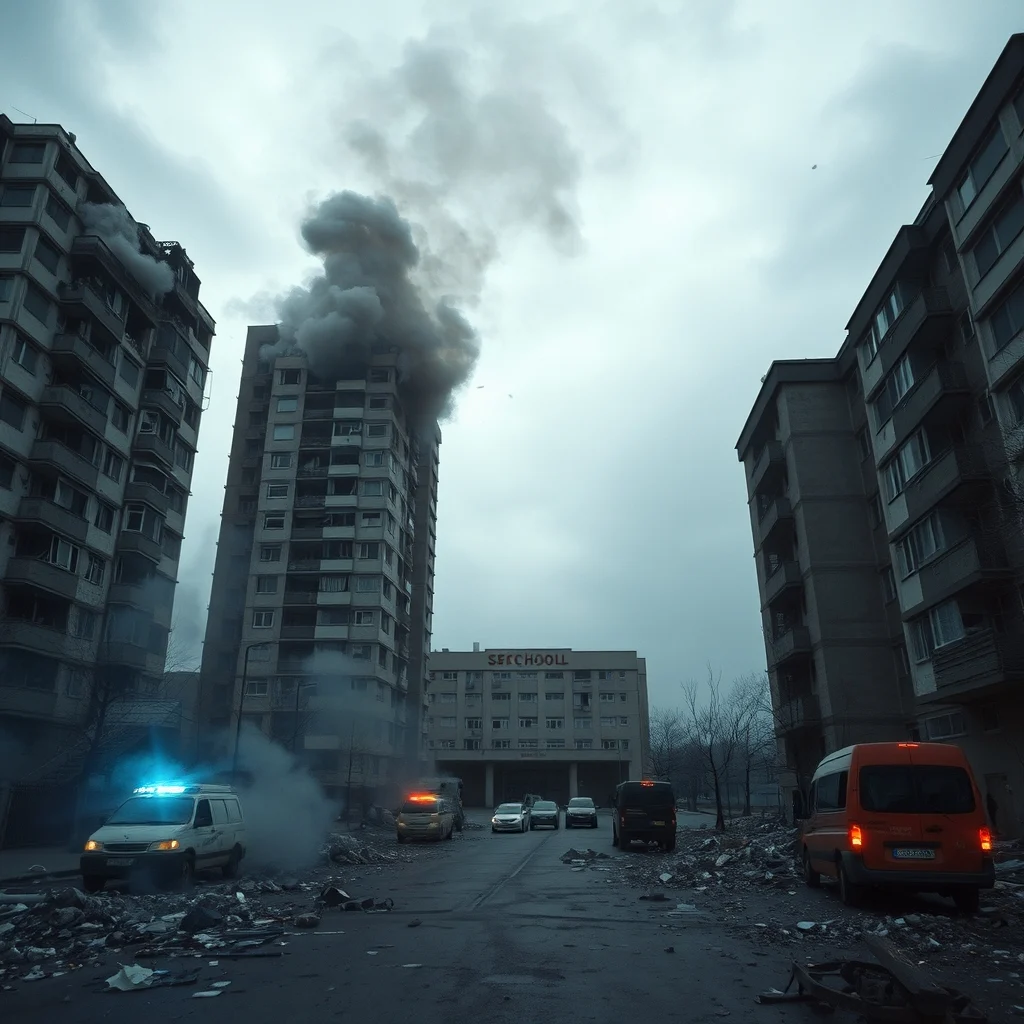
Russia launched a significant wave of missile and drone strikes on Ukraine’s capital, Kyiv, on Sunday, resulting in at least one fatality and injuring 21 others. Explosions reverberated across the city, with widespread damage reported in all districts, affecting residential buildings and a school.
The attacks followed a vow of retaliation by Russian President Vladimir Putin, who accused Ukraine of a deadly strike on a student dormitory in Starobilsk on Friday, which killed 18 people. Ukraine’s General Staff confirmed an attack near Starobilsk but stated it targeted a Russian military unit.
Widespread Damage Across Kyiv
Mayor Vitali Klitschko reported that debris from the strikes ignited fires in residential buildings, warehouses, a supermarket, and a shopping center. The capital experienced a massive ballistic attack, with authorities warning of potential further launches.
A nine-story residential building in the central Shevchenko district was hit, causing a fatal fire on its upper floors. In the same district, debris from a strike blocked the entrance to an air raid shelter at a school, trapping individuals inside. Emergency services responded to numerous sites, battling blazes, clearing rubble, and attending to the injured.
Children Among the Injured
Among the casualties were 13 individuals hospitalized, including a 15-year-old boy. Three of the hospitalized were reported to be in serious condition. The cleanup and aftermath assessment of the shelling are ongoing, with aid headquarters deployment to be announced.
Context of Escalation
The strikes represent a significant escalation in the ongoing conflict, directly targeting the Ukrainian capital following a deadly incident in occupied eastern Ukraine. Ukraine had previously warned of potential retaliatory actions from Russia.
Ukrainian President Volodymyr Zelensky had cautioned on Saturday about intelligence indicating Russia’s preparation for a combined strike, potentially including the use of the Oreshnik missile. This missile is reportedly capable of speeds exceeding ten times the speed of light, presenting a significant challenge to current interception capabilities.
Expert Perspectives and Data
Military analysts suggest that Russia’s retaliatory strikes aim to inflict psychological damage and demonstrate military capability in response to perceived Ukrainian successes or provocations. The targeting of civilian infrastructure, even if collateral, is often seen as a tactic to disrupt morale and essential services.
Data from Ukraine’s State Emergency Service indicates a pattern of increased aerial attacks following significant events or perceived setbacks for Russian forces. The intensity and scale of Sunday’s attack on Kyiv underscore the volatile nature of the conflict and the continued threat to urban populations.
Implications for Civilians and Defense
The attacks highlight the persistent danger faced by Ukrainian civilians, particularly in major urban centers. The damage to residential buildings and essential services underscores the humanitarian cost of the conflict.
For Ukraine’s defense forces, the reported speed of the Oreshnik missile, if deployed, poses a new and formidable challenge. This necessitates a rapid assessment and potential adaptation of air defense strategies and technologies. The continued reliance on ballistic missiles and drones by Russia indicates an ongoing effort to overwhelm Ukrainian air defenses and sow fear.
What to watch next will be Ukraine’s response, both militarily and diplomatically, and whether Russia continues its pattern of retaliatory strikes. The international community’s reaction and any potential shifts in military aid or diplomatic efforts will also be crucial indicators of the conflict’s trajectory.










Leave a Reply