
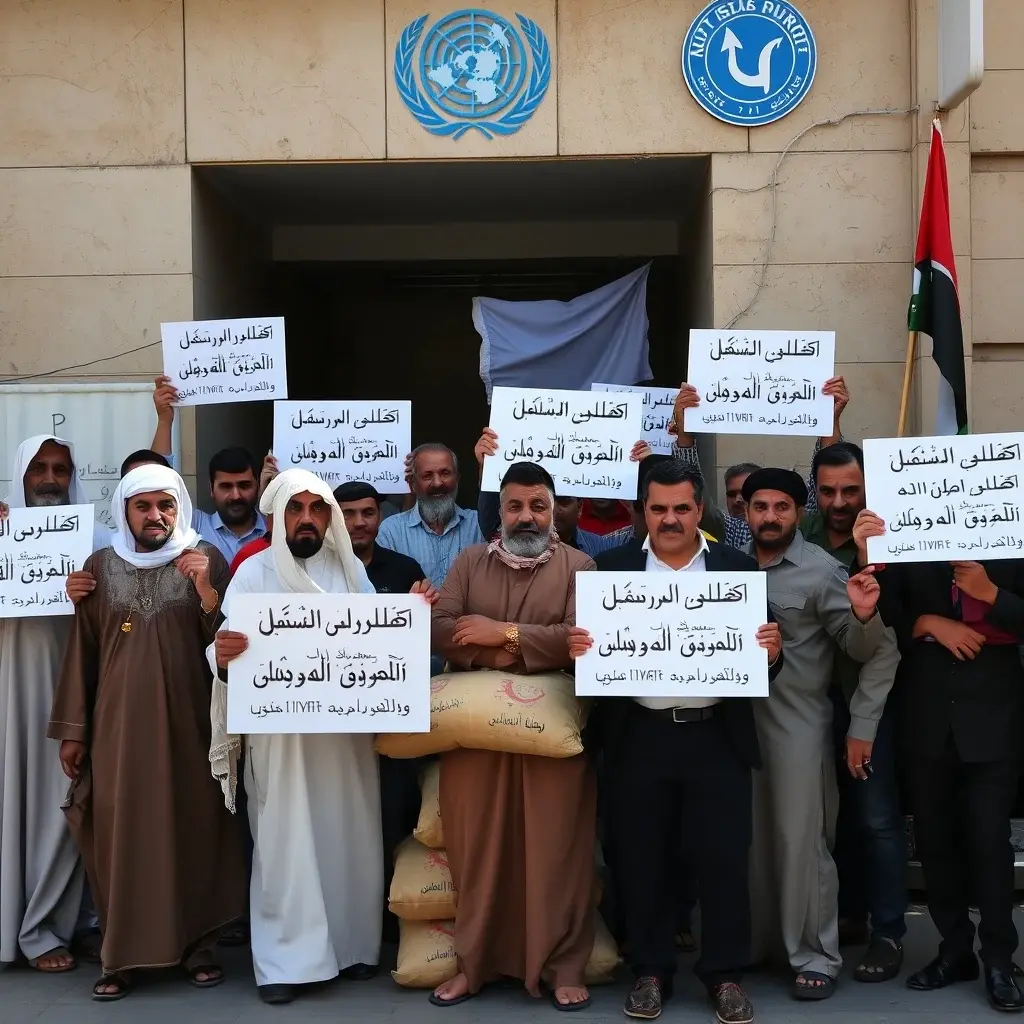
Hundreds of Libyans staged a protest on Thursday, blocking the United Nations refugee agency’s office in Tripoli. Demonstrators voiced strong opposition to the presence of migrants in the country, chanting slogans demanding their expulsion and asserting that Libya is for Libyans only.
Context of Migration in Libya
Since the 2011 NATO-backed uprising, Libya has become a primary transit route for hundreds of thousands of migrants. These individuals are often fleeing conflict and poverty, primarily from sub-Saharan Africa. Many undertake perilous journeys across the desert or the Mediterranean Sea in search of work or a passage to Europe.
The Libyan economy, heavily reliant on oil, also attracts migrants seeking employment. They often fill low-wage jobs in sectors like cleaning and construction, roles that many Libyans are reluctant to take.
Escalating Protests and Demands
The protest outside the UN High Commissioner for Refugees (UNHCR) office in Tripoli’s Sarraj neighbourhood marked the largest of several recent demonstrations against migrants. Demonstrators erected tents and used a truckload of sand to barricade the main gate, signaling their firm stance.
Chants such as “No, No to settlement, Libya only for Libyans” and “Get out of Libya, take them all out of Libya” echoed through the streets. Signs carried by protesters read, “No to intruders in our country, take them out.”
Official Responses and Clarifications
The United Nations Support Mission in Libya (UNSMIL) issued a statement affirming the right to peaceful expression while condemning incitement to violence against UN staff or premises. UNSMIL clarified that there is no UN resettlement program operating within Libya.
UNHCR’s mandate in Libya is to assist individuals fleeing war, seeking solutions outside the country. These solutions include evacuations to third countries and voluntary returns when conditions permit. UNHCR did not immediately respond to a request for comment on the protests.
Migrant Population and Economic Strain
Libya, with an estimated population of around 7 million people, hosts well over 900,000 migrants, according to UN figures. The influx has placed additional strain on a nation grappling with 15 years of conflict and political division.
Some demonstrators blamed migrants for social and economic problems, including alleged break-ins and assaults. One protester, Ahmad al-Ghasa, stated, “These phenomena were not present in Libyan society before,” attributing them to the increased migrant presence.
Government Statements on Migration Policy
In a television interview the day before the protest, Libya’s acting Foreign Minister, Taher al-Baour, addressed the issue. He stated that there is no government project aimed at settling migrants within Libya.
Al-Baour emphasized that Libya’s capacity to manage the current numbers is limited. He also urged Libyans not to solely blame migrants for the country’s political and security challenges, suggesting these issues contribute to higher migrant numbers.
Implications and Future Outlook
The protests highlight the growing social and economic pressures within Libya, exacerbated by the ongoing migrant crisis. The demonstrators’ actions underscore a rising nationalist sentiment and a demand for stricter immigration policies.
The situation raises questions about the future management of migration flows through Libya and the international community’s role in supporting both Libyan authorities and the vulnerable migrant populations. As Libya continues to navigate its internal challenges, the pressure on its resources and social fabric is likely to intensify, potentially leading to further tensions and policy debates regarding migration.










Leave a Reply