
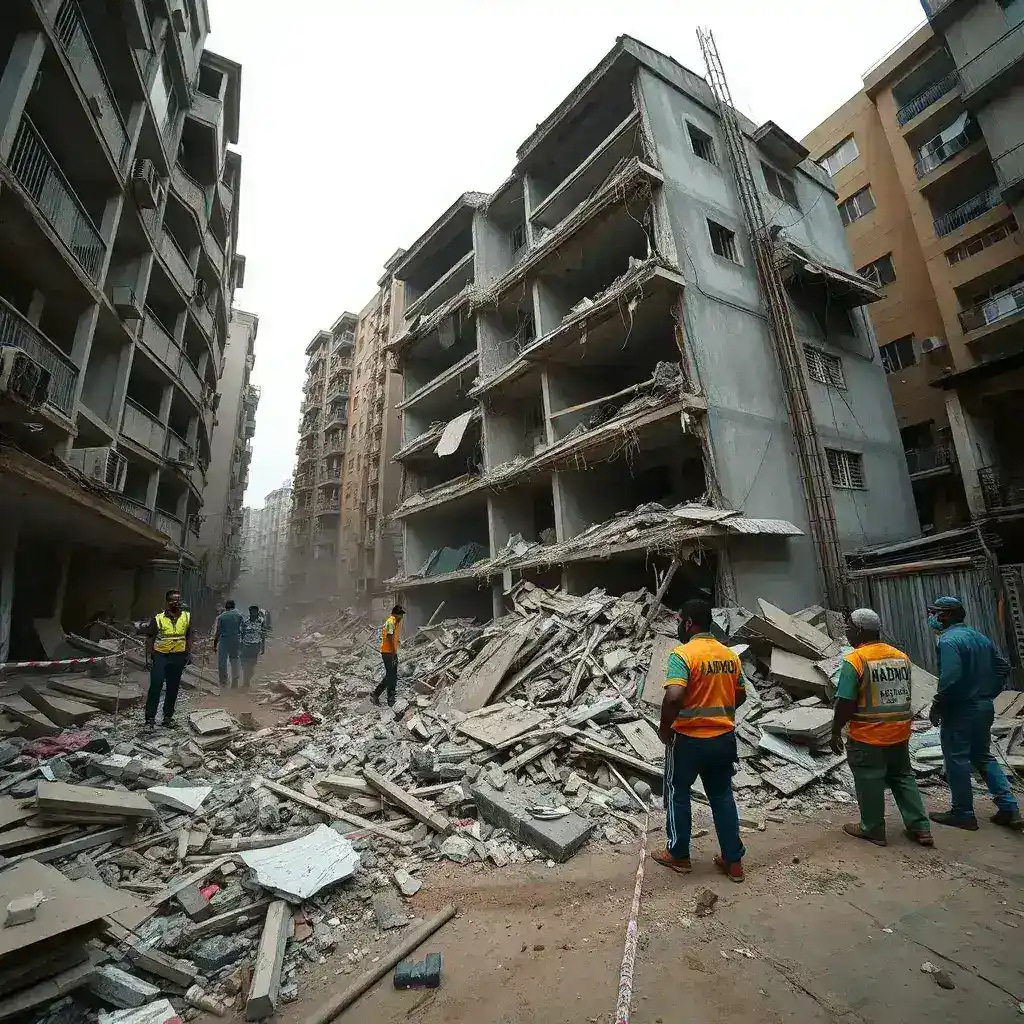
A Joint Technical Investigative Committee has released preliminary findings into the building collapse in the La Nkwantanang Madina Municipal Assembly (LaNMMA) area, attributing the disaster to a combination of severe regulatory non-compliance, structural weaknesses, and unsafe construction practices. The incident, which occurred recently, resulted in fatalities and injuries, prompting an urgent investigation by engineering and architectural professionals.
Context of the Collapse
The collapse occurred within the jurisdiction of the La Nkwantanang Madina Municipal Assembly, a densely populated area where construction activities are frequent. Building collapses in urban Ghana, while not commonplace, often highlight underlying issues with regulatory enforcement and construction standards. This particular incident has drawn significant attention due to its tragic human cost and the clear violations identified by the investigative committee.
Unauthorised Construction and Regulatory Failures
The investigation, conducted by specialists from the Ghana Institution of Engineering (GhIE), the Institution of Engineering and Technology, Ghana (IET-Gh), and the Architecture Registration Council (ARC), revealed a disturbing pattern of disregard for established building laws. The committee found that the collapsed structure was erected without obtaining essential statutory approvals.
This included the absence of approved architectural and structural engineering drawings, building permits, and other mandatory technical documentation. Such omissions suggest a fundamental bypass of the safety and planning protocols designed to prevent structural failures.
Compounding these initial breaches, official stop-work directives issued by the Municipal Assembly were reportedly ignored. Construction continued despite regulatory interventions, indicating a systemic failure in enforcement mechanisms.
Structural Deficiencies and Load Imposition
At the time of the collapse, an additional floor was being constructed on the building. This unauthorised vertical extension significantly increased the load on the existing structure.
The building was not originally designed or assessed to withstand the additional stress imposed by this extra storey. Occupants were reportedly present within parts of the building while these dangerous construction activities were underway, escalating the risk to life.
A preliminary engineering assessment of the collapsed structure identified critical structural weaknesses. These included discontinuous load-bearing columns, inadequate support systems, the use of poor-quality concrete, and improperly detailed reinforcement. These deficiencies severely compromised the building’s capacity to safely transfer loads down to its foundation.
Pattern of Failure and Laboratory Analysis
The observed pattern of failure is consistent with a progressive or










Leave a Reply